Are Moroccan Jews Considered Sephardic?
Yes, most Moroccan Jews are considered Sephardic, but the word describes their religious tradition more than their bloodline.
Moroccan Jews are widely regarded as Sephardic because the community adopted the Sephardic rite, liturgy, and customs brought by Jews expelled from Spain. Yet many descend from the Toshavim, an indigenous population that predates the 1492 expulsion, so they are Sephardic by tradition, not always by descent.
Here's the distinction that clears up most of the confusion. “Sephardic” can mean two different things:
- It can point to descent – literal ancestry traced to the Jews of Sepharad, medieval Iberia.
- Or it can point to rite – the religious customs, prayer melodies, and legal rulings those Iberian Jews carried with them.
Morocco is where those two meanings come apart. For example, with the distinction between Megorashim and Toshavim.
When the Megorashim, the expelled Sephardim, arrived after 1492, their traditions gradually became dominant. The older Toshavim communities absorbed the Sephardic rite over generations. The result – a Jew whose family lived in the Atlas Mountains long before Columbus sailed may still pray in the Sephardic tradition today.
So the clean answer is this: by religious tradition, Moroccan Jews are Sephardic. By ancestry, many are – and many carry roots far older than Spain.
They are also frequently classed as Mizrahi, a point worth its own answer below.
What is the Sephardic rite?
The Sephardic rite is the traditional liturgy and religious custom (minhag) of Jews originating in Iberia — Spain and Portugal — later adopted across North Africa and the Middle East. It differs from the Ashkenazi rite in prayer order, Torah scroll cases, and Passover practice.
Are Moroccan Jews Berber or Arab?
Many Moroccan Jews descend from Berber (Amazigh) and Arab communities native to North Africa, not from Iberian settlers – making them among the oldest inhabitants of the region.
Moroccan Jews are neither Berber nor Arab, but rooted in both. The indigenous Toshavim lived alongside Amazigh (Berber) tribes for centuries before the Arab conquest, and many are Amazigh or Arab in origin – part of the ancient Maghrebi Jewish world that mixed with the Iberian one brought by Sephardic arrivals.
The Jewish presence in Morocco reaches back to Roman times – Hebrew inscriptions and a third-century synagogue survive at Volubilis, near Rabat.
These communities settled among the Amazigh long before Islam reached the region in the eighth century. Some scholars trace them to refugees who arrived after the destruction of the Second Temple in 70 CE.
This is why the question, “are Moroccan Jews Arab?” has no tidy yes-or-no answer. Their heritage is woven from the languages, foods, and daily life of North Africa – Berber and Arab alike – while their faith connects them to a people whose story began in the Middle East. A Moroccan Jew can be Amazigh in culture, Arab in language, and Jewish in faith, all at once.
Because Morocco sits at the western edge of the Arabic-speaking world, these Jews are also called Maghrebi – “western” – Jews.
Who Do Sephardic Jews Descend From?
Sephardic Jews descend from the Jewish communities of the Iberian Peninsula – Spain and Portugal – known in Hebrew as “Sepharad.”
Sephardic Jews trace their origins to the Jews of medieval Spain and Portugal, many of whom flourished under Muslim rule between 711 to 1492. After the 1492 Alhambra Decree ordered the forced conversion of expulsion of Jews, they scattered across North Africa, the Ottoman Empire, and beyond, carrying a distinct Iberian-Jewish culture with them.
The name comes from “Sepharad,” the Hebrew word for the Iberian Peninsula.
For centuries, Jews lived and prospered there, particularly during the era of Al-Andalus, when Jewish scholarship, poetry, and philosophy reached a golden age. That world produced a rich religious and cultural tradition – the Sephardic rite.
Then it ended.
In 1492, the Catholic monarchs of Spain issued the Alhambra Decree, ordering Jews to convert or leave. Portugal followed soon after. Tens of thousands fled, and Morocco – just across the Strait of Gibraltar – became one of the closest refuges.
How Long Did The Jews Have to Leave Spain?
Following the signing of the Alhambra Decree (also known as the Edict of Expulsion) on March 31, 1492, Jews in Spain were given exactly four months to either convert to Catholicism or leave the country.
The original deadline was set for July 31, 1492. However, a brief extension was granted, pushing the final departure date to August 2, 1492 (which corresponded to the Jewish fast day of Tisha B'Av that year).
During this short four-month window, Jewish families had to make agonizing decisions and face severe restrictions:
- Asset liquidation: Jews had to sell off their homes, land, and belongings in a massive buyers' market, often receiving next to nothing.
- Banned wealth: The decree strictly forbade them from carrying gold, silver, minted coins, horses, or weapons out of Spain. They had to rely on bills of exchange or trade goods.
- The ultimatum: Those who stayed past the deadline without converting faced immediate execution.
To Where Did Sephardic Jews Flee?
| Primary Destination | Long-term Outcome | Key Cultural Impact |
|---|---|---|
| Portugal | Short-term refuge; forced mass conversions in 1497 | Created a large class of secret Jews (conversos) who eventually fled north |
| Ottoman Empire | Permanent safety, economic boom, cultural dominance | Kept the Ladino language alive for over 450 years |
| North Africa | Integrated into local cultures; faced initial hardships and piracy | Built monumental Jewish quarters (Mellahs) in Morocco |
| The Netherlands / Northern Europe | Late 16th/17th-century havens of tolerance | Funded global trade networks and built intellectual communities |
The expulsion of Spain's Jews in 1492 sparked a massive, tragic migration. It's estimated there were 300,000 Jews in Spain at this time – and an estimated 175,000 Jews left Spain, dispersing across North Africa, Europe, and the Middle East to form the Sephardic Diaspora.
Their main destinations and the realities they faced upon arrival include the following:
1. Portugal (The immediate escape)
The easiest and most logical route for the majority of refugees (as many as half of those who fled) was simply to cross the western border into Portugal.
But King Manuel, not wanting to lose the immense economic and intellectual talent of his Jewish subjects, opted for forced, mass conversions in 1497 rather than letting them leave. Many became conversos (crypto-Jews practicing in secret), and some eventually fled Portugal decades later.
- The reality: The refuge was painfully short-lived. In 1496, King Manuel I of Portugal sought to marry Isabella of Asturias (the daughter of Spain's monarchs Ferdinand and Isabella). As a condition of the marriage, Spain demanded that Portugal rid itself of its Jewish population.
NOTE: You can learn more about the story of the crypto-Jews and related historical places in our guide to the top Jewish sites in Portugal.
2. The Ottoman Empire (The warmest welcome)
The absolute safest and most prosperous haven for Sephardic Jews was the Islamic Ottoman Empire, ruled by Sultan Bayezid II. The Sultan famously ridiculed King Ferdinand for impoverishing Spain to enrich the Ottomans, actively sending ships to Spanish ports to rescue and transport fleeing Jewish families.
- Where they settled: Major concentrations grew in Constantinople (Istanbul), Salonica (Thessaloniki), and Izmir.
- The reality: In Salonica, Sephardic Jews became the majority of the city's population. They established thriving textile, printing, and trading industries, and the city became a world capital of Jewish scholarship. Here, they preserved their unique language, Ladino (Judeo-Spanish), for centuries.
Many also moved to Ottoman-controlled areas of the Levant, particularly settling in the holy cities of Safed and Jerusalem.
3. North Africa (The Maghreb)
Tens of thousands traveled south across the Mediterranean to Morocco, Algeria, and Tunisia.
- Where they settled: Large populations established themselves in cities like Fes, Tetouan, Oran, and Algiers.
- The reality: The journey was dangerous, fraught with disease and attacks by opportunistic pirates. Once settled, they integrated with the existing local North African Jewish communities (though the Spanish Sephardic Jews often remained culturally distinct and politically dominant due to their sheer numbers and education).
4. Italy
The fractured collection of states in the Italian peninsula offered mixed welcomes.
- Where they settled: Many settled in Rome, Naples (until they were expelled from there too, in the 1540s), Venice, Ferrara, and eventually Livorno.
- The reality: Venice famously confined them (along with other Jews) to the world's first segregated “Ghetto” in 1516. However, some cities welcomed them for their mercantile connections. For instance, the Medici rulers of Florence and Tuscany later granted them extensive civil liberties to settle and build up the port city of Livorno.
NOTE: You can learn more about the Jewish ghettos of Venice and more in our guide to the top Jewish sites in Italy.
Northern Europe (Later Migrations)
As the 16th and 17th centuries progressed, descendants of the Spanish-Portuguese expelled (especially those who had been forced to convert but wanted to return to Judaism) migrated to northern European mercantile capitals that offered religious tolerance.
- Where they settled: Amsterdam (The Dutch Republic), London, and Hamburg.
- The reality: Amsterdam became a massive center for “New Christians” returning to open Judaism, eventually establishing the famous Portuguese Synagogue there and nurturing brilliant minds like the philosopher Baruch Spinoza.
Did Moroccan Jews Come from Spain?
Many Moroccan Jews came from Spain, but not all – a significant indigenous community was already living in Morocco long before the Spanish exiles arrived.
Thousands of Sephardic families fled Spain for Morocco after 1492, settling in cities like Fez, Tétouan, and Marrakech. These were the Megorashim. But they joined the Toshavim, native Moroccan Jews whose roots in the region ran back over a thousand years.
The Megorashim reshaped Moroccan Jewry, but they did not create it.
They settled in the imperial and trading cities – Fez, above all, then Tétouan in the north and Marrakech in the south. In some towns, the two communities kept separate synagogues and even separate marriage contracts for generations.
Over time, they merged into one community under a shared Sephardic rite. That merger is the heart of the answer to whether Moroccan Jews “came from Spain” – some did, some were already home, and the Jewish community in Morocco today is the blend of both.
How Spain's 1492 Expulsion Shaped Morocco's Jewish Identity
The 1492 expulsion transformed Moroccan Jewry by layering a dominant Sephardic culture over an ancient indigenous one.
When the Megorashim arrived, they brought Iberian liturgy, learning, and language. Their traditions gradually shaped the wider community – though most Moroccan Jews continued to speak Judeo-Arabic, while the Iberian-descended vernacular Haketía took hold mainly in the north.
The newcomers carried prestige. Their scholars, prayer customs, and legal rulings spread outward from cities like Fez. But the language story is more layered than the culture story – and it's where a common assumption goes wrong.
The Sephardim did not turn Morocco into a Ladino-speaking country. Instead, two Jewish languages coexisted:
- Haketía: A Judeo-Spanish vernacular that developed from the exiles' Spanish, absorbing Arabic and Hebrew. It was spoken mainly in the north – Tétouan, Tangier, and Chefchaouen.
- Judeo-Moroccan Arabic: The everyday language of the majority of Moroccan Jews, across most of the country, a Jewish variety of Moroccan Arabic.
So the “Judeo-Spanish” shorthand you'll see elsewhere is only half true. Haketía was real and distinctive – but northern and minority. Most Moroccan Jews spoke a Jewish dialect of Arabic, a reminder that the Sephardic layer sat on top of a deeply North African foundation.
This layering – Iberian culture over indigenous roots – is the thread that runs through everything the Sephardim brought with them, from the prayer house to the kitchen.
Centuries later, French would join the mix, spread through the schools of the Alliance Israélite Universelle and, later, the years of the French protectorate. That period, and the later Jewish exodus from Morocco, belongs to a story of its own.
What Did Sephardic Jews Bring to Morocco?
The Sephardic exiles brought a rich Iberian inheritance – religious traditions, liturgical music, scholarship, and a distinctive cuisine that reshaped Moroccan Jewish life.
The Megorashim carried the culture of Al-Andalus across the Strait: Andalusian liturgical melodies, a tradition of learning, and Iberian-influenced foods. Blended with local Moroccan ingredients and customs, these became the heritage still celebrated in Moroccan Jewish homes today.
Walk into a Moroccan Jewish celebration and you're seeing this blend in motion.
The Sephardim were famous guardians of Andalusian music and their prayer melodies carried a distinctly Iberian feel into the synagogue. Their scholars enriched an already deep tradition of Torah learning.
But the most vivid inheritance is the food.
Moroccan Jewish cuisine fuses Iberian, Berber, and Arab flavors with the rules of kosher cooking. A few dishes carry the heritage best:
- Skhina (also called “dfina”): The slow-cooked Shabbat stew, simmered overnight, the Moroccan cousin of the Ashkenazi cholent.
- Tajine: Spiced stews of meat and seasonal vegetables, a staple of the Shabbat table.
- Couscous: A North African foundation adopted into the Jewish festive kitchen.
- Mofletta: The sweet pancake at the heart of Mimouna, the joyful celebration that follows Passover.
Food is where heritage becomes something you can taste. Every dish carries a memory – an Andalusian technique, a Berber spice, a Shabbat ritual older than any of them.
If you're planning to eat your way through this heritage today, that's a subject in its own right – see our guide to kosher food in Morocco for where and how to eat kosher across the country.
What Are Common Sephardic Surnames?
| Surname | Origin / Meaning | Notes |
|---|---|---|
| Toledano | “From Toledo” (Spain) | Toponymic; a classic Iberian-Sephardic name carried into Morocco after 1492 |
| Serfaty | “From Spain / the Spanish one” | Iberian origin; widely treated as a Sephardic family name |
| Benzaquen | Built from Arabic / Judeo-Arabic elements | Often a title or occupational marker |
| Abecassis | Occupational / honorific | Linked to “father of the judge (cadi)” in an Arabic framework |
| Peretz | Biblical Hebrew patronymic | Not Moroccan in origin, but widespread among Sephardic and Moroccan Jews |
| Ohana | Berber-Jewish; a Berber form of Hannah | Matronymic; reflects the indigenous Amazigh layer |
Spellings vary widely across French, Spanish, Arabic, and Hebrew transliteration, so related forms may point to the same family line.
Common Moroccan Sephardic surnames include toponymic names like Toledano and Serfaty, alongside Arabic and Berber-influenced family names such as Benzaquen, Abecassis, and Ohana.
Moroccan Sephardic surnames often preserve memory rather than geography – a Spanish city, a communal role, a biblical ancestor, or a Berber form. Toledano (“from Toledo”) and Serfaty (“the Spaniard”) point to Iberia, while names like Ohana reflect the community's deep North African roots.
One caution before the list: a surname alone doesn't prove Iberian descent.
Names like Cohen and Levi appear among Moroccan Jews, but they mark priestly and Levitical lineage shared across all Jewish communities, including Ashkenazi. They are not distinctively Sephardic, so they're not reliable markers of Moroccan-Sephardic heritage.
The genuinely characteristic names tell a richer story.
Where Are the Sephardic Jewish Sites in Morocco?
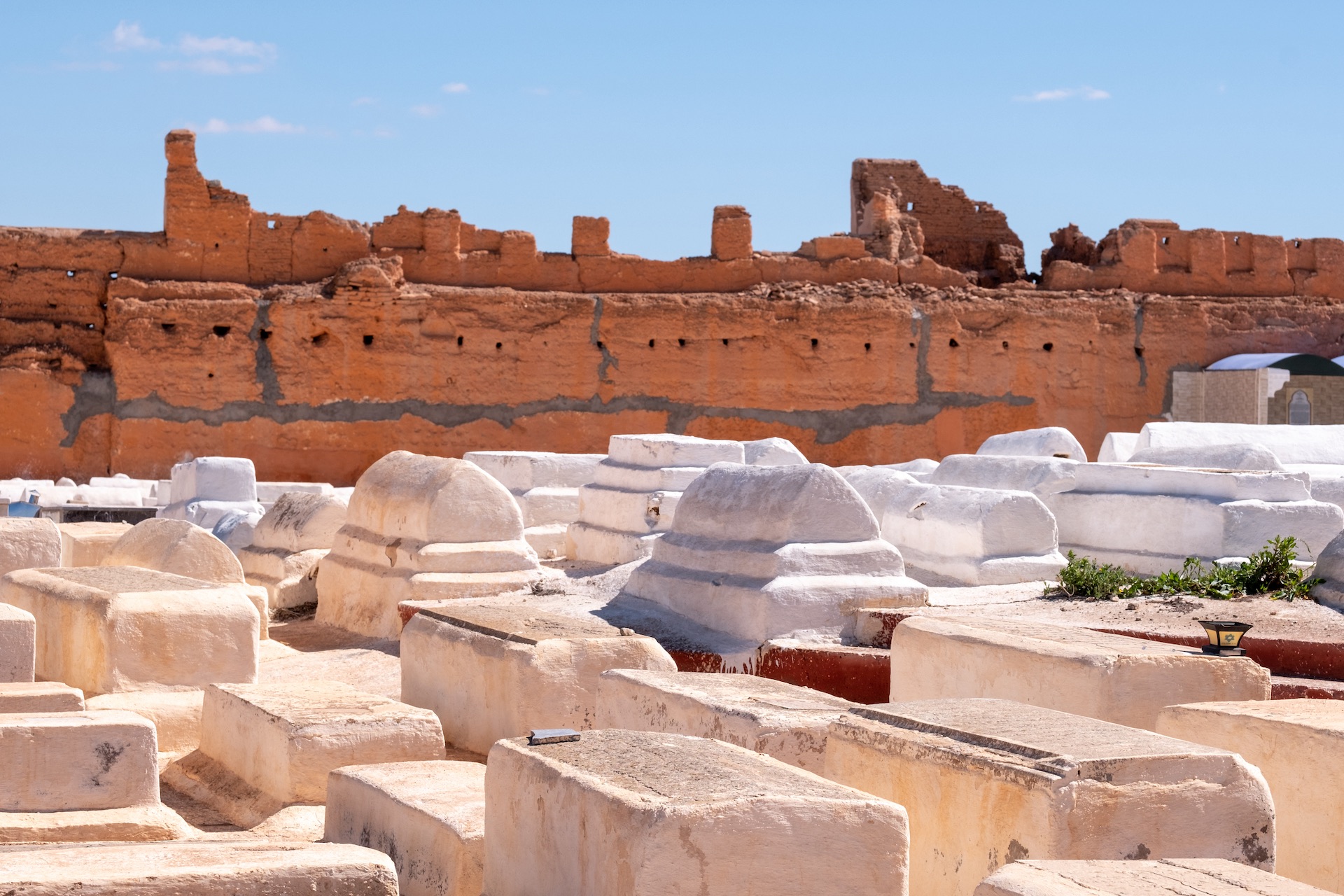
Morocco's Sephardic Jewish sites cluster in the old mellahs – the historic Jewish quarters – of Fez, Marrakech, and Essaouira, alongside synagogues, cemeteries, and pilgrimage shrines across the country.
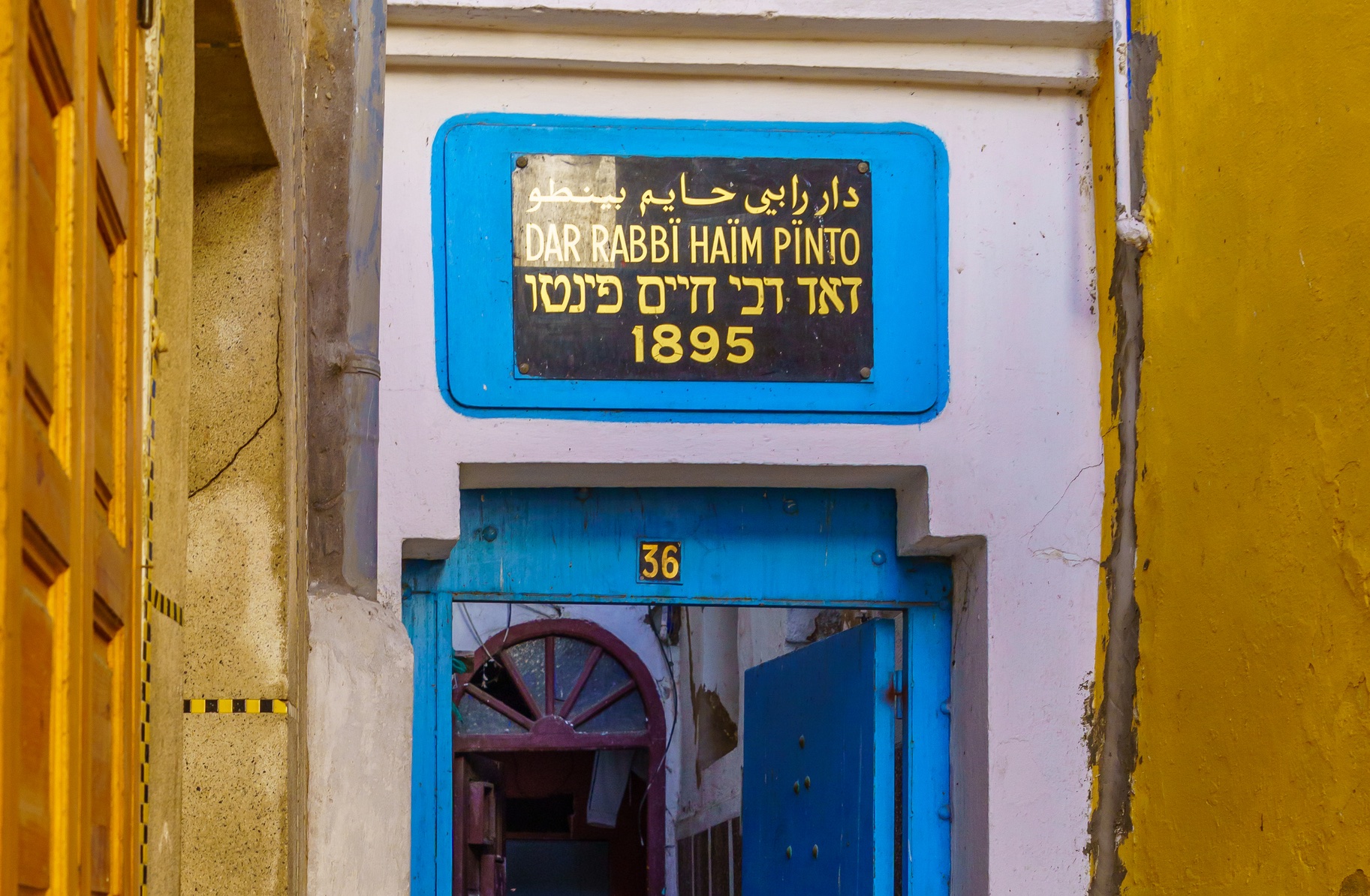
The richest heritage sites include the Ibn Danan Synagogue in Fez, Slat al-Azama in Marrakech, and the Chaim Pinto Synagogue in Essaouira, all set within centuries-old mellahs. Cemeteries and saint shrines add a living dimension, drawing pilgrims each year.
A word on the mellah first, because it frames everything else.
The mellah was the walled Jewish quarter, found in nearly every major Moroccan city. The name likely comes from melach, the Hebrew and Arabic word for salt. These quarters sat close to the palace – the Sultan extended his protection to the community, and proximity made that protection real.
The Fes Mellah is the most storied of them all.
Here are some of the key Sephardic Jewish sites in Morocco:
| Site | City | Significance |
|---|---|---|
| Ibn Danan Synagogue | Fez | Restored 17th-century synagogue-museum in the mellah; one of Morocco's most important Jewish heritage sites |
| Fez Jewish cemetery | Fez | Large, well-preserved cemetery, cared for by the remaining community |
| Slat al-Azama Synagogue | Marrakech | Historic synagogue in the old mellah, long tied to Sephardic settlement |
| Chaim Pinto Synagogue | Essaouira | The best-known visitable synagogue, linked to Rabbi Chaim Pinto; still used by pilgrims |
| Bayt Dakira (Simon Attias) | Essaouira | Restored “House of Memory” heritage complex |
| Ouazzane | Ouazzane | Pilgrimage town northwest of Fez; a destination for hillula celebrations at rabbis' shrines |
Beyond the buildings, the country's saint shrines come alive during the hillula – the celebration marking a righteous rabbi's passing, when pilgrims gather to light candles, feast, and pray. It's one of the most moving experiences for any traveler, and you can read more about the Hiloula pilgrimage tradition.
For a fuller route through these places, see our guide to the best Jewish sites in Morocco or explore our Jewish heritage tours of Morocco to visit them with a guide who knows their history.
Who Are Famous Sephardic Jewish Figures from Morocco?
Morocco's famous Jewish figures span nearly a thousand years – from medieval sages and revered rabbis to modern activists and political advisors.
The most celebrated include the sage Maimonides, who lived in Fez in the 1160s, and revered rabbis like Yaakov Abuhatzeira and Chaim Pinto. In modern times, figures such as André Azoulay, Abraham Serfaty, and Simon Levy shaped Moroccan public life.
One note on the word “Sephardic” here: The historical rabbis belong to the Sephardic religious world; the modern figures are Moroccan Jews more broadly – not all trace strictly Iberian descent – so the label works loosely for the modern group.
| Figure | Era | Significance |
|---|---|---|
| Historical & Religious | ||
| Maimonides (Rambam) | 12th century | The great sage and philosopher; lived in Fez in the 1160s while writing his commentary on the Mishnah |
| Rabbi Yaakov Abuhatzeira | 19th century | Revered Kabbalist known as the Abir Yaakov; his descendants include the Baba Sali |
| Rabbi Chaim Pinto | 18th–19th century | Celebrated Essaouira sage; his synagogue remains a pilgrimage site |
| Solica Hachuel | 19th century | A young Jewish woman of Fez, executed in 1834 for refusing to renounce her faith; venerated as a martyr |
| Rabbi Yitzchak Alfasi (the “Rif”) | 11th century | Foundational halakhic authority; his name means “from Fez” |
| Rabbi Chaim Ibn Attar (Ohr Hachaim) | 18th century | Renowned Kabbalist and commentator who led a yeshiva in Salé |
| Modern Cultural & Political | ||
| André Azoulay | 20th–21st century | Senior advisor to King Mohammed VI; a leading voice of the Jewish community |
| Abraham Serfaty | 20th century | Prominent activist and political figure |
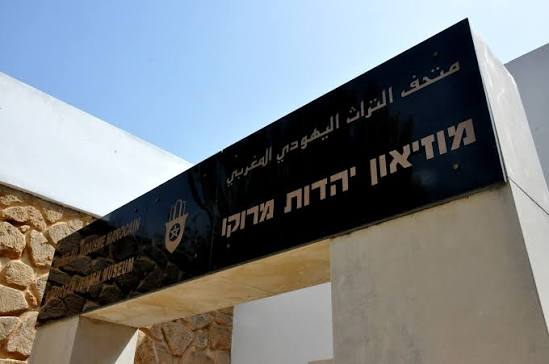
| Simon Levy | 20th–21st century | Scholar and driving force behind Morocco's Jewish museum in Casablanca |
Frequently Asked Questions
Are Sephardic and Mizrahi Jews the same?
Not exactly – the terms overlap, and many Moroccan Jews are described as both.
“Sephardic” refers to a religious tradition rooted in Iberia, while “Mizrahi” is a broader term – used especially in Israel – for Jews from Middle Eastern and North African lands. Moroccan Jews are commonly counted as Mizrahi socially and Sephardic religiously, so the labels blur rather than divide cleanly.
In Israeli usage, Moroccan Jews are usually grouped as Mizrahi – Jews from Arab and Muslim countries. Religiously, though, they follow the Sephardic rite. Outside Israel, most identify as Sephardic. The boundary is genuinely contested, and you'll hear the words used interchangeably.
What language did Moroccan Jews speak?
Most Moroccan Jews spoke Judeo-Moroccan Arabic, while those in the north often spoke Haketía, a Judeo-Spanish vernacular.
Judeo-Moroccan Arabic – a Jewish variety of Moroccan Arabic – was the everyday language of most of the community. In the north, especially Tétouan and Tangier, Jews spoke Haketía, derived from the Spanish of the exiles. Hebrew served religious life, and French later spread through Alliance schools.
Are there Sephardic Jews in Morocco?
Yes – a small but active Jewish community remains in Morocco, concentrated overwhelmingly in Casablanca.
Morocco's Jewish community, once numbering in the hundreds of thousands, has dwindled to a few thousand, most living in Casablanca. Fez and other historic centers are now largely heritage sites. The community remains active, and Morocco has restored synagogues and cemeteries across the country.
You can read more about the Jewish community in Morocco today.
What are Moroccan Jews called?
Within the community, Moroccan Jews are distinguished as Toshavim and Megorashim – more broadly, they're known as Moroccan or Maghrebi Jews.
The two historic terms are Toshavim – the indigenous Jews who predate 1492 – and Megorashim, the Sephardic exiles from Spain. Regionally they're called Maghrebi (“western”) Jews, and in modern usage they're often labeled both Sephardic and Mizrahi, reflecting overlapping identities.
Plan Your Sephardic Heritage Journey With Shin Tours
Since founding Shin Tours in 2018, I've organized Jewish tours in Morocco for hundreds of travelers. This includes visiting Morocco's historic Sephardic communities – the mellah of Fez and the Marrakech Mellah, the synagogues, and the sites where Iberian and indigenous Jewish traditions met and blended. My team and I have built relationships with local guides, drivers, and historians who bring context most visitors never find on their own.
When you request a free custom itinerary, here's what you get:
- A tailored itinerary built around your interests and travel group
- A personal call with me to talk through your trip
- A sample itinerary to review before you commit to anything
You can also learn more about Shin Tours if you want the fuller picture first.
Morocco has proven itself, year after year, as one of the most welcoming places in the world for Jewish travelers. Request your free custom itinerary and let's plan a trip that shows you why.