Why we know these sites better than anyone
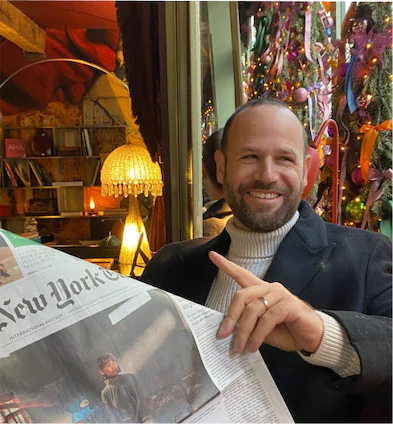
I’m Asaf Peled, the CEO of Shin Tours. I’m a registered tour guide in Israel, and have been designing and leading Jewish heritage tours for decades, ever since founding my company in 2018.
I’ve personally guided hundreds of travellers through Portugal. I therefore have first hand knowledge of what’s on offer in the region and have built dozens of itineraries for kosher-observant families, couples and groups.
If you’re planning a trip to Portugal, feel free to request a custom itinerary here.
The Jewish History of Portugal: Expulsion & Forced Conversion
Portugal once had a thriving population of Jews. After the 1492 Alhambra Decree, Portugal’s Jewish population of 30,000 grew to 60,000-90,000.
The Alhambra Decree ordered the expulsion of unconverted Jews from Spain, many of whom ended up settling in Portugal. After this influx, 6-10% of the population of the entire country was Jewish.
At its peak, Portugal had 135 Jewish quarters, compared to just 31, in 1279.
1496 – Decree of Expulsion from Portugal
In 1496, a decree of expulsion was issued by King Manuel I.
Until this point, Portugal had steered an ambivalent course. For example, some children had been separated from their parents in order to be raised Christian.
Lacking enough ships to deport Jews, Manuel I forced all the remaining Jews to convert to Catholicism. These converts became known as New Christians (Cristãos Novos) or conversos.
Under the 1547 Inquisition, the prosecution of New Christians who still practiced Judaism was authorised. Crypto-Jews were also persecuted, those who maintained their religious beliefs and practices in secret.
1800s to Today – Jews Returning to Portugal & Citizenship
In the 1800s, Jews began to be able to express their identity more openly again. Between 1920-1930, Moroccan Jewish families began to settle in the Algarve and Azores.
In 1860, a synagogue was built in Faro. In 1904, The Shaare Tikvah Synagogue opened in Lisbon.
Then, in 1920, Captain Artur Carlos de Barros Basto helped to establish the Jewish community in Porto. Crypto-Jewish families were persuaded to reclaim their ancestral faith.
Many people assume that Portugal’s Jewish community is a thing of the past.
It’s true that the community has suffered a number of setbacks since its heyday in the 1400s. However, in 2015, Portugal started granting citizenship to the descendants of Sephardic Jews who were expelled from the country during the Inquisition.
To date, 75,000 Jews have had their citizenship restored. Famously, Roman Abramovich, the business oligarch and politician, claimed his citizenship via this route. As a result, Judaism has once again become a prominent part of life in Portugal.
Top 12 Jewish Sites in Portugal
Below are listed the top Jewish sites in Portugal. Reference will be made of the kosher options available at each site, where appropriate.
1. Lisbon Jewish Quarter (Alfama, Lisbon)
Alfama is one of the oldest neighbourhoods in Lisbon. Our guests are routinely mesmerised by the labyrinth of quaint streets that climb up towards the castle.
For Jewish travellers, this neighbourhood carries a particular weight: it was the city’s historic judiaria (Jewish Quarter), where a vibrant community flourished before it was sadly extinguished by the Inquisition.
The Lisbon Pogrom marks one of the darkest chapters in the history of the Jews in Portugal.
On April 19, 1506, a crowd of churchgoers attacked and killed people they suspected to be secretly Jewish. Between 500-4,000 New Christians were killed over the course of just three days.
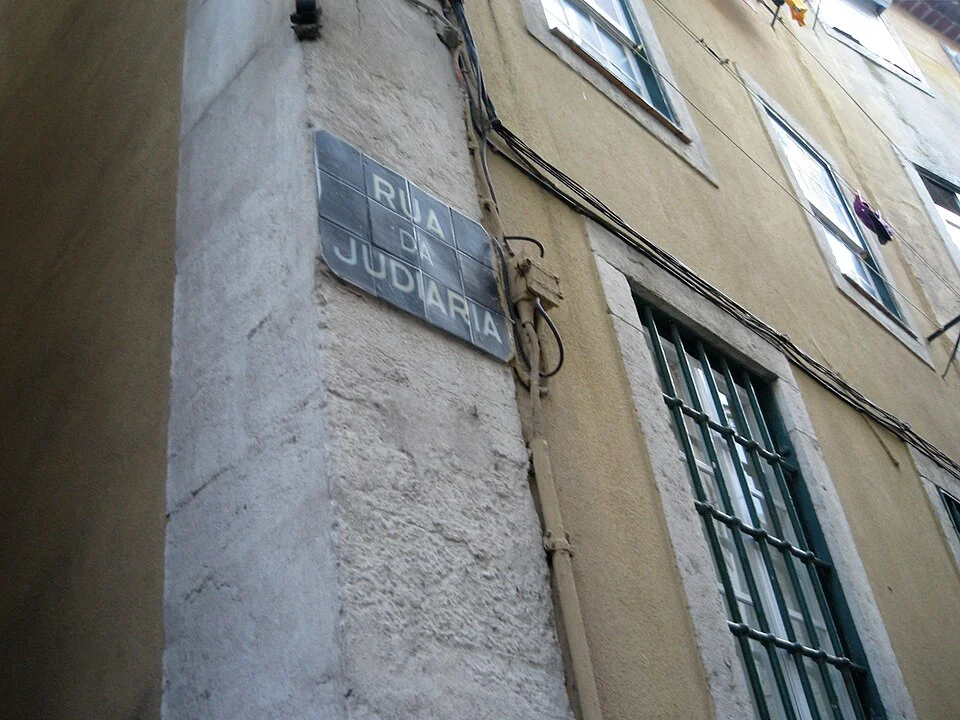
If you have time, it’s worth visiting the Jewish Cultural Center on the Rua da Judaria.
Like much of Lisbon, this area is hilly and steep, meaning it can be challenging for visitors with limited mobility.
We therefore recommend using a local guide who knows how to navigate this area by hopping on one of the iconic trams that service parts of this area or by using one of the affordable local taxi services.
Shin Tours accounts for this when designing itineraries for clients with mobility issues.
Kosher tips: Lisbon’s only kosher restaurant, Genesis, can be found in Alfama. It is recommended to pre-book as it can get busy, especially during the holiday season.
If you’re worried about not being able to access kosher food in other locations, we recommend a stop at a kosher supermarket on arrival.
What are the highlights of this site?
- Walking the historic alleyways of the former judaria
- Understanding the story of the 1506 Lisbon Pogrom
- Navigating the quarter by tram or taxi
- Genesis (Lisbon’s only kosher restaurant)
2. Lisbon Pogrom Memorial (Rossio Square, Lisbon)
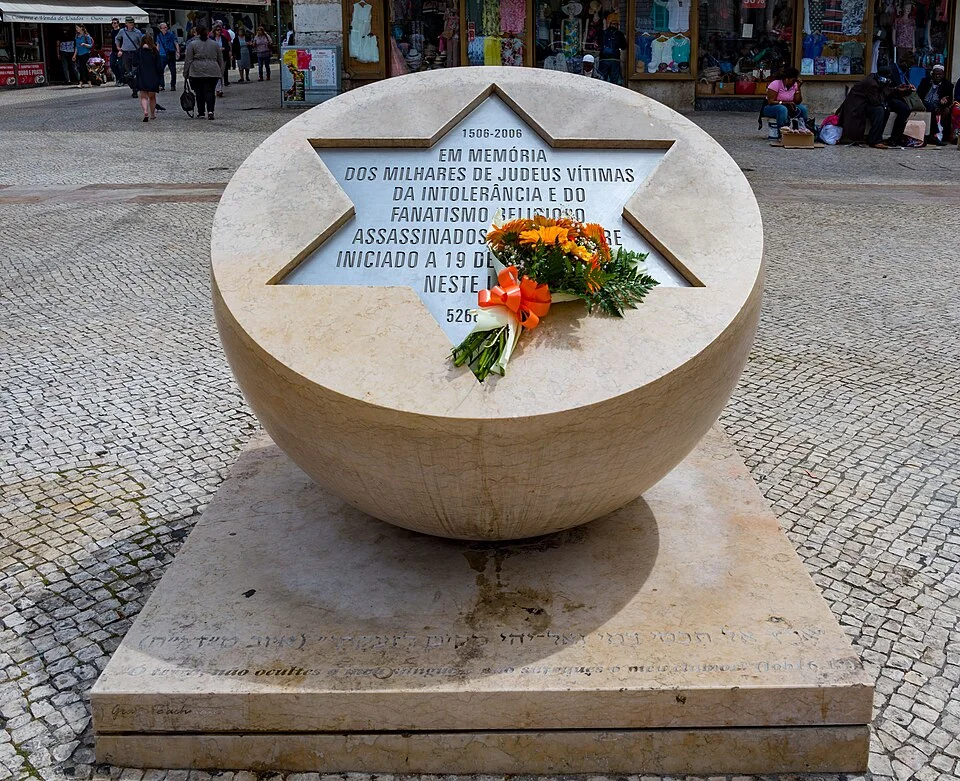
Rossio Square is one of the most famous squares in Lisbon.
It’s a bustling place, full of cafes, restaurants and shops. But, for Jews, it carries a deeper significance.
The 1506 Lisbon Pogrom Memorial stands here, dedicated to the victims of the massacre.
It also provides us with an opportunity to tell you about Gracia Mendes Nasi.
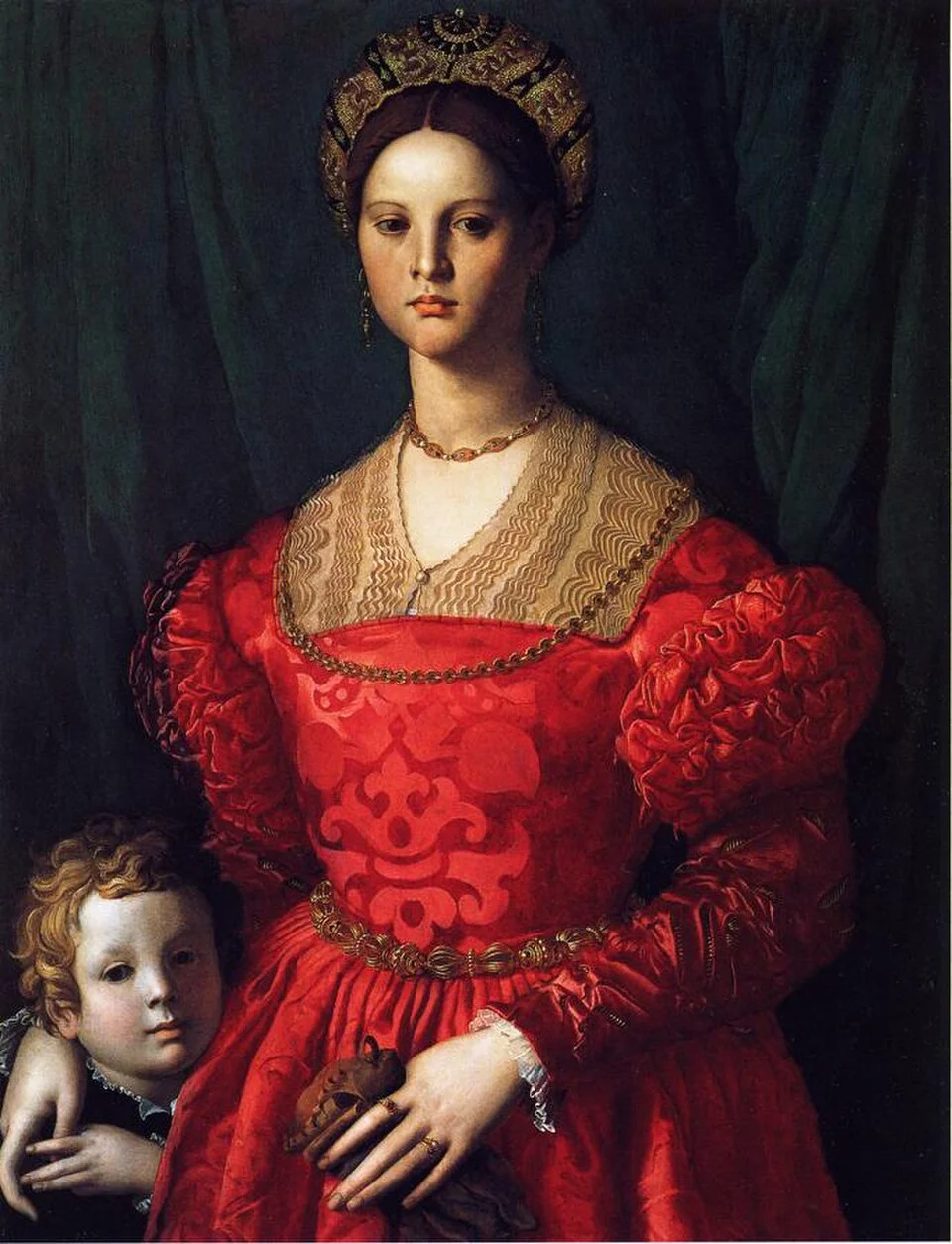
She was a remarkable woman.
Born in 1510, into a converso family in Lisbon, she used her wealth and networks to help hundreds of Jews flee the Inquisition. She’s one of the most remarkable figures in Jewish history.
Her story begins here, in Rossio Square.
Rossio Square happens to be one of the most accessible and pleasant parts of the city in which to spend time. While there are plenty of restaurants, cafes and bars in this area, kosher specific options will require some planning.
What are the highlights of this site?
- The Lisbon Pogrom Memorial
- Gracia Mendes Nasi
- Pleasant square in the heart of historic Lisbon
3. Shaare Tikva Synagogue (Lisbon)
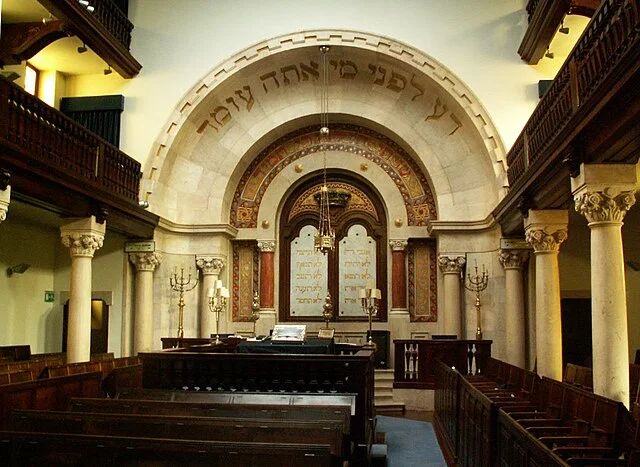
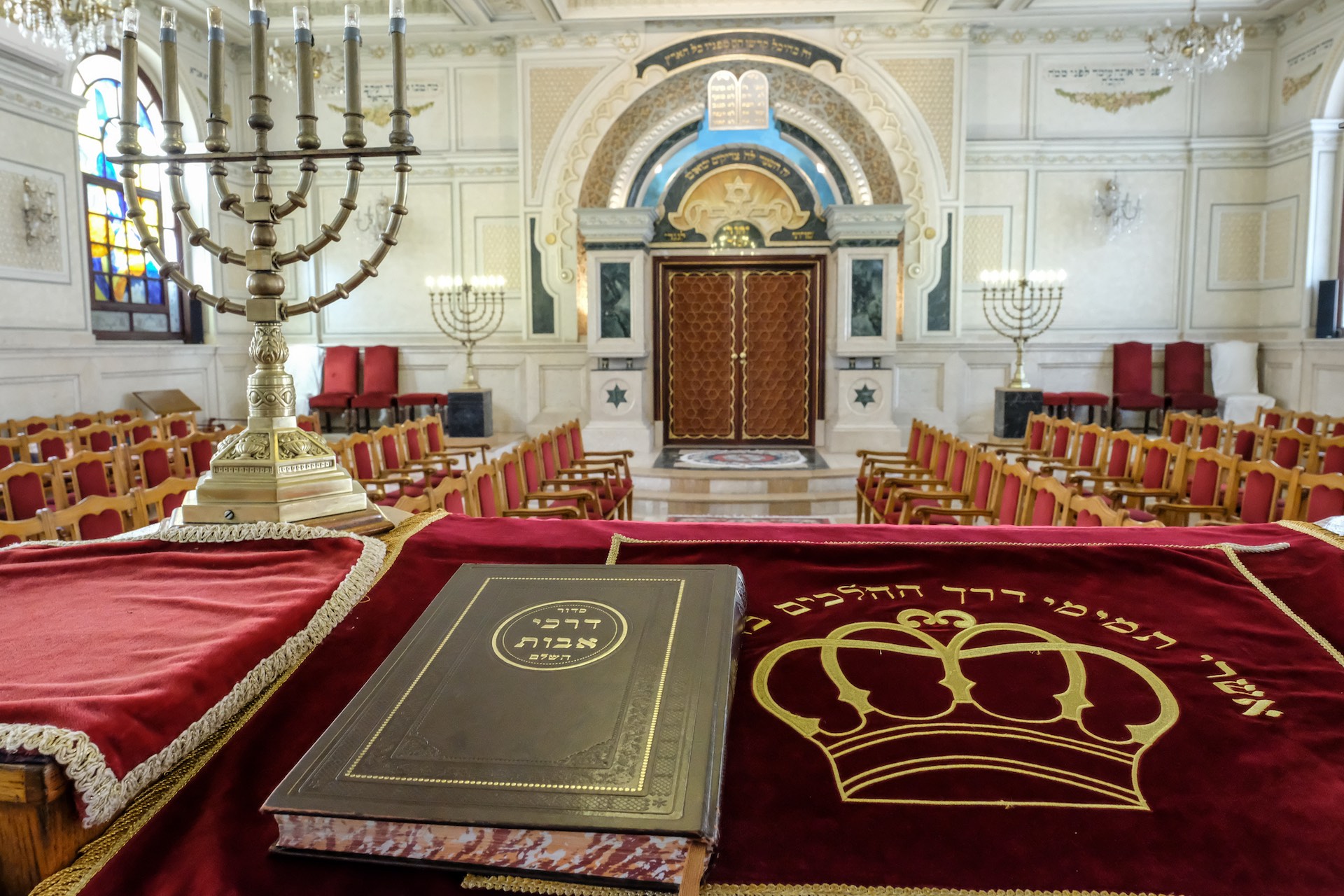
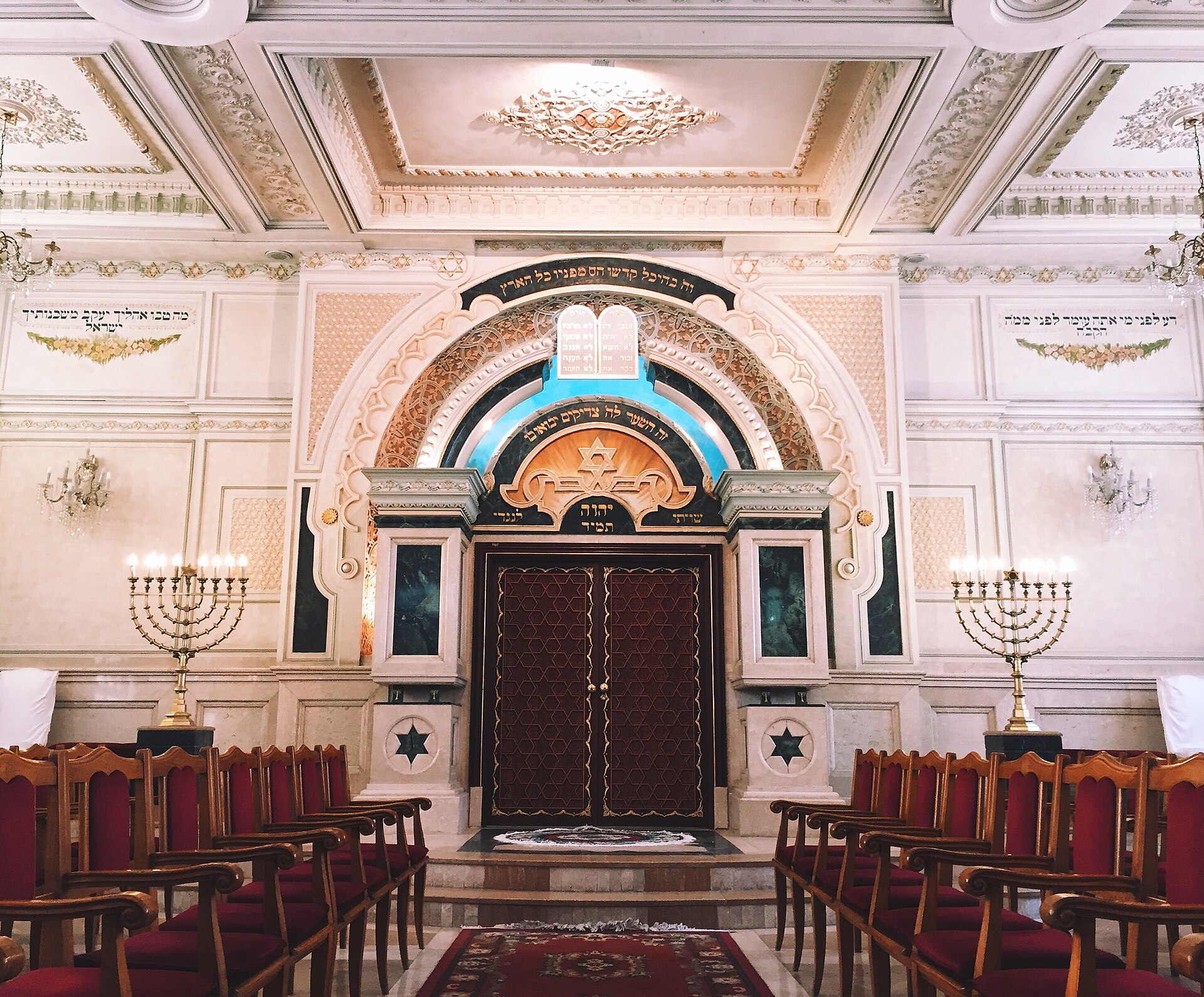
The Shaare Tikva Synagogue is the main synagogue in Lisbon.
Built in 1904, it’s one of the most moving sites of any tour of Portugal. It was the first synagogue to be built in the country since the late 1400s, which should tell you something about what it was like to be Jewish in Portugal for the years in between.
At the time it was constructed, Portuguese Law didn’t allow for non-Catholic houses of worship to face the street. As such, the synagogue was designed to have its facade set back from the road, hidden within an inner courtyard.
The Lisbon Synagogue had to conceal its identity in order to exist at all.
We can recommend attending evening service here on a Friday. Many find the experience particularly moving.
There’s something profound about worshipping inside a synagogue that had to be built in secret, alongside a community that has fought for centuries to survive.
The Lisbon Synagogue also houses a collection of documents from the 1600s to the 1900s.
There’s a Chabad in Lisbon, although it’s located some distance from the city centre, in Cascais.
For observant travellers, we recommend booking a hotel within walking distance from a Friday night service.
What are the highlights of this site?
- The Lisbon Synagogue was the first to be built in the country since the 1400s
- It’s hidden facade is a reminder of the centuries in which Jews had to practice in secrecy
- Friday evening services are a moving experience for observant visitors
- Contains an archive of documents spanning the 1600-1900s
4. Sintra National Palace (Sintra)
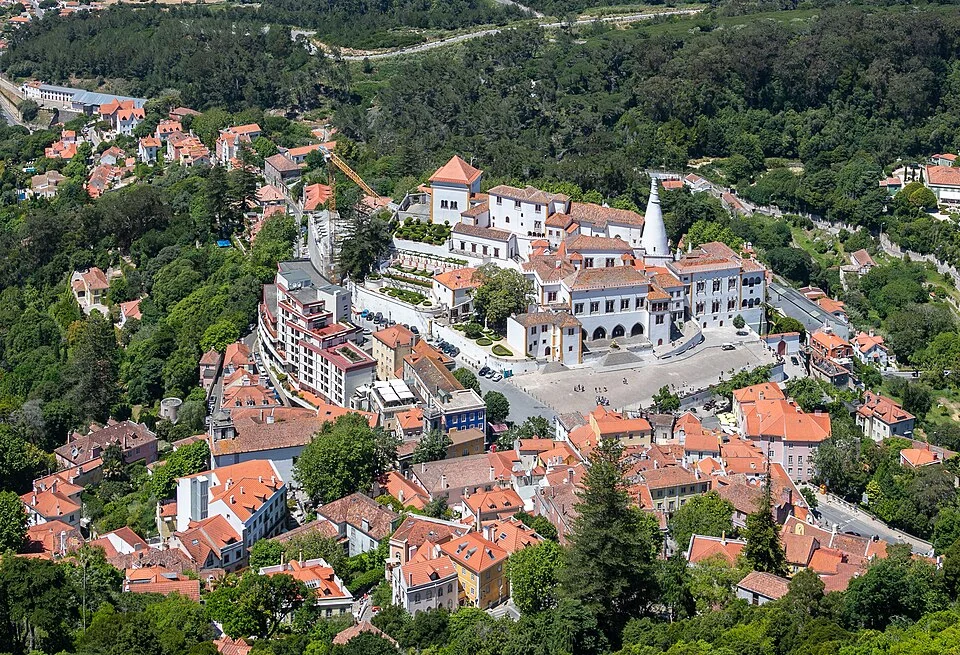
Sintra is one of the most spectacular places in all of Portugal.
Just over half an hour from Lisbon, Sintra is home to a cluster of fairytale-like palaces and estates, spread over forested hills that rise above the Atlantic.
The National Palace is at the heart of one of the best-preserved medieval royal palaces in the country.
It provides the perfect setting for us to tell you about the story of Isaac Abravanel.
Isaac Abravanel was one of the most remarkable figures in the history of the Jewish Iberian Peninsula.
He was a statesman, philosopher, biblical commentator and financier who served at the highest levels of government. He was an advisor to the kings of both Portugal and Spain.
He would have walked the halls of this palace as a truasted royal counsellor.
In 1492, following the expulsion of the Jews from Spain, he was forced to flee. Then the Inquisition came to Portugal. His story is central to the tragedy of the Jewish Iberian Peninsula.
Isaac Abravanel was a man who sat at the tables of kings and yet, ultimately, he could not escape the tide of persecution that swept the peninsula.
These are the kinds of moments that make a heritage your more than just sightseeing.
What are the highlights of this site?
- The story of Isaac Abravanel
- One of the best preserved medieval royal palaces in Portugal
- Sintra is one of the most beautiful places in Portugal
5. The Jewish Quarter in Évora
Évora is a UNESCO World Heritage Site and one of the most atmospheric towns in Portugal.
Located in Alentejo, it’s a great example of a walled Roman city. It also had a significant medieval Jewish community.
Its Jewish Quarter is one of the most intact in the country.
Born in Évora, Garcia de Orta went on to become one of the most significant figures in the history of medicine and botany.
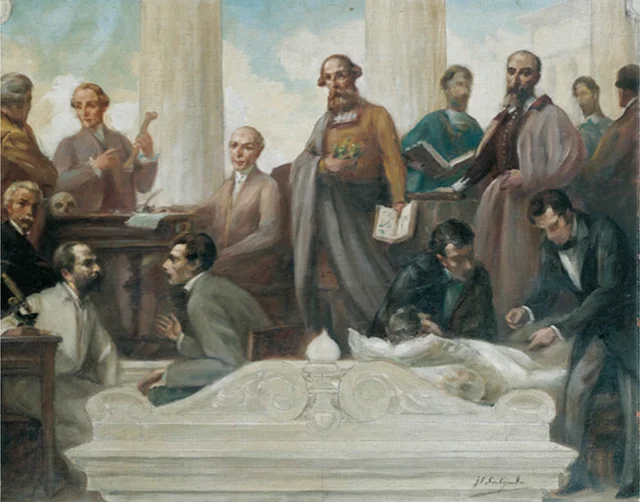
He was a converso, or converted Jew, who studied medicine before eventually fleeing to Goa, which was then part of the Portuguese Empire. It was here that he went on to pioneer the study of tropical diseases and plants.
His story is one of the most extraordinary of the Crypto-Jews.
After his death, his sister was arrested and confessed that their family had continued to practice Judaism, despite their conversation.
As a result of these allegations, Garcia de Orta’s remains were dug up and burned.
The Inquisition followed him beyond the grave and across the world to Goa.
While Portugal has been home to as many as 135 Jewish Quarters, Évora is one of the few worth visiting today.
What are the highlights of this site?
- Walking the medieval judiaria of one of the most beautiful and historic walled cities in Portugal
- The story of Garcia de Orta
- One of the most intact Jewish Quarters in Portugal
6. Praça do Giraldo (Évora)
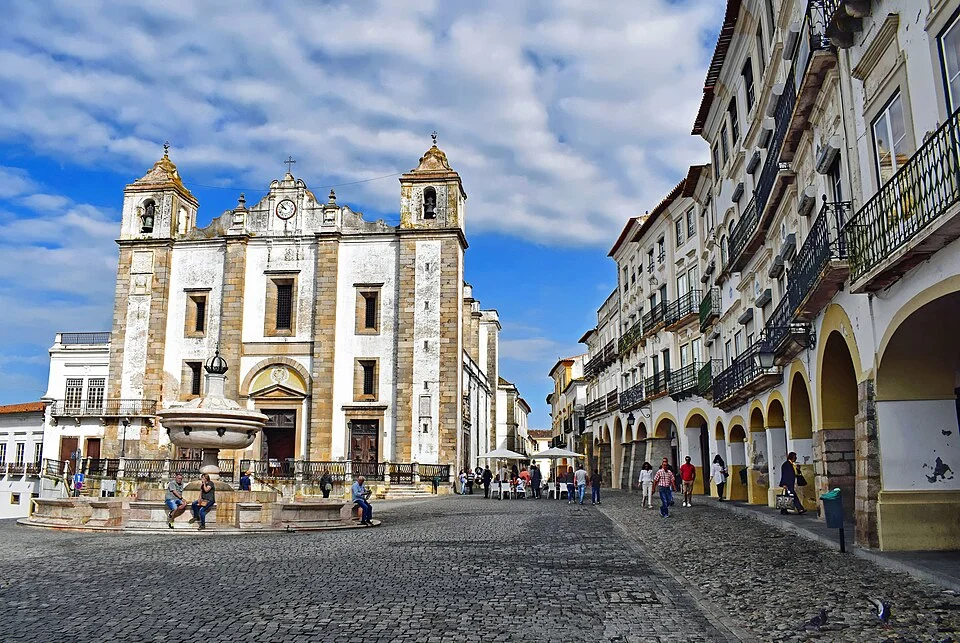
Praça do Giraldo is one of the most beautiful squares in Portugal.
Arcaded, grand, and centuries old, it’s the beating heart of Évora. Today it is full of cafés, tourists and the ordinary business of daily life. Sit at a table with a coffee and it is easy to feel nothing but pleasure at the place.
Hold that feeling.
Then hold this one alongside it:
This is where public sentences were carried out.
This is where those convicted of secretly practising Judaism – or suspected of it – were condemned before a crowd. The state's punishment was made into a spectacle. It was designed to be watched.
It’s here, most likely, that the sentence relating to Garcia de Orta's family was read aloud. His sister had confessed under interrogation. The consequences followed publicly, in a square like this one — in front of neighbours, strangers, and the full machinery of religious authority.
The Inquisition did not operate in the shadows. It happened out in the open, in broad daylight. That was the point.
I find this square one of the most quietly powerful stops on any itinerary through the Alentejo. There is no monument here to explain what happened – the cafés do not acknowledge it – the beauty of the place is entirely intact.
That is exactly why it matters to stand here and reflect on what happened here.
Jewish heritage travel asks you to carry two things at once — the place as it is, and the place as it was. Praça do Giraldo rewards that kind of attention more than almost anywhere else in Portugal.
Note on kosher food: Évora has no kosher restaurants. If you are travelling here from Lisbon, plan provisions before you leave – a stop at a kosher supermarket in Lisbon is something I build into every itinerary that includes the Alentejo.
What are the highlights of this site?
- One of Portugal's most beautiful and historic central squares
- The probable site of Inquisition public sentencings – directly connected to the story of Garcia de Orta
- A place where history and everyday life exist side by side, without explanation or apology
7. Kadoorie Mekor Haim Synagogue (Porto)
Porto surprises people.
They arrive expecting a smaller, quieter version of Lisbon. What they find instead is a city with its own fierce identity — and one of the most extraordinary Jewish stories in all of Portugal.
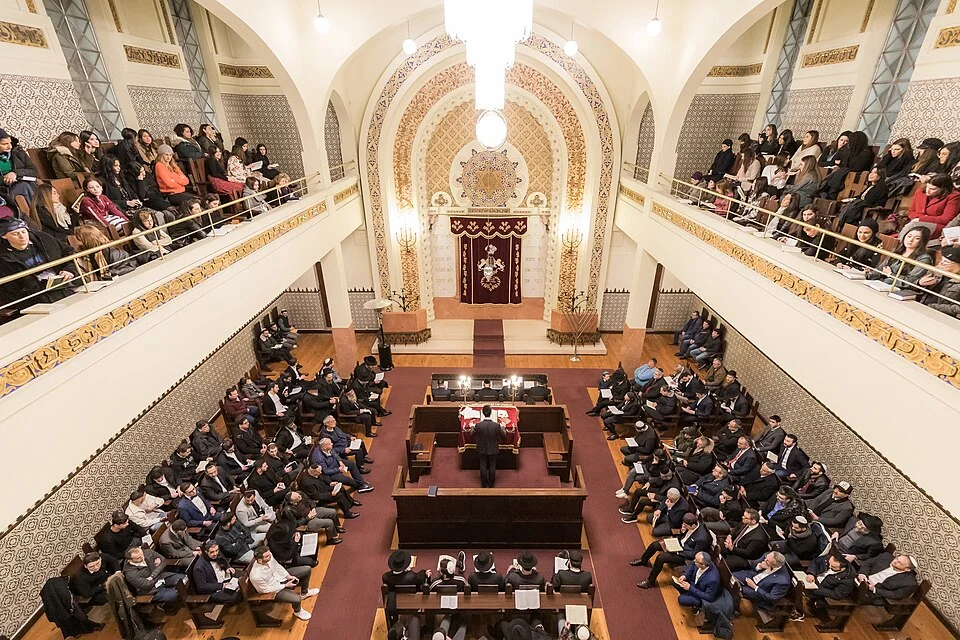
The Kadoorie Mekor Haim Synagogue is the largest active synagogue on the Iberian Peninsula.
It sits within a large garden, a grand square stone building entered through a series of arches. Step inside and you will find azulejos – the blue tiles for which Portugal is famous – lining the walls. Above the Ark, gold tiles run in arabesque patterns. It’s magnificent.
But the building is not the story – the man who built it is.
Captain Artur Carlos de Barros Basto was born into what he believed was a Catholic family. In adulthood, he discovered he was Jewish by ancestry.
What followed was one of the most remarkable acts of Jewish revival in modern European history.
Almost single-handedly, he travelled across northern Portugal. He was looking for families who had preserved fragments of Jewish identity for centuries: families who lit candles on Friday nights without knowing why, who said certain prayers in private and who had continued crypto-Jewish traditions over the past five centuries without understanding their origins.
He found them.
He organised circumcisions, published a journal, held talks, set up a school and eventually built a synagogue.
For his efforts, he was attacked by the fascists, tried by a military tribunal on fabricated charges, and stripped of his rank. His name was only rehabilitated in 1997.
He died in 1961.
Compare this building to the Shaare Tikva Synagogue in Lisbon. While that building had to hide from the street, this one stands out in the open, confident and proud.
It’s a symbol of what he did for the community.
The Jewish Community of Porto today has more than a thousand members from over 30 countries.
Kosher food in Porto: Porto has a kosher restaurant and butcher. Hotel Da Musica is a kosher hotel. The Jewish Community of Porto has a page where other kosher supermarkets, restaurants and caterers are listed, for instance, Sababa Catering.
What are the highlights of this site?
- The largest active synagogue on the Iberian Peninsula
- The extraordinary story of Captain Artur Carlos de Barros Basto
- An active community of over 1,000 members from more than 30 countries
- Hotel Da Musica is a kosher hotel
8. Old Jewish Quarter (Rua de Santa Maria, Guimarães)
Guimarães is where Portugal began.
This is the city where Afonso Henriques – the first King of Portugal – was born in 1109. It’s one of the most beautiful medieval towns in the country and its historic centre is a UNESCO World Heritage Site.
It also had a significant Jewish community.
Its former Jewish quarter, centred on Rua de Santa Maria, is one of the most atmospheric old judiarias in Portugal.
I need to be honest with you here.
You won’t find a functioning judiaria today in Guimarães. The Jewish community was largely erased by the forced conversions and expulsions of 1497. What you find instead is a street — and an absence.
That absence is poignant: a good guide does not just tell you what is there, they help you understand what was taken away.
Walking Rua de Santa Maria with that knowledge changes how you see it. This is what Jewish heritage travel does at its best.
It doesn’t require a museum or a monument to move you. It requires the right context, the right story, and the willingness to feel the weight of what is no longer there.
The town itself is well worth a full half-day. Beyond the Jewish Quarter, the castle, the palace of the Dukes of Braganza, and the old streets are all exceptional.
What are the highlights of this site?
- Rua de Santa Maria, the heart of the former Jewish Quarter
- Understanding the erasure of Jewish life in 1497 — a story of absence as much as presence
- One of the most beautiful medieval cities in Portugal, and a UNESCO World Heritage Site
9. Belmonte Jewish Museum and the Bet Eliahu Synagogue
Of all the places in this list, Belmonte is the one that stays with people longest.
This small farming and winemaking town in the Beira Alta province is the spiritual centre of crypto-Jewry in Portugal. Its story is almost impossible to believe.
In 1920, the engineer Samuel Schwartz made a discovery that shook the Jewish world. He found a community in Belmonte that had been practising Judaism in near-total secrecy for over 500 years.
They’d survived the Inquisition by pretending to be Christian.
They had no rabbi, no Torah and no Hebrew. They prayed in Portuguese, in private and behind locked doors. They passed their traditions from generation to generation, without ever fully understanding their origins. But they had survived – intact, hidden and alive.
In 1993, the first stone of the Bet Eliahu Synagogue was laid.
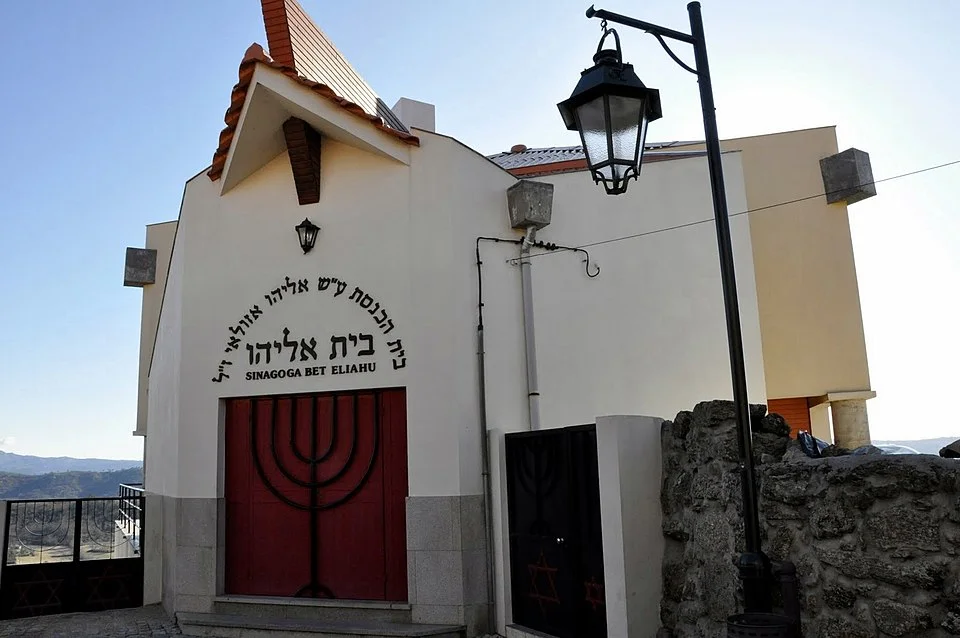
It opened in 1996, as part of ceremonies marking the 500th anniversary of the expulsion decree of 1496.
The building — white stone with a red-tiled roof — stands at the edge of the old Jewish quarter. Services take place every night in summer, on Shabbat and on holidays throughout the year.
The Belmonte Jewish Museum tells the full history of Jewish Portugal — their integration, their contributions to art, literature and the economy, and their experience under the Inquisition.
Renovated in 2017, it’s considered one of the finest Jewish museums on the Iberian Peninsula, attracting over 30,000 visitors annually.
Belmonte is not a museum piece – it’s a living community.
The people you meet here are the descendants of those who survived. That’s not something you forget.
What are the highlights of this site?
- The Belmonte Jewish Museum
- Beit Eliahu Synagogue
- The extraordinary story of the Belmonte crypto-Jewish community
- Deeply moving site for any Jewish traveller
10. Jewish Cemetery, Faro
Most visitors to the Algarve spend their time at the beach.
They have no idea what is waiting for them in Faro. The capital of the Algarve has a Jewish history that goes back centuries — it begins with a remarkable distinction.
In 1487, Samuel Porteira published the first printed book in Portugal in Faro.
It was a Hebrew edition of the Pentateuch.
Jews were expelled from the Algarve in 1496, along with the rest of Portugal. Many continued to live there as conversos. Resettlement began in the early 1800s, and in 1860, a synagogue was built in Faro — one of the first to be built in modern Portugal.
The most significant surviving site today is the Jewish Cemetery.
It holds over a hundred graves and served the community from 1838 to 1932. It’s listed as a place of public interest in Portugal's National Register of Historical Monuments.
The date 5638 (1878 in the Gregorian calendar) above the entrance gates is thought to mark when the cemetery wall was constructed.
A small museum was established as part of a restoration in 1992–93, displaying furniture from former Faro synagogues.
It’s a rarely visited site. It shouldn’t be.
Kosher food note: Options are very limited in the Algarve. Plan provisions from Lisbon before travelling south – a stop at a kosher supermarket on arrival from the airport is strongly recommended.
What are the highlights of this site?
- The historic Jewish Cemetery
- The story of the first printed book in Portugal
- A rarely visited but historically significant site in southern Portugal
11. Medieval Synagogue (Museu Luso-Hebraico Abraham Zacuto, Tomar)
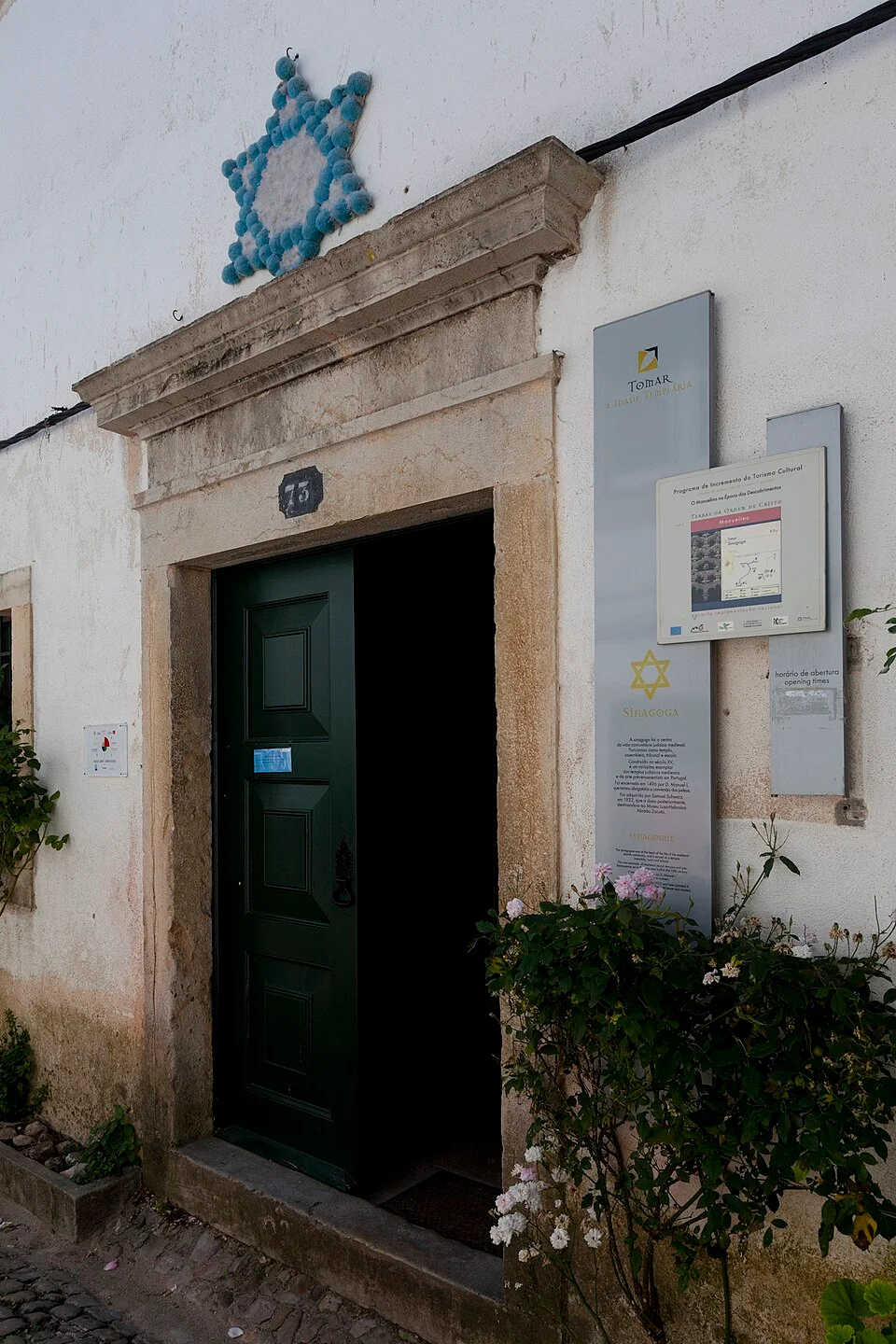
I want to tell you about a building that spent centuries hiding in plain sight.
The Tomar Synagogue is the oldest and best-preserved existing synagogue in Portugal.
It’s also one of the most remarkable in Europe. Construction began in 1430 and was completed in 1460.
36 years after it was finished, the Jews were expelled and the synagogue was shut.
In the centuries that followed, the building was used as a prison, a hay barn and then as a grocery warehouse.
In 1921, it was declared a national monument.
In 1939, the owner donated it to the Portuguese state. In 1985, archaeologists excavating the outbuilding discovered parts of a mikveh.
The building now houses a museum – the Museu Luso-Hebraico Abraham Zacuto – with a collection that includes Judaica, fine art, medieval gravestones and important architectural fragments from other destroyed buildings.
There’s an inscribed stone from 1307, believed to have come from the Lisbon Great Synagogue, which was destroyed in the earthquake of 1755.
They also have another inscribed stone from the medieval synagogue in Belmonte, which dates back to the 1200s.
From the outside, the only sign of the building's true identity is a single Star of David. It sits quietly in a row of whitewashed buildings – invisible to anyone who does not know what they are looking for.
This invisibility is part of its story.
This building survived five centuries of use and misuse — and it’s still here. For a Jewish traveller, standing inside it is an extraordinary thing.
What are the highlights of this site?
- The oldest and best-preserved synagogue in Portugal
- Parts of a mikveh discovered during an excavation in 1985
- The Museu Luso-Hebraico Abraham Zacuto
- One of the most remarkable buildings in Portuguese Jewish history
12. Casa do Gato Preto and the Jewish Cultural Centre Isaac Cardoso (Trancoso)
Trancoso does not make most travel lists of Portugal. It really should.
Situated in the north of Portugal, this medieval walled town has one of the most striking concentrations of Jewish symbolic markings in the country.
In the 1400s, its Jewish community numbered around 500 people – a significant proportion of the town's total population.
Their presence is still visible – carved into doors and marked on buildings through the streets.
Hebrew inscriptions and Stars of David are carved into doorways across the town. Candlestick symbols are carved in stone on buildings you pass without noticing.
These are not museum exhibits, they’re on the walls and in the streets – exactly where they were left.
The most famous Jewish house is the Casa do Gato Preto (the House of the Black Cat).
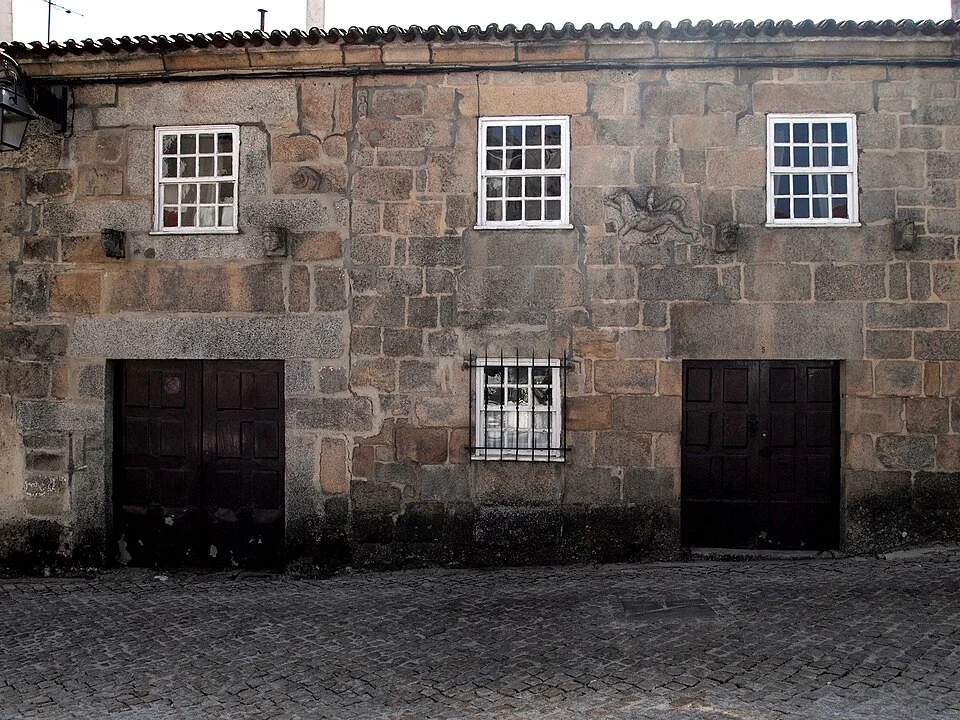
Above the door you’ll find the Lion of Judah and the walls of Jerusalem, carved in stone. A Jewish family lived here and they left their mark on the building in the only way they could.
At the Isaac Cardoso Interpretation Centre for Jewish Culture, visitors can see the Beit Rayim Synagogue, two exhibition halls, a garden, and a courtyard with a well and inscriptions in Hebrew. The centre also holds archives documenting the history of the Jews of Trancoso during the Inquisition.
Isaac Cardoso was a converso philosopher and physician born in Trancoso in 1604.
I include Trancoso on almost every itinerary we design for northern Portugal. Competing guides regularly overlook it. That’s their loss — and potentially yours, if you do not plan for it.
This is not a polished heritage attraction. It’s a real medieval town where the evidence of Jewish life is still carved into the walls.
What are the highlights of this site?
- Casa do Gato Preto
- Hebrew inscriptions and Stars of David found carved throughout the town
- Jewish Cultural Centre Isaac Cardoso
- One of the most atmospheric and underrated Jewish heritage towns in Portugal
The Missing Piece: How Will You Get Kosher Food in Portugal?
You now have a guide to the 12 best Jewish heritage sites in Portugal and the historical context to understand why they matter.
But for kosher-observant travellers, knowing the sites is only half the challenge.
Portugal has very limited kosher infrastructure. There is one kosher restaurant in Lisbon — Genesis Restaurant, in Alfama. Kosher options are also limited in Porto. Beyond those two cities, options become extremely sparse. In the Algarve and in rural areas, there is almost nothing.
For groups requiring fully catered kosher meals, one key resource in Porto is Sababa Catering — a kosher caterer who cooks for the synagogue and can prepare meals for touring groups, but must be pre-booked in advance. In Lisbon, Portuel is a good kosher deli option.
I always build a stop at a kosher supermarket on arrival from the airport into every itinerary – it makes everything that follows easier.
Without this kind of advance planning, an observant traveller moving through multiple cities and regions will struggle.
This is not a reason not to go.
Portugal is a magnificent country with extraordinary Jewish heritage. But knowing what to prepare for – and building it into your itinerary before you travel – is what separates a good trip from a great one.
It’s the kind of insider knowledge that travel guides rarely give you.