Want a free tour itinerary tailored to your group?
At Shin Tours, we create complimentary sample itineraries based on your group’s pace, interests, travel style, and level of observance. It’s a simple way to see what your Italy trip could actually feel like.
Click here to your free Italy itinerary.
Is There More to Italy than the Vatican and Churches?
There’s more to Italy than old churches and the Vatican. Yet, many travellers leave Italy feeling that’s all they saw.
I’m sure you’re familiar with the pattern: a church, another church, a chapel, then a basilica. Then another grand building with a long line and a guide holding up a flag. For many Jewish travelers, this starts to feel repetitive pretty quick.
Of course, you still want Italy – you want the beauty, the food, the history and the layers of culture.
But you don’t want a run of the mill trip. You want to see Italy from a Jewish perspective.
And not only that, you want to feel something. You’d like to not only know what happened but why it matters to your people. Most of our clients who book a Jewish tour to Italy wat a trip that stays with them long after you get home.
Unfortunately, not every Italy trip can give you that.
Visiting Italy from a Jewish Perspective
This article will help you.
In 2018, I founded Shin Tours to create deeply moving experiences for Jewish travelers.
For me, a trip to Italy from a Jewish perspective should be about memory, identity and family. about food and stories. Moments where a traveler looks at me and says, “I did not expect to feel this much.”
I’ve taken guests to famous headline sites. But the experiences that stay with me (and them) are much smaller and more mundane.
Here’s some examples.
Last year, I remember one Jewish family from the US said the highlight was making kosher pizza in Rome, then sitting down with the host to talk and learn about life as an Italian Jew. I remember another couple who said spending Shabbat at a Beth Chabad house in Florence was the highlight of their trip.
This brings me to something important.
People always say the best Jewish sites in Italy are only in Rome and Venice. They’re not.
Florence, Pitigliano, Ferrara and Palermo – to name a few – add depth that many travelers miss completely. You probably never knew that Pitigliano is known as “Little Jerusalem”. It gives you with a beautiful example of a synagogue from 1598.
I could go on…
But we have an article to write!
Top 12 Jewish Sites to Visit in Italy
Please find my personal recommendations of the top 12 Jewish sites to visit in Italy – including top tips on how to experience Italian culture in a kosher-friendly way.
1. The Jewish Ghetto in Rome
I almost always begin here.
Rome is home to the oldest Jewish community in Europe and one of the oldest continuous Jewish presences in the world, outside of the Middle East. Rome’s Jewish community dates back to 161 BCE. The Roman Ghetto was established by Pope Paul IV in 1555.
The Jewish Museum of Rome notes that many of the ritual objects now preserved there came from the original Cinque Scole (‘Five Synagogues’) that were housed in one building. The Tempio, Nova, Catalana, Castigliana and Siciliana Syngagoges represented some of the different regions the congregations came from and served the community during the ghetto period.
What makes this place so powerful is not only the history, it’s the feeling.
The streets are compact and the memory is close. The Jewish story here doesn’t feel distant or frozen, it feels alive.
When I bring travelers here, I like including the area around Portico d’Ottavia, the Jewish Museum of Rome and the Great Synagogue of Rome. Visitors can really feel continuity here. It’s a place that impacts you. Stays wth you.
The Great Synagogue deserves special attention.
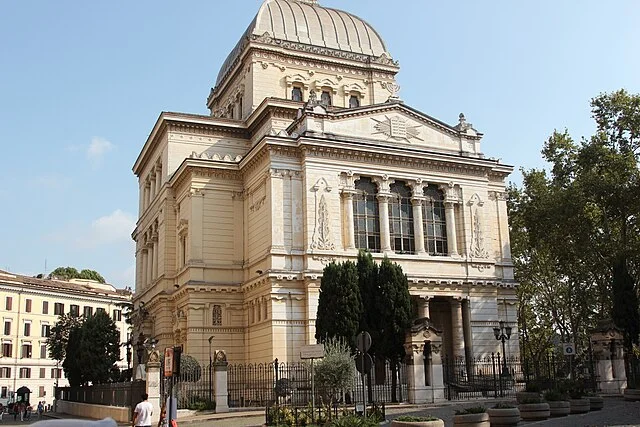
The Great Synagogue can be visited through the Jewish Museum. If you want to attend a service here, the Jewish Community of Rome asks visitors who want to attend Shabbat prayers to register by 2:00 pm on Friday for security reasons.
(We can help you register if you’re booking with Shin Tours. I usually recommend Friday evening services, when timing allows.)
The Jewish Community of Rome explains they have their own minhag, or local customs and traditions. The Roman minhag includes a distinct order of prayers, cantillation and liturgical songs.
When visiting the Great Synagogue, you’re stepping into a living tradition. Rome’s Jews have carried that tradition forward with extraordinary care for centuries.
I’ve seen it happen: a guest may walk in, expecting to admire the architecture. Then the service begins and the voices rise. Suddenly, the moment becomes much bigger than the building itself.
Then there’s the food.
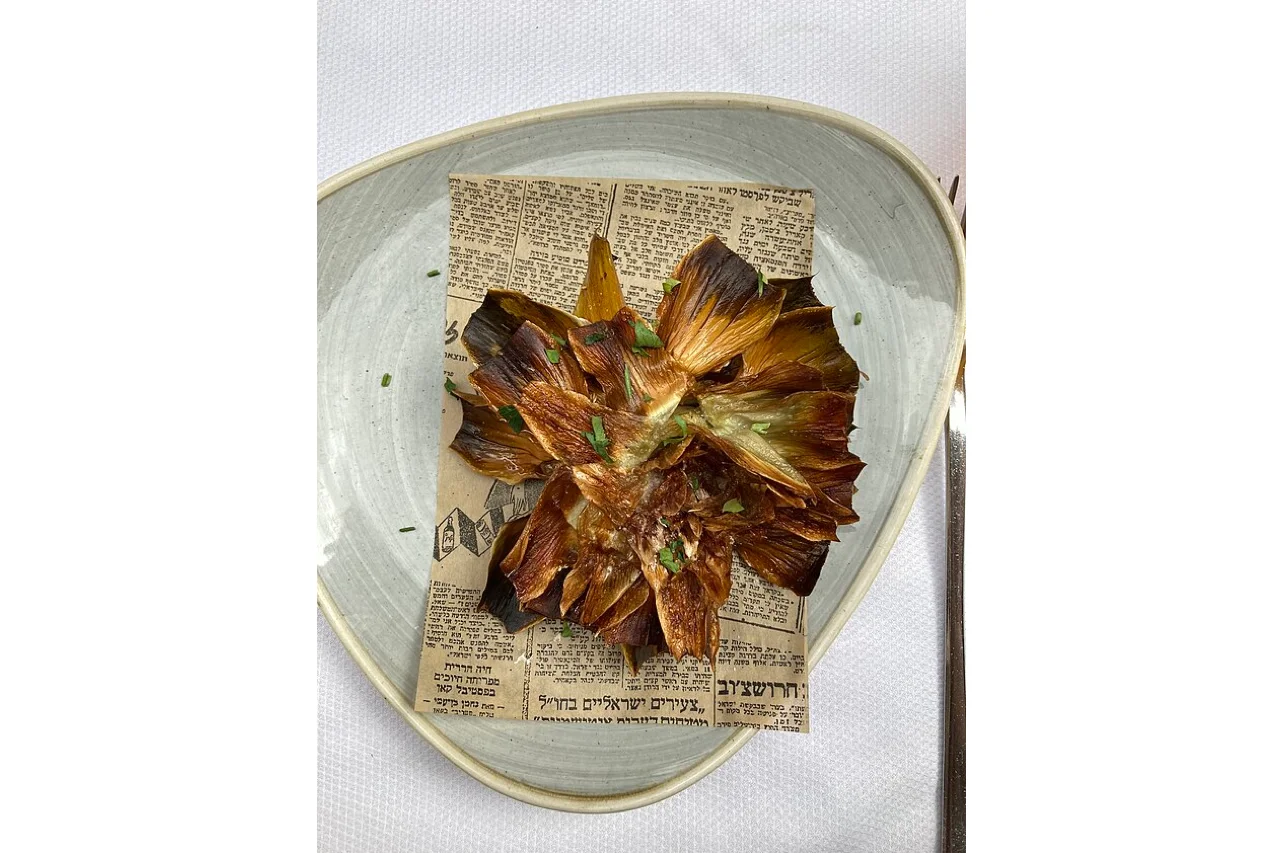
Here we can move from history into flavor without forcing it. Exploring the Great Synagogue can turn into carciofi alla giudia, Jewish-Roman pastries, or a family meal that becomes one of the warmest memories of the whole trip.
The highlights of this Jewish site are:
- One of the oldest continuous Jewish communities outside Israel
- The historic ghetto established in 1555
- The Great Synagogue of Rome and the Jewish Museum
- Portico d’Ottavia and the surrounding Jewish quarter
- A chance to attend Friday evening services with advance registration
- A rare mix of heritage, living tradition, and food
2. The Colosseum
For most, the Colosseum is an icon of Rome. I also see it as one. But I also ask my travelers to see something else.
The Flavian building program (69 - 96 AD) was a massive urban renewal effort to restore Rome, gain legitimacy and erase the legacy of Nero. The Colosseum was completed in 80 AD, while construction began under the rule of Vespian (70 - 72 AD). It formed a central part of the Flavian building program and was financed by the spoils of the First Jewish-Roman War, which ended with the siege of Jerusalem in 70 AD.
This connection is discussed in scholarship, for example, by Feldman, who writes about the amphitheater’s funding and analyses inscriptional evidence tied to war booty.
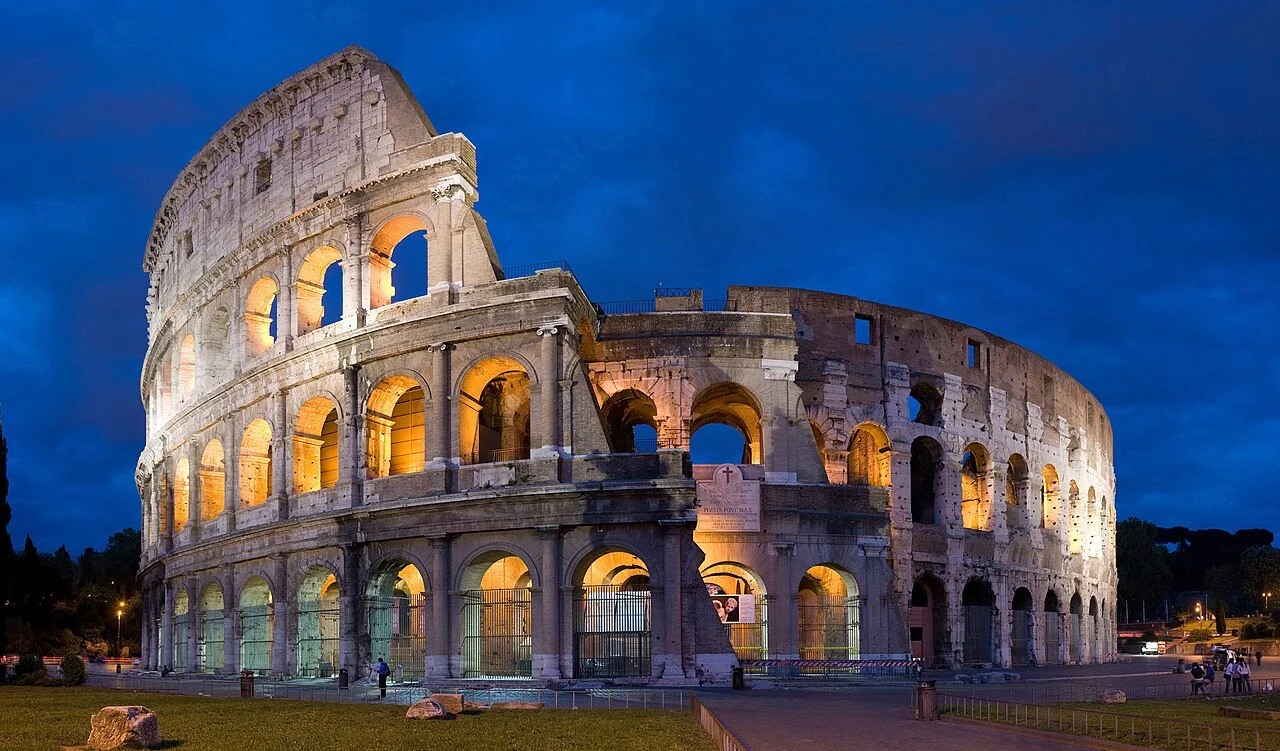
I never rush this stop.
Without the story of the Jews, you just see the might of the Roman Empire. With the Jewish story included, you also see what that empire cost. This changes everything.
The highlights of this Jewish site are:
- A Roman monument linked by many historians to spoils from Judea
- A powerful place to discuss the destruction of the Second Temple
- A strong example of how famous Roman sites look different through Jewish history
- Best experienced with story and context, not just as a photo stop
3. The Arch of Titus
For many Jewish travelers, this is one of the most emotional places to visit in Rome.
The Arch of Titus was built soon after Titus’ death to commemorate victory in the Jewish War. Its most famous relief shows sacred vessels from the Second Temple being carried away from Jerusalem, including the seven-branched menorah and the Table of the Showbread.
Yeshiva University’s Arch of Titus Project also notes that the menorah image on the arch later became a symbol of the modern State of Israel.
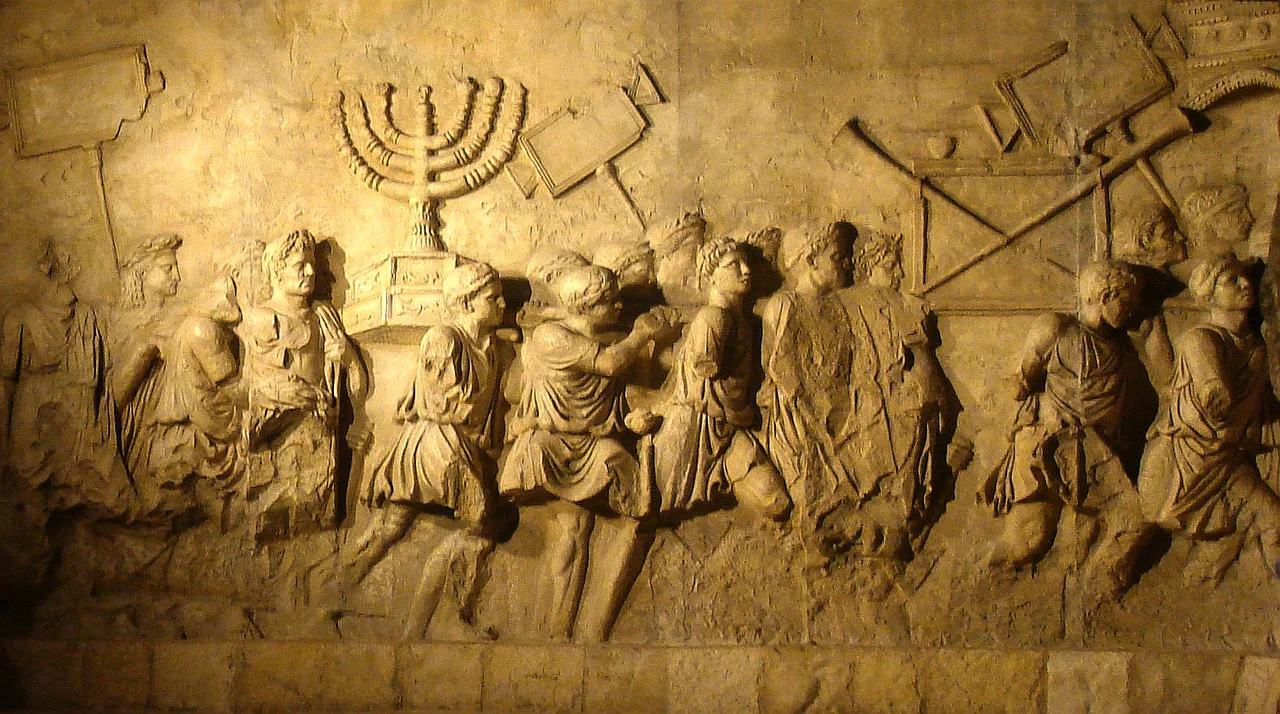
When I stand here with travelers, we talk about exile – but we also speak about return.
What Rome once proudly displayed as a symbol of defeat later became a symbol of Jewish sovereignty.
It's an incredible place to talk about Jewish identity and meditate on our story.
The highlights of this Jewish site are:
- Relief of Roman soldiers carrying the Temple menorah
- One of the clearest visual links to the destruction of Jerusalem
- A place where Jewish loss and Jewish renewal meet
- Deep symbolic connection to the modern State of Israel
4. A Kosher or Kosher-Style Pizza Workshop in Rome
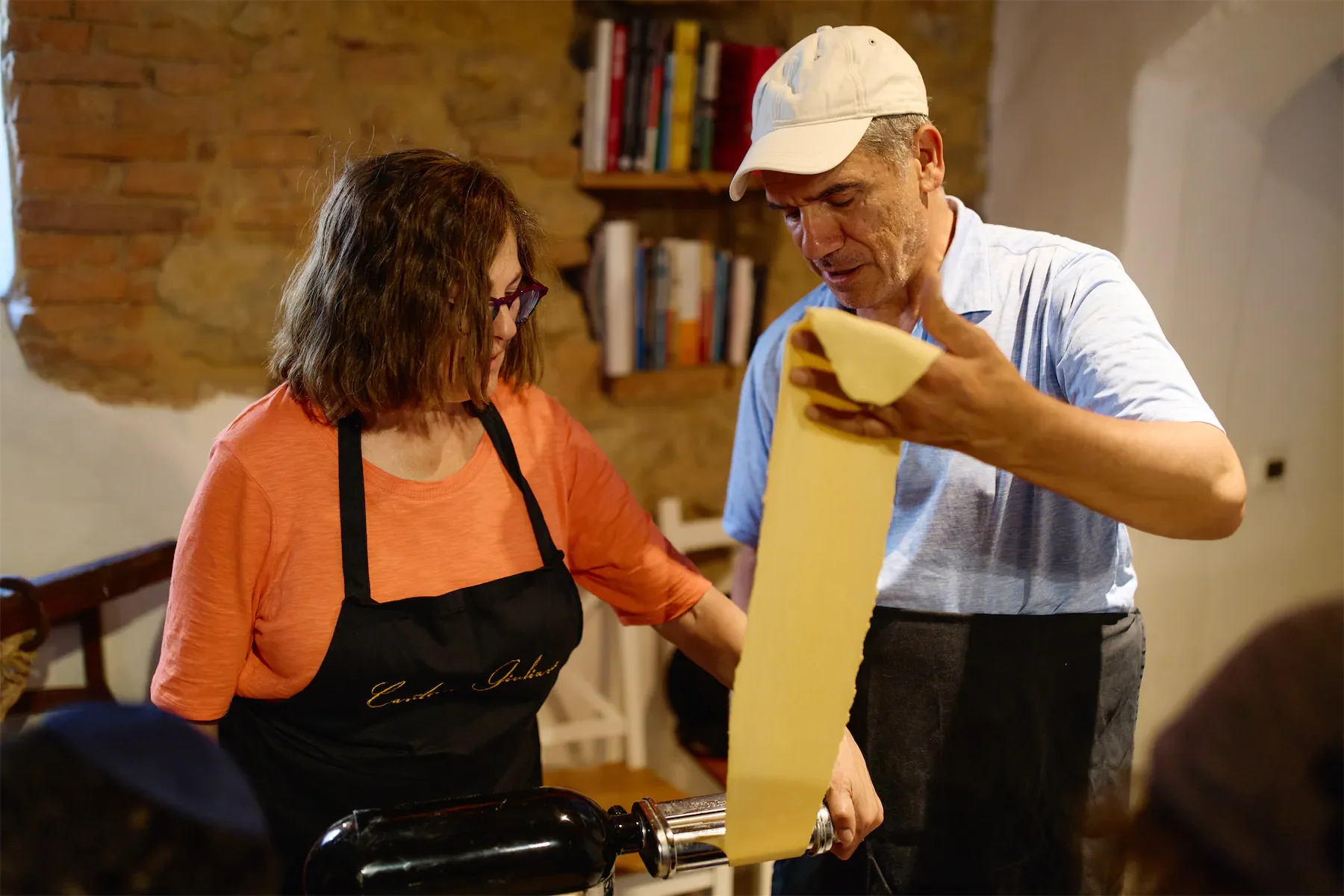
This may sound lighter than the sites above, it is. That’s why I like it.
Jewish heritage travel cannot be only about grief, exile, and ruins. It has to also be about life. One of the best ways to bring Jewish Rome to life is through a hands-on food experience.
When possible, I like weaving in a pizza workshop that fits the group’s needs, whether that means kosher planning or a Jewish-Roman culinary experience with the right story around it.
I’ve seen this work beautifully with families.
A serious historical site can move people. But so can flour on your hands, kids laughing, and a table full of warm pizza after a meaningful day.
Those moments matter.
In fact, they’re often what people remember most.
The highlights of this Jewish site are:
- A joyful, hands-on way to experience Jewish Rome
- Great for families and multi-generational groups
- Balances heavy history with living culture
- Can be shaped around kosher needs when possible
5. Venice Ghetto Novo
Venice matters enormously in Jewish history.
The Venetian Ghetto is widely recognized as the first ghetto in Europe. The official Venice Ghetto site traces its formal beginning to a decree by the Senate on 29 March 1516. This decree forced people into a separate enclosure for Jews.
When I bring travelers here, I slow the pace down.
This is not a place to rush through. Visitors are often stunned by the tall buildings, the quiet square and the sense of enclosure. The echoes of Jewish life still sit in the air.
All of this makes it one of the most atmospheric Jewish places in Europe.
It’s also the place where the word “ghetto” was first used to describe a separate enclosure for Jews.
The highlights of this Jewish site are:
- Europe’s first ghetto, established in 1516
- Remarkable atmosphere and setting
- Home to historic synagogues and Jewish institutions
- Still central to Jewish Venice today
6. The Venetian Synagogues
Inside the Venice ghetto, the synagogues tell a deeper story.
The Venice Ghetto contains multiple historic synagogues, each with its own identity and history. That layered religious life is one of the reasons this neighborhood feels so rich, once you step beyond the square itself.
What moves me here is the contrast.
From the outside, these buildings do not always call attention to themselves. Then you step inside, and the interiors open up. Inside these sacred structures you’ll see beauty, craftsmanship and experience the dignity with which these people held themselves, in spite of their hardships.
That matters.
Even under limits and pressure, the community created places of grace and meaning.
The highlights of this Jewish site are:
- Multiple historic synagogues within the ghetto
- Interiors that reveal beauty and resilience
- A sense of hidden Jewish life above street level
- Ideal for travelers who love both architecture and story
7. Florence Synagogue
Florence has a different Jewish mood.
The synagogue here is one of the most beautiful in Europe. Construction on the Synagogue in Florence began in 1870 and it opened in 1882. It is built in a Moresque (Moorish) style that blends several architectural influences.
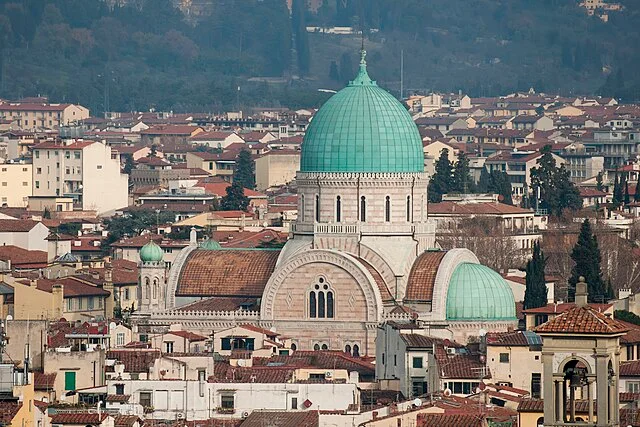
Visually, it’s stunning.
I love pairing this stop with an experience of contemporary Jewish life in Florence. The Florence Synagogue, like any religious building, should not feel like an object. It should feel like a door.
Florence makes that possible.
The Chabad of Tuscany website lists regular Shabbat programming and meal options in Florence, which can make the city especially meaningful for travelers who want both heritage and community.
I have seen guests arrive curious and leave deeply touched. That doesn’t happen by accident. It’s the result of careful planning, as well as the power of the site.
The highlights of this Jewish site are:
- One of Europe’s great Moresque synagogues
- Built in 1882, during a period of Jewish emancipation
- Strong visual beauty and strong community connection
- A meaningful stop for Shabbat-focused travelers
8. Pitigliano
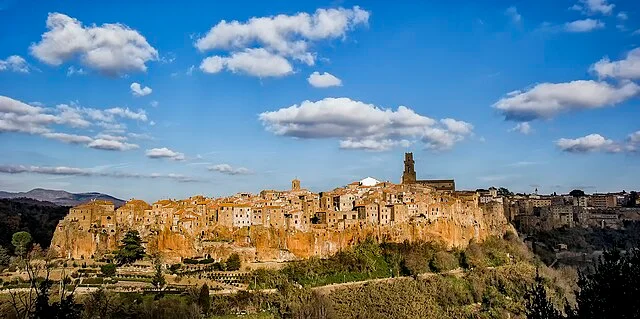
Pitigliano surprises people.
Before I even begin telling its story, the setting already does part of the work. The town rises dramatically from volcanic tufa cliffs. Then you learn about its Jewish past, and the place becomes even more compelling.
Pitigliano is known as “Little Jerusalem.” Visit Tuscany notes that visitors can explore the synagogue, the mikveh, the matzah bakery and the underground spaces tied to kosher food production, as well as the wider museum complex. The synagogue dates back to 1598.
I want to debunk another myth: many people assume the only meaningful Jewish sites in Italy are grand, famous, and urban. This is not true.
Pitigliano is powerful precisely because it feels tucked away.
It feels discovered and helps you imagine how Jewish life once took root in a small place and created everything a community needed.
The highlights of this Jewish site are:
- Known as “Little Jerusalem”
- Historic synagogue built in 1598
- Reconstructed mikveh, matzah oven, and communal spaces
- One of Italy’s most atmospheric smaller Jewish heritage towns
9. Kosher Wine and Tuscan Culinary Experiences
Let me say this clearly.
Many people assume that if you want to stay kosher, Tuscany will feel off limits. Either that or it will feel bland or compromised.
In my experience, that’s a myth. A Jewish traveler does not have to choose between their religious practices and a great travel experience.
One great example is Cantina Giuliano, a kosher culinary destination in Tuscany with kosher wine and a kosher gourmet restaurant. Its website says the winery is one of the few fully kosher wineries in Europe. They offer wine tours, tastings, and hospitality experiences.
I love building a Tuscan experience for Shin Tours travelers that includes a kosher winery visit, a Tuscan cooking class, and a chef-led meal that still feels rooted in place.
Now, there’s something I need to mention.
Availabilities change and supervision and group needs matter. You can book this kind of thing in by yourself – but it often helps to have a specialist tour operator like Shin Tours handle the work.
The Chabad of Tuscany’s current event calendar and meal pages show that Florence can also provide a useful Shabbat anchor for observant travelers.
This is important because the whole region opens up when you can enjoy Tuscany without feeling like you’re missing out.
The highlights of this Jewish site are:
- Kosher travel in Tuscany is possible with good planning
- Cantina Giuliano offers a rare mix of kosher wine, dining, and culinary experiences
- A kosher Tuscan cooking class can add warmth and local flavor to the trip
- Best handled case by case, not with generic promises
- Stronger when paired with Florence-based Jewish support
10. Ferrara
Ferrara is one of the most underrated Jewish stops in Italy. Its importance is not only local.
Ferrara is tied to one of the great publishing events of the sixteenth century: the Ferrara Bible of 1553. The Ferrara Bible is a translation of the Hebrew Bible in Spanish.
It’s linked to Doña Gracia Nasi, who you can read more about in our article on the best Jewish sites in Portugal.

The Jewish Women’s Archive notes Ferrara’s importance to Doña Gracia Nasi. Ferrara’s official tourism body notes that the city’s ghetto history started later, in 1627.
This is the real reason Ferrara matters: it was not Doña Gracia Nasi’s long-term home in the same way Istanbul later became. But it was a turning point, a place where open Jewish leadership, Sephardi culture, and literary history came together.
One detail in particular here is worth mentioning: Ferrara’s ghetto belongs to a later chapter. This nuance is important, because it helps tell the story accurately.
The highlights of this Jewish site are:
- Major center of Sephardi and Jewish print culture
- Home of the Ferrara Bible of 1553
- Strong connection to Doña Gracia Nasi
- The ghetto story comes later, in 1627
- A smart stop for travelers who want more than the obvious
11. Palermo Jewish Quarter
Palermo carries a different kind of emotion. The old Jewish quarter still preserves memory in its streets and lanes.
What makes Palermo especially interesting now is not only the past, but the return.
In December 2024, Jewish and civic institutions announced an agreement to support the creation of a synagogue in Palermo, marking a significant step in reconnecting the city with its Jewish roots.
Palermo is not polished tourism – it’s human. It’s a place where loss and recovery are both still visible.
For the right traveler, that can be incredibly moving.
The highlights of this Jewish site are:
- A city where the Jewish past is still deeply felt
- A meaningful place to talk about expulsion and return
- Modern synagogue revival efforts add present-day relevance
- Especially powerful for travelers who want depth, not just polish
12. A Roman Jewish Culinary Tasting Tour
I like ending this list with taste.
Jewish Italy is not only about what was destroyed. It’s also about what has survived.
Recipes survived, neighborhoods survived and memory survived through food, as much as through stone.
In Rome especially, I often build culinary moments into the itinerary because they help travelers experience Jewish history in a softer, more intimate way. One of our bespoke tasting tours can sit beautifully beside the ghetto, the synagogue and the Arch of Titus.
For many travelers, this becomes the bridge between history and joy. I’ve found that bridges like this matter.
The highlights of this Jewish site are:
- A living way to experience Jewish Rome
- Connects food, memory, and neighborhood history
- Works beautifully for families and private groups
- Balances solemn sites with pleasure and warmth
How can I reserve and access kosher meals or Shabbat services in Italy?
This is one of the biggest practical questions I get. It’s a good question.
Many travelers worry if they want kosher meals, they’ll miss out on the pleasures of Italy. Others worry about something even more basic:
- Where will I eat on Shabbat?
- Where will I pray?
- How do I know I can trust what I am being told?
Rome and Florence both offer real support, but it’s important to plan early.
The Jewish Community of Rome says visitors who want to join Shabbat prayers must register in advance for security reasons. The Chabad of Tuscany currently lists Shabbat services and meal options in Florence as well.
I take that responsibility seriously.
I don’t like guessing when it comes to kashrut, Shabbat logistics, or community access. If a traveler tells me those details matter, I build around them from the start.
I’d rather be careful than casual.
I’d rather be sure when it comes to things like restaurants, Chabad proximity and every other Jewish touchpoint in the trip.
For travelers who do not keep kosher, I still guide them toward the right culinary experiences. The point is not only rules, the point is fit.
Click here to have us produce a free itinerary for your trip to Italy.
If you have specific questions and want a free consultation with me, you can also fill out the form on our Contact page.
Final Thoughts
Italy has no shortage of famous places.
But if you want your trip to have a Jewish perspective, you need more than the usual highlights. This is something my company Shin Tours specializes in through our bespoke service offering Jewish tours to Italy.
We’ll compare and plan experiences in Rome, Venice, Florence, Pitigliano, Ferrara, Palermo, and Tuscany to give you something different. Together, we’ll create a journey that feels layered, emotional, and deeply alive.
And yes, if kosher meals, Shabbat services, or access to the local Jewish community matters to you, those can be built in too.
If that is the kind of Italy you want, let’s talk.
Click here to start booking your experience with Shin Tours today.
About Asaf Peled
Asaf Peled is the founder of Shin Tours, a Jewish travel company he founded in 2018 to create deeply moving, tailor-made journeys for Jewish travelers. He specializes in heritage-rich itineraries that blend iconic sites, personal storytelling, culinary experiences, and meaningful Jewish connection across destinations including Italy, Morocco, Egypt, Israel, and beyond.