Can Anyone Celebrate a Bar or Bat Mitzvah at the Kotel?
Yes. Jewish families from anywhere, however religious or observant, can celebrate a Bar or Bat Mitzvah at the Kotel, the Western Wall in Jerusalem. The Wall has two prayer sections: the main plaza and Azarat Israel. The section you choose affects who reads from the Torah, whether men and women can celebrate side by side, and the booking process.
Most of the families I plan with choose to celebrate at Azarat Israel. Each family has its own reserved marble-top tables for the Torah scroll, with shade umbrellas overhead (more on this below).
Can Men and Women Celebrate Together at the Wall?
Yes, at Azarat Israel, where men and women pray side by side and the whole family takes part in the ceremony. Boys and girls prepare and read from the Torah the same way, just as they do at home. At the main plaza, however, men and women pray in separate sections.
The main plaza is the area most people imagine when they think of the Western Wall. They picture celebrating there, then touching the stones and leaving a note.
But often they don’t know a mechitza (screen) separates the men’s section from the women’s section. It can also get very busy.
That’s why almost all of our clients at Shin Tours choose to celebrate the Bar or Bat Mitzvah at Azarat Israel, with the Western Wall in close view for an intimate celebration with all the family. Afterward, we move swiftly to the main plaza to touch the stones and leave notes.
It’s worth choosing a section before you choose a date, because each one has a different booking process.
Why Is the Western Wall a Good Place to Celebrate?
Jews have prayed at the Western Wall for centuries because it’s the closest point to where the ancient Temple’s Holy of Holies stood. The Temple was the heart of the Jewish people until its destruction in 70 CE, nearly 2,000 years ago. Celebrating here shows your child where they fit, as the next link in a chain of generations.
Most of the families I plan with are looking to connect to Judaism through tradition, culture, and their identity as Jews. For them, the Wall stands for belonging to the Jewish people, wherever they live.
For this reason, the Wall is one of the most important Jewish sites to visit in Israel. Of the families we plan with at Shin Tours, roughly half choose to celebrate their Bar or Bat Mitzvah at the Kotel, about 30% at Masada, and 20% at other sites.
If Masada appeals, our guide to celebrating a Bar or Bat Mitzvah at Masada explains more.
What Is Azarat Israel, and Is It the Same as Robinson’s Arch?
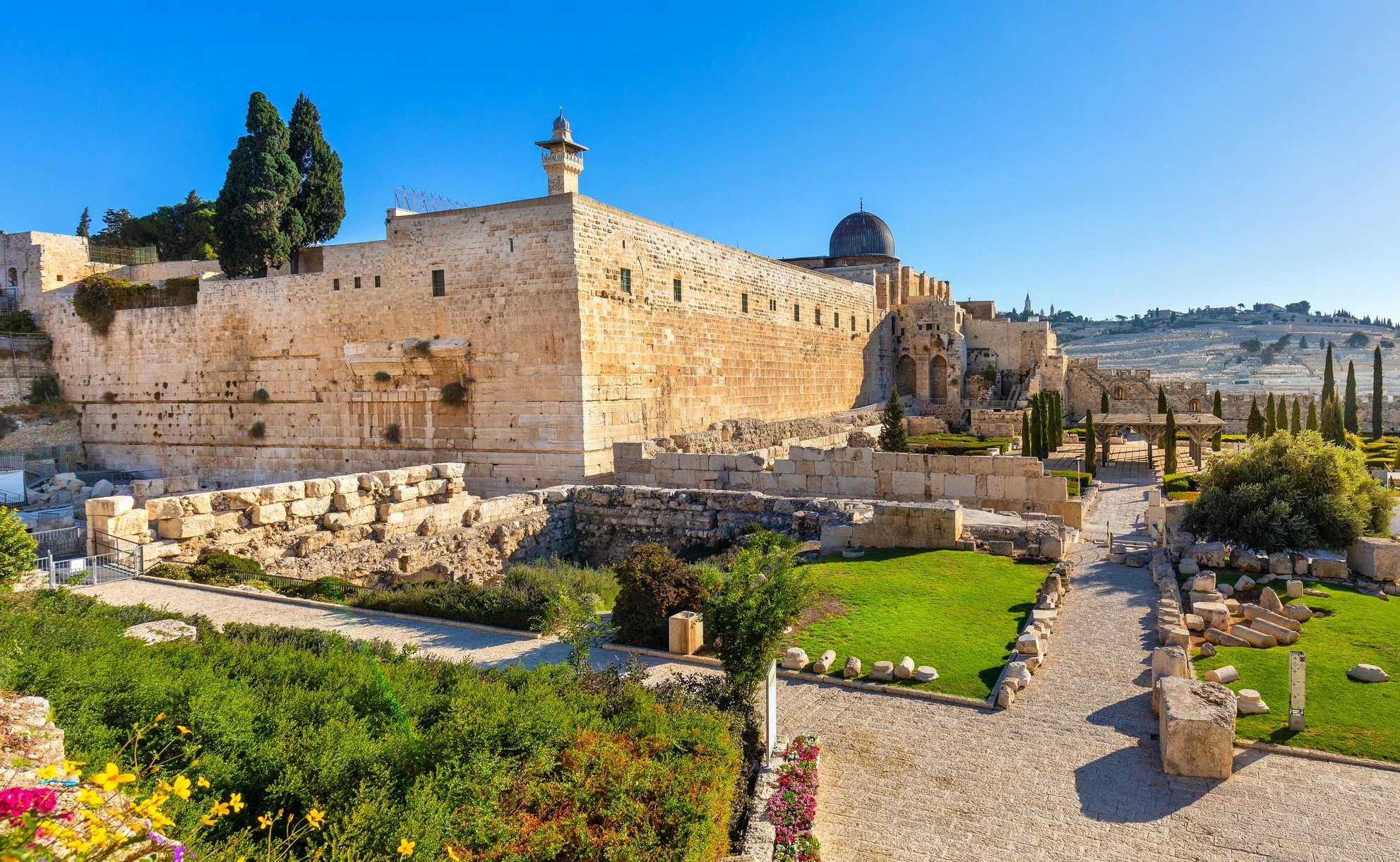
Azarat Israel (also called Azarat Yisrael, Ezrat Israel, or Ezrat Yisrael) is the southern prayer section of the Western Wall, where families can pray together and celebrate a Bar or Bat Mitzvah ceremony. It sits beside Robinson’s Arch, the remains of an ancient arch in the Davidson Center archaeological park. Many people call the whole area Robinson’s Arch, but the dedicated prayer section is called Azarat Israel or the “egalitarian section” of the Kotel.
The Masorti Movement looks after Azarat Israel and keeps it an inclusive, pluralist space where Jews of every denomination can pray in their own way. The only thing not allowed is musical instruments, so nobody else’s prayers or celebrations are interrupted. Musicians can escort your family to the entrance, and from there you walk in with your rabbi or guide.
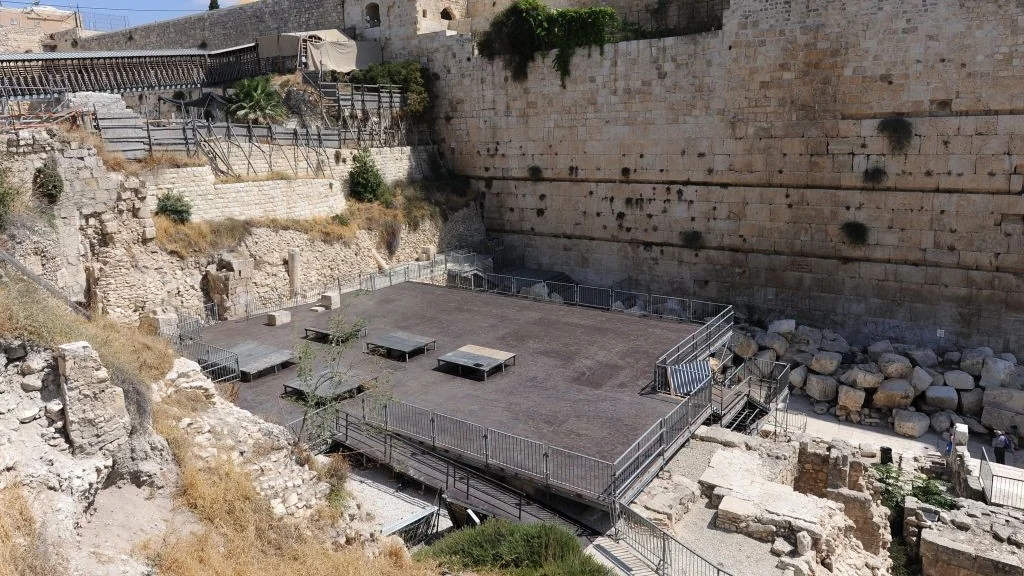
It’s set up for ceremonies, with a large wooden area, tables for the Torah scroll, and big sun umbrellas for shade. Entry to the prayer section is free. To visit the rest of the archaeological park, use the Davidson Center’s main entrance near the Dung Gate.
How Do Azarat Israel and the Main Plaza Compare?
| Azarat Israel | Main plaza | |
| Prayer | Inclusive and pluralist, can pray together | Like an orthodox synagogue, men and women in separate sections |
| Reading from the Torah | Boys and girls, with the same preparation and the same reading | Boys, in the men’s section; girls say a shorter, different prayer and place a prayer note in the Wall |
| Setting | Organized, with a reserved marble table and shade umbrellas; other ceremonies may run alongside yours | Busy, often with many ceremonies at once |
| The Wall section | A close view of the Western Wall’s southern end and the Davidson Center archaeological park | The main plaza where Jews traditionally touch the Wall and leave notes |
| Looked after by | The Masorti Movement, which supports pluralist Judaism | The Western Wall Heritage Foundation, an Orthodox organization |
| Booking | Entry is free; book ahead to reserve a table and Torah scroll, usually through your rabbi or tour operator | Entry is free; registering is recommended to reserve a spot, usually through your rabbi or tour operator |
| Torah scroll | Arranged in advance by the Masorti Movement, your tour operator, or a Conservative or Reform Israeli rabbi | Provided by the Foundation when you register, or by your tour operator |
| Best for | Families of any background who want to celebrate together | Families who prefer an Orthodox-style service or simply wish to celebrate at the main plaza |
Which Days Can You Hold a Bar or Bat Mitzvah at the Western Wall?
Ceremonies at the Western Wall take place on Monday and Thursday mornings, the weekdays when the Torah is traditionally read according to Halacha. Friday mornings are also possible at both Azarat Israel and the main plaza, though they’re often much busier and generally not recommended.
With two main mornings a week, slots fill quickly in the busiest weeks – especially around spring and winter breaks.
Why Should Families Avoid Friday Mornings?
The Wall is often very busy on Friday mornings. It’s also when Muslim worshippers go up to pray on the Temple Mount, so the Old City and the roads around it fill up. The ceremony itself can go ahead as normal but you may experience delays with transport and logistics, which can affect the rest of your day’s plans.
How Do You Book a Bar or Bat Mitzvah at the Kotel?
Entry to both sections is free, and booking ahead reserves your spot. At Azarat Israel, slots are booked through a rabbi at the Masorti Movement, usually by email. At the main plaza, registering with the Western Wall Heritage Foundation is recommended, online or by phone, six months to a week ahead.
The Masorti Movement also has an online request form, but confirming a slot usually takes someone who knows the process. Your rabbi can be from any movement and still book through them. A booking at Azarat Israel usually includes a Torah scroll and a table, and you bring your own rabbi or leader to run the ceremony.
At the main plaza, the Foundation’s basic ceremony and planning help are free. It also offers extra services, such as a buffet or a rabbi to help your child prepare. Musicians, drummers, and a photo and video crew cost more and can be arranged through a tour operator.
You can book a slot yourself, but it’s hard to know it’s confirmed without being in touch with the right people. If you’re only in Israel for a short trip, I wouldn’t leave the reservation to chance. That’s what a tour operator is for: you avoid the stress of uncertainty and can relax and enjoy your trip instead of working through it.
How Far Ahead Should You Book a Slot?
For spring and winter breaks, book about six months ahead. Those are the busiest weeks, and with two main mornings a week, slots go quickly. About two months ahead is usually enough for dates outside the high seasons in Jerusalem.
The Masorti Movement accepts requests up to about 18 months ahead, so there’s no need to wait once you’ve chosen a date. Booking early also gives your child time to meet the rabbi, who works with them in advance on their Torah portion.
Can’t I Just Book the Free Western Wall Heritage Foundation Ceremony?
Yes, you can book the Western Wall Heritage Foundation’s free ceremony, which covers the essentials of a Bar Mitzvah at the main plaza. A guide escorts the family, the Torah scroll is taken from the Ark and passed to the child, and the blessings, tefillin, and Shema follow. Musicians, photographers, and transport aren’t included, and the service covers the main plaza only.
If you’re celebrating at the main plaza and want a simple morning, it can work. The one thing to consider is that women and girls are separated from the men during the ceremony.
For a ceremony at Azarat Israel, or one that’s part of a longer trip, you’ll need your own rabbi and arrangements.
What’s it Like Booking a Bar or Bat Mitzvah With Shin Tours?
When families book our Bar & Bat Mitzvah Tour of Israel, we start by asking what kind of ceremony you and your child want. It might be the classic ceremony with a rabbi and a Torah scroll, perhaps with musicians and a photographer to make it even more memorable. If you’ve already held a ceremony at home, it could be something short and symbolic, without a big production.
Together, we work out the best format and arrange every detail, so you don’t have to worry about a thing. We book everything for you in advance.
We also act as your private event planner for the rest of the day. That can mean transport for relatives coming from elsewhere in Israel or abroad, a celebratory lunch, activities for the whole family, and a festive dinner at a restaurant or outdoors.
Foundation Free Ceremony vs a Full-Service Trip
| Foundation free ceremony | Private tour operator | |
| Charge | Free; extras cost more | Part of the trip price |
| Sections | Main plaza only | Azarat Israel or the main plaza, plus sites such as Masada |
| Who books | You or your rabbi, with the Foundation | Your tour operator, such as Shin Tours, or your local Israeli rabbi |
| Who leads | A Foundation guide escorts the family | Your own rabbi, one your tour operator recommends, or your tour guide |
| What’s included | Guide, Torah scroll from the Ark, blessings | A rabbi or guide to lead the ceremony, then your choice of musicians, a photographer, transport, a celebration afterward, and a multi-day tour, or all of them |
| Best for | A simple ceremony at the main plaza | A ceremony built into a family trip |
Case Study: Jewish-American Family Celebrates Bar Mitzvah at the Kotel With Special Gathering at the Tower of David
A few years ago, our team filmed a family’s account of their son’s Bar Mitzvah at the Kotel in Jerusalem. The ceremony took place at the main plaza, after which we arranged a special gathering for the family at the Tower of David.
Months ahead, we asked the child to prepare something of his own: a presentation on the Six-Day War when Jerusalem’s Old City was brought under Israeli control. We often work with a child months in advance to prepare this kind of event. It helps the child take a more active role in the Bar or Bat Mitzvah celebration and understand their own Jewish heritage on a personal level.
During the gathering, the son, Josh, told the story of company commander Yoram Zamosh who famously planted the Israeli flag above the Kotel. We then surprised everyone by inviting Yoram onto the stage to meet the family. Josh’s father, David, said he couldn’t find “the words to express the emotions” felt during the encounter.
These kinds of experiences are what we specialize in at Shin Tours. If you’re looking to book a Bar or Bat Mitzvah that builds a deep connection to Jewish heritage for your child, get in touch today.
Who Provides the Rabbi, Torah Scroll, Tefillin, and Minyan?
You can bring your own rabbi, a local Israeli rabbi if you know one, or one your tour operator introduces. At Azarat Israel, the Masorti Movement provides the Torah scroll, arranged in advance; at the main plaza, it’s taken from the Ark. Families usually bring their own tefillin, and a minyan is rarely something you need to organize.
People at the main plaza offer tefillin to anyone who wants to pray, but for your child’s ceremony you’ll want to bring their own. A personalized tallit and tefillin are a traditional Bar or Bat Mitzvah gift from parents or grandparents. Wearing their own for the first time marks the child’s coming of age, with a sense of belonging and new responsibilities, such as keeping the commandments.
In Orthodox practice, a minyan is ten adult men, while Reform and Conservative communities count women too. Many Reform and Conservative families don’t hold to it for a Bar or Bat Mitzvah. If yours does, the main plaza always has enough people praying to make one.
A few terms worth knowing before the day:
- Minyan: the quorum of ten needed for communal prayer and Torah reading.
- Tefillin: small boxes holding Torah verses, bound on the arm and head for weekday morning prayer.
- Tallit: the prayer shawl worn during the service.
- Aliyah: the honor of being called up to recite the blessings over the Torah.
How Should We Choose a Rabbi for the Bar Mitzvah?
Choose someone your child feels comfortable with, because they’ll work together closely on the Torah portion before the day. If you don’t have one, a tour operator that runs many Bar and Bat Mitzvahs can recommend a rabbi who works well with teenagers. A rabbi helps, but isn’t strictly required: an experienced tour guide can also lead the ceremony.
Before recommending anyone, I talk with each family at length about who their child will connect with. You can meet the rabbi in advance, and if they still aren’t a good fit, ask your tour operator to replace them.
It makes a real difference to your child’s whole experience.
What Should the Family Bring on the Day?
Whichever section you choose, bring your child’s tefillin, a hat or yarmulke (kippah), and sunscreen. Dress up for the occasion, and bring something meaningful you’ve written to read during the ceremony. Paper and pens are useful too, so everyone can write prayer notes to leave at the Kotel afterward.
At Azarat Israel, your booking usually includes a Torah scroll and a marble table, and prayer books are free on request. There are sun umbrellas for shade, so the main thing to bring is your own rabbi or leader.
At the main plaza, the Torah scroll comes from the Ark, and the plaza is open-air with no shade. Pack an umbrella if rain is forecast.
What Happens on the Morning of the Ceremony?
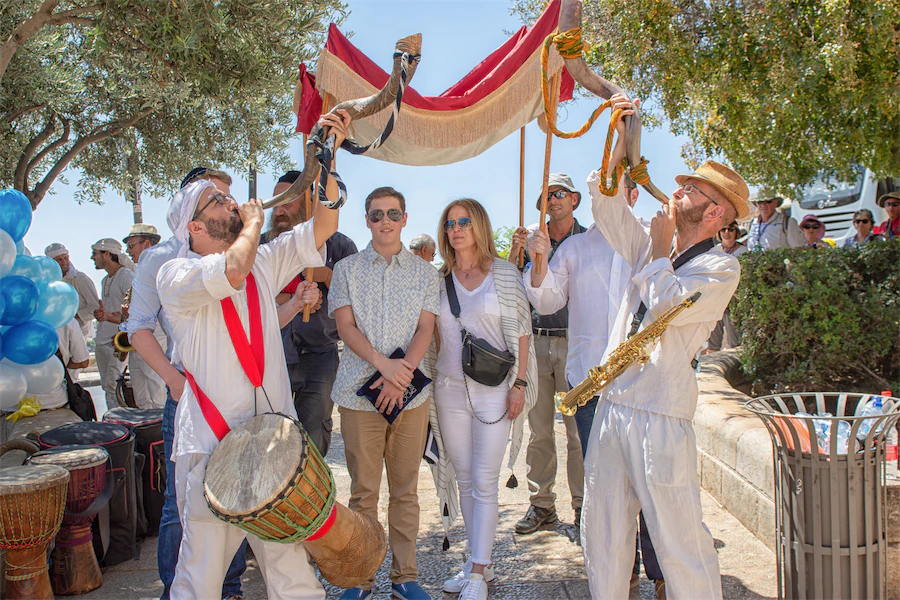
Many families choose to start with a procession: musicians lead the family toward the Wall, with the child and their parents under a canopy. At the main plaza, a Foundation guide escorts the family, and the boy is called up to the Torah in the men’s section. At Azarat Israel, the whole family stays together at your table, the child reads from the Torah, and family speeches follow.
The procession is entirely up to you. If your family would rather keep things low-key, you can walk straight in with your rabbi or guide.
Here’s how a morning at Azarat Israel usually runs when we plan it:
- If you choose a procession, musicians play a darbuka (an Arab drum) and trumpets, and the shofar is sounded. The family dances toward the Wall, with the child and their parents under a canopy.
- The musicians stop at the entrance to Azarat Israel, and you walk in with your rabbi or guide.
- The rabbi takes out the Torah scroll at your table.
- The child is called up and reads from the Torah.
- Family members give their speeches.
- Afterward, the family moves swiftly to the main plaza to touch the stones and leave notes.
How Long Does a Kotel Bar or Bat Mitzvah Take?
It depends on the rabbi. The shortest ceremonies I’ve seen took 20 to 25 minutes, and some families linger for an hour and a half. The speeches matter too, and so does whether it’s hot or raining.
At Azarat Israel, morning slots last 90 minutes.
Frequently Asked Questions
What Should Guests Wear at the Western Wall?
Guests should dress modestly. For men, that means covering the shoulders and wearing a head covering; for women, covering the knees, shoulders, and chest. Observant married women often cover their hair too, partially or completely.
At Azarat Israel, Reform women who wear a yarmulke at home can wear one there as well. Women who wear a yarmulke may want to add a shawl, headscarf, or hat when approaching the women’s section at the main plaza.
Can Non-Jewish Relatives Take Part?
Yes. Anyone can approach the Western Wall.
Is the Ceremony Private?
No. The Western Wall is a public place, and at both sections other families may be celebrating right beside you. Booking reserves your table or spot, but the space around you stays shared.
For a private event, you can rent a venue overlooking the Western Wall, with a magnificent view of the Wall. It suits larger families, or anyone who wants a quiet space with seating, air-conditioning, and shelter from sun and rain.
You can play music or bring instruments, and there’s no tight timeframe. It can cost more to arrange, but from the venue you step straight out onto the main plaza and walk to the Wall.
Should the Ceremony Be at the Start or End of the Trip?
I usually say the start. Picture a child who knows they’ll be reading aloud in front of everyone, with a week of touring before it. Get it done early and they can relax and take in the rest of the trip.
That said, every family knows what’s best for them and their child, so plan the trip in the way that feels right for you. I’m here to listen first, and advise after.
Is Masada a Good Alternative?
Yes, and it’s the most popular one. Masada gives you a private space with views over the Dead Sea, and many families see it as a symbol of Jewish resilience. It usually costs more, because a Torah scroll has to be brought to the site. Our guide to celebrating a Bar or Bat Mitzvah at Masada covers the details.
What Else Should We Do During a Bar or Bat Mitzvah Tour of Israel?
Our 13-day Bar & Bat Mitzvah Tour of Israel includes the City of David, Masada and the Dead Sea, an archaeological dig, adventure activities, a kibbutz visit, a cooking workshop, and more. Children tend to enjoy hands-on experiences like these much more than sightseeing. For more inspiration, see our ideas for a Bar or Bat Mitzvah in Israel.
How Much Does a Bar or Bat Mitzvah Trip to Israel Cost?
There’s no single price. It depends on your group size, where you hold the ceremony, and how you celebrate: the rabbi, photographer, transport, and the meal afterward all add up. As a rough guide, the family trips I’ve seen have ranged from about $30,000 to over $100,000.
Community trips organized through a synagogue usually have a fixed price, typically around $6,500 per person at a good hotel. Our guide to how much a Bar Mitzvah trip to Israel costs breaks down what goes into the price.
Plan Your Family’s Ceremony With Us
I’m Shakked (Shakk) Beery, Shin Tours’ CMO and Head of Israel Department, and I plan Bar and Bat Mitzvah trips in Israel for Shin Tours. I can help you plan your entire trip including:
- Booking the ceremony at either the main plaza or Azarat Israel
- A rabbi to lead the day
- Procession musicians
- A photographer
- A certificate to keep and cherish
- A special gathering where the child gives a presentation
- Planning the full 12- to 14-day trip around the ceremony
- Making sure every part of the trip fits what your family wants
Tell us the date you’re thinking about, and I’ll walk you through the options. Get in touch for a free consultation.