About the Author
I'm Shakked Beery – registered tour guide, CMO of Shin Tours, and author of Secret Israel, the book that uncovers the Israel most visitors never find. My family has called this land home for ten generations, long before modern Zionism. This list comes from years of leading Jewish families through these exact sites – watching what moves people, what changes them, and what they wish they'd known before they arrived.
Click here to see our services for planning and booking Jewish tours in Israel. If you'd like a trip built around your group, request a free custom itinerary today.
1. The Western Wall
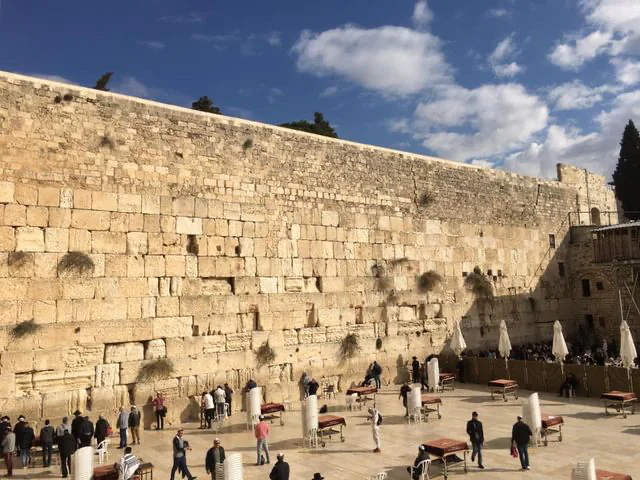
The "Western Wall" is known as the holiest place in the world for Jews. Sounds strange. The holiest place in the world for many Christians is the Church of the Holy Sepulchre. For Muslims, the holiest place in Jerusalem is the Al-Aqsa Mosque.
Why do Jews pray to a wall? Saying the wall is the holiest place in the world for Jews is a misconception. The holiest place is the Temple Mount, on which the First and Second Temple stood, on top of Mount Moriah, where Abraham performed the binding of Isaac.
Historical and Spiritual Significance
In 70 AD the Temple was destroyed by the Romans and since then, Jews were not allowed to return to it. The only place they could approach was the Western Wall – the western retaining wall of the platform that held the Temple. This section was chosen for its proximity to the Holy of Holies, the holiest place in the Jewish Temple, where the divine presence resides.
For 2,000 years Jews have been present at the Wall, under the different restrictions and limitations of the different empires and regimes that came and went from the Holy Land. They have been mourning their destroyed Temple, making requests, and praying for redemption. Today, not just the Wall but the entire Temple Mount belongs to the sovereign nation of the Jewish democracy of Israel. Despite that, the Temple Mount remained in Muslim (Jordanian) hands, with the Muslim holy sites on it, and with tight restrictions over who may visit and pray there for non-Muslims.
Jews, Christians, and every other faith that is not Muslim who wish to pray freely can still do so at the Western Wall. Maybe it is 2,000 years of constant prayers, maybe the proximity to the Holy of Holies – whatever the reason, the Wall became known as the place where prayers are most heard and answered.
The Plaza and Tradition of Notes
The Wall is divided into sections: one where Orthodox Jews pray in separated sections for men and women, and one for everyone to pray together. The notes placed in the Wall daily are never thrown away. The Rabbi of the Western Wall collects them and buries them in a designated spot on the Mount of Olives. So when you place a note with your heart's most secret prayer or desire, it stays in Jerusalem forever.
Visiting the Wall, praying at it, and placing your note is one of the most meaningful experiences of travelling Israel. It is the highlight of highlights – it represents not only the connection between man and God, but also the 2,000-year-old desire of returning to this land and to the history that shaped our culture and identity.
Top Tips When Visiting This Site
- Best time to visit: Unlike most tourist sites, the busiest times are sometimes exactly when you want to be there. Friday night before Shabbat creates a unique atmosphere. Note: photographs are not permitted from Friday afternoon through Saturday night. Writing is also prohibited on Shabbat – bring your note prepared in advance.
- Dress code: Men and women must cover knees and shoulders. Women should cover cleavage and avoid tank tops. A scarf or shawl is recommended. Men must cover their heads – kippot are available to borrow at the entrance.
- Bringing a note: Recommended. Prepare one in advance. You can also carry notes from family, friends, or congregation members.
2. City of David
When most people travel to Jerusalem, they come in search of something ancient – to understand their roots, their culture, to feel closer to God and the Bible, or to gain a better understanding of their own history as part of mankind.
The City of David, though at first glance it may appear to be an amorphous pile of rocks, is actually a beating heart of answers. Located outside the walls of the Old City of Jerusalem today, this was in fact the first Jerusalem. Located on the border between the tribes of Benjamin and Judah, King David conquered it and established it as the capital of the united kingdom of all 12 tribes, 3,000 years ago.
His son, King Solomon, built the First Temple northwards and uphill from the city, on Mount Moriah – later known as the Temple Mount. The city was destroyed during the Babylonian conquest in 586 BCE, rebuilt by the Jews who returned from exile, and then destroyed again by the Romans in 70 AD.
Archaeology and Discovery
Over the years, Jerusalem has shrunk and expanded under different regimes and empires, and in modern times this area remained outside the city walls. It is evident to every visitor that the excavations are carried out in the heart of a living neighbourhood, which makes this site not just historical but political as well.
Excavating the City of David has brought to light countless finds that shed light on the history of biblical stories, and thus on Western culture – from daily material life, through communal structures, to methods of trade and communication. The site contains extraordinary structures, including what many researchers believe to be the palace of King David, and an active underground water tunnel that carried water to the city for over 2,500 years.
Top Tips When Visiting This Site
- Hezekiah's Tunnel: Highly recommended – bring a change of shoes, shorts or pants, and a waterproof torch. Avoid flip-flops; the footing is uneven and the current is real.
- Booking: Tickets available on arrival or online at the City of David official website. A guided tour is essential – book in advance.
- If time is limited: Consider skipping this site. The depth of the experience depends entirely on having enough time and a good guide. Exception: if travelling with children, Hezekiah's Tunnel alone is worth the visit.
3. Temple Mount
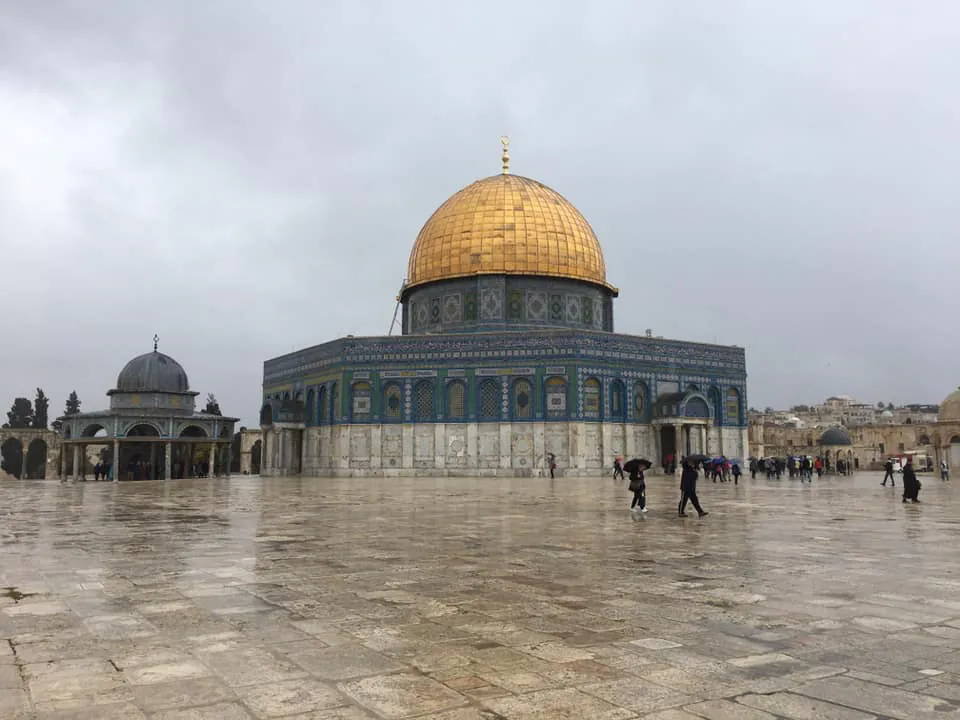
Temple Mount is a hilltop plateau in the Old City of Jerusalem – one of the most contested religious sites in the world. For Jews, it is the location of both the First Temple (built by Solomon around 957 BCE, destroyed by the Babylonians in 586 BCE) and the Second Temple (expanded by King Herod, destroyed by the Romans in 70 CE). The Foundation Stone at the centre of the Dome of the Rock is the place where Jewish tradition holds that Abraham prepared to sacrifice Isaac, and where the world began.
The platform you walk across is not ancient – it is Herodian construction, built to support the enormous Temple complex. Standing here means standing at the epicentre of 3,000 years of Jewish longing.
Non-Muslim visitors have very limited hours, one entrance point, and strict conditions. You cannot enter the Dome of the Rock or Al-Aqsa Mosque. Jewish, Christian, or any non-Muslim prayer on the Mount – even subtle – can cause an incident. The site is managed not by Israeli authorities but by the Jordanian Waqf, as part of the post-1967 status quo agreement.
Top Tips When Visiting This Site
- Visiting hours: Change constantly and without advance notice. Check online the day before. There is only one entrance for non-Muslims.
- Dress code: Strictly enforced. Men: trousers, closed-toe shoes, sleeved shirt. Women: baggy clothing covering hips to thighs, long sleeves, no tight items, hair covered or tied. Modest covering garments can be borrowed at the entrance.
- What is not permitted: Non-Sunni Muslim prayer, entering the Dome of the Rock or Al-Aqsa Mosque, and bringing items like prayer books, Bibles, or musical instruments.
- The experience: Despite the restrictions, standing in the holiest place in Judaism – the place that shaped monotheism for the entire world – is genuinely affecting.
4. Israel Museum and Shrine of the Book
Israel's national museum in Jerusalem is home to the Shrine of the Book – a striking white-domed building designed to house the Dead Sea Scrolls, the oldest known biblical manuscripts ever discovered. Found in 11 caves at Qumran between 1947 and 1956, the 981 manuscripts date back over 2,000 years. The dome's shape replicates the lids of the clay jars in which the scrolls were preserved.
The Great Isaiah Scroll – the oldest complete copy of the Book of Isaiah, dating to approximately 100 BCE – is on display here. Seeing a text you know, in a hand 2,100 years old, produces genuine awe.
The museum has six distinct sections that can fill an entire day:
- The Shrine of the Book – the Dead Sea Scrolls
- The Model of Jerusalem in the Second Temple Period – an extraordinary outdoor scale reconstruction
- The Archaeological Wing – artefacts spanning millennia
- The Judaica, Jewish Relics and Synagogues Wing
- The Art Wing – from classical to contemporary
- The Sculpture Garden
Strong recommendation: begin your Jerusalem visit at the Second Temple Model, with a good guide. It will orient everything you see afterwards – the City of David, Temple Mount, the Western Wall – in a way no amount of reading can.
Top Tips When Visiting This Site
- Time to allow: Minimum 2.5 hours. Can easily fill a full day.
- Booking: Not required for entry. Book in advance if you want a guided tour – strongly recommended.
- Priorities: The Shrine of the Book and the Second Temple Model. Don't miss the Dead Sea Scrolls.
- Opening note: Since October 2023, the museum has reduced hours. Currently closed Sundays and Wednesdays; half-days Tuesdays and Fridays. Check the museum's official website before visiting.
5. Mount of Olives
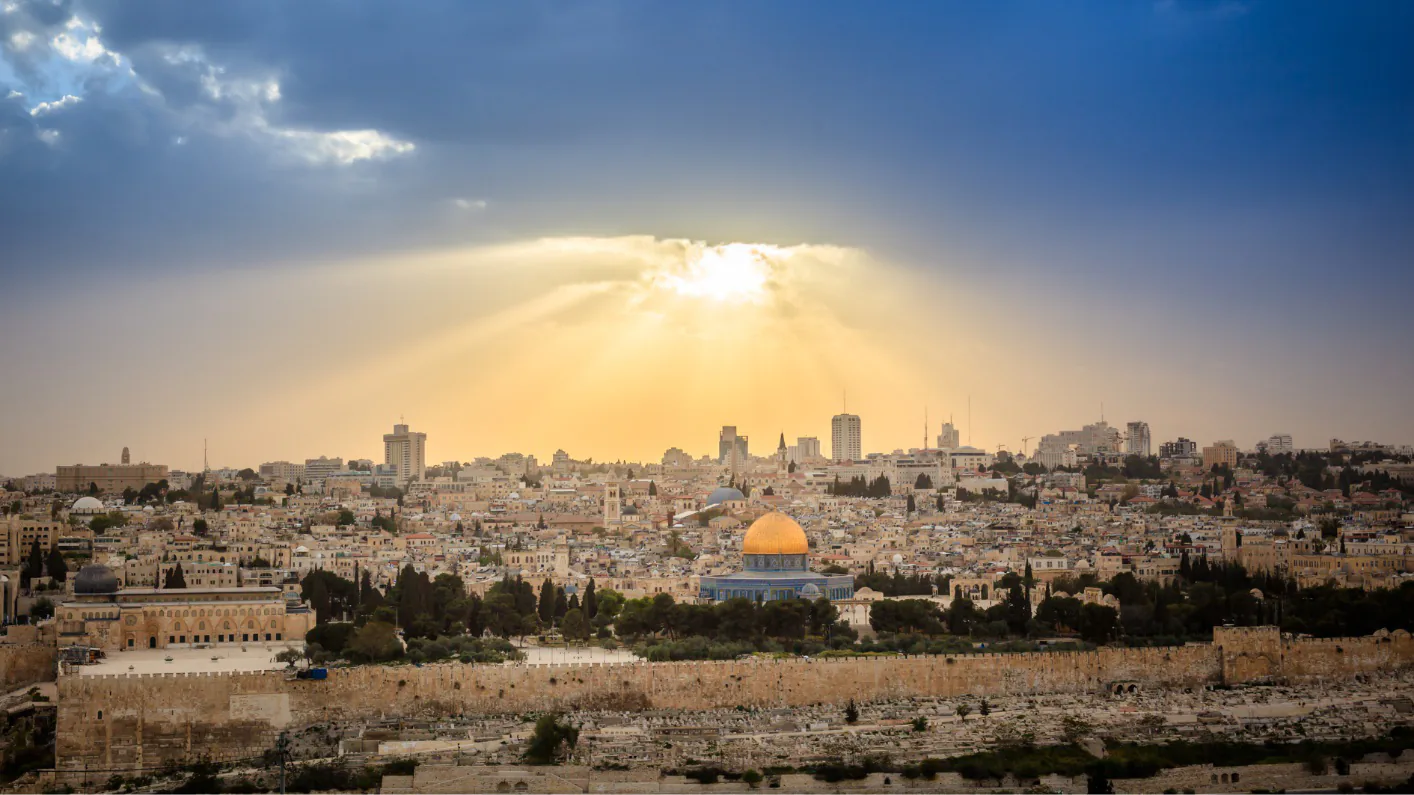
The Mount of Olives is a ridge of hills east of Jerusalem's Old City, overlooking Temple Mount and the Kidron Valley. Jewish tradition holds that the resurrection of the dead will begin here – which is why it became the oldest still-active Jewish cemetery in the world, over 3,000 years old, containing between 70,000 and 140,000 tombs. Many of the greatest rabbis in history are buried here, including the prophets Haggai, Zechariah, and Malachi.
The view from the summit – across the Old City to the Dome of the Rock – is one of the most iconic in the world.
The Epicentre of Redemption
All three monotheistic faiths – Judaism, Christianity, and Islam – agree that the Mount of Olives is where judgement day and redemption will be ignited. Jews believe that the Messiah, when he comes, will come from the Mount of Olives. For this reason, Jews have been asking to be buried there for thousands of years.
Christianity looks to the Mount of Olives because Jesus Christ walked along this mountain during the holy week before his crucifixion, establishing his claim as the Messiah. After his resurrection, he ascended to heaven from the top of this mountain. Christians worldwide believe that when He returns, he will appear at the top of the Mount of Olives. Muslims too believe that judgement day will take place here.
On a mountaintop controlled by a Jewish government, covered in a giant ancient Jewish cemetery, resided mainly by a Muslim population, and beaded with holy Christian sites and churches – all while gazing at the Temple Mount and embodying three different concepts of resurrection for three monotheistic religions – this is truly one of the most remarkable places a person can visit in their lifetime.
My Personal Connection to History
My family has resided in the Old City's Jewish Quarter for generations. The founding father of my family came to Jerusalem in 1811 to prepare the city for the arrival of the Messiah. He was persecuted by the Muslim community of the city until, in 1851, he was murdered in the streets. Our family buried him on the Mount of Olives – and later had to move his grave and hide it, as generations of Muslims from the Old City would vandalize it specifically.
Every time I come here I feel myself part of the chain of generations – part of a never-ending story of different religions and faiths trying to live, and die, together in peace.
Top Tips When Visiting This Site
- Time of day: Morning only. The sun rises in the east – arrive in the morning and you will have the city before you. Arrive in the afternoon and the sun will be in your eyes.
- Navigation: Don't attempt the cemetery alone. Go with a guide. Solo visitors become targets for self-appointed guides and merchants.
- Specific graves worth seeking: Menachem Begin; Rashaz; the ancient tombs in the Kidron Valley at the foot of the mountain.
- Footwear: Closed-toe shoes with good grip. The walk down is steep and paths are sometimes uneven.
6. Beit Shearim ★ Insider Pick
Most top-10 guides miss this site entirely. That is their loss – and potentially yours.
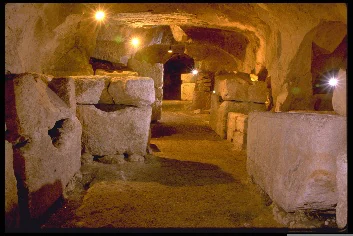
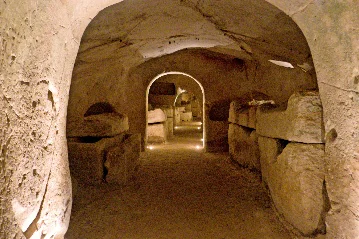
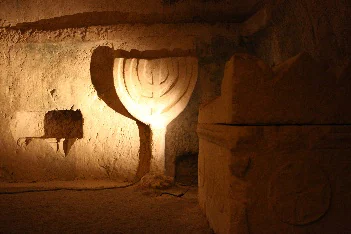
Beit Shearim is a UNESCO World Heritage Site in the Lower Galilee, home to an extraordinary network of ancient Jewish catacombs. After the Romans barred Jewish burial in Jerusalem following the Bar Kokhba revolt in 135 CE, this became the central Jewish necropolis – people were brought here from across the Jewish world: from Palmyra, Himyar, and Mesopotamia. Hundreds of carved stone sarcophagi bear inscriptions in Hebrew, Aramaic, Greek, and Palmyrene. Relief carvings of menorahs, lions, ships, and human figures cover the walls.
Rabbi Judah HaNasi – compiler of the Mishnah, the foundational text of Jewish oral law – lived and died here in the early 3rd century CE. This is not a polished tourist attraction. That is exactly what makes it special.
The Survival of the Jewish People
The visit to Beit Shearim is not simply a visit to an ancient Jewish catacomb. It is a portal to the survival of the Jewish people. On the face of it, Beit Shearim is a Galilean burial site that arose as a solution to a Roman prohibition on Jewish burial in Judea. It became famous in part because of the burial of Rabbi Judah HaNasi, the author and curator of the Mishnah – the first codified collection of Jewish interpretive texts.
The question that really matters is why archaeologists discovered tombs of Jews from all over the Jewish diaspora of the time, not just from Judea. And why Rabbi Judah HaNasi himself, despite the presence of grand stone sarcophagi, was buried in a simple hole in the ground.
The rise of Beit Shearim as a burial centre happened alongside the beginning of the long Jewish exile and diaspora – an era that posed new challenges of survival: how to endure as a scattered nation with no land and no Temple. Rabbi Judah HaNasi created the Mishnah precisely to answer that question. His burial choice may have been a deliberate act – pointing toward the belief, recorded in the Babylonian Talmud (Tractate Ketubot, 111a), that Jews would return to the Holy Land through the earth itself when redemption came. Whether it was or not, in this place the survival method for the exiled Jewish people was established, and it lives on to this day.
Top Tips When Visiting This Site
- Kohanim (priests): If you carry a priestly surname – Cohen, Kohn, Katz, Kogan, Levi, Levin, and others – and practice traditional Judaism, consult your rabbi or guide before entering. Priestly prohibitions regarding cemeteries apply here.
- What to look for: The animal sarcophagus; the Great Menorah carved in stone; the tomb of Rabbi Judah HaNasi.
- Why make the detour: You can truthfully say you saw something most visitors to Israel never see.
7. Tel Dan
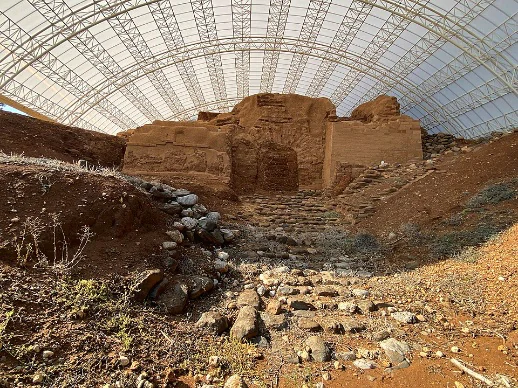
Tel Dan is an archaeological tel in the far north of Israel, at the foot of Mount Hermon, within a nature reserve fed by one of the three sources of the Jordan River. It is one of the most important Bronze and Iron Age sites in the country.
In 1993–94, archaeologists discovered the Tel Dan Stele – the first and only contemporaneous inscription ever found outside the Bible that explicitly references the House of David. The discovery sent shockwaves through the field of biblical archaeology.
The site also contains the remarkably preserved ancient Israelite city of Dan, including a city gate complex from the era of the biblical kings. Walking through it, you are walking through a standing biblical city of the tribe of Dan.
Something for Everyone
Nature lovers will find crystal-clear fast-flowing streams, dense shade, and lush green vegetation unlike almost anywhere else in Israel. The park is accessible to visitors with disabilities. Practising believers – Jewish or Christian – can stand inside an actual biblical city, in the presence of altars where the scriptures say worship took place. Geopolitics enthusiasts will find this strategically vital ground at the junction of Lebanon, Syria, and Israel worth studying carefully.
Top Tips When Visiting This Site
- Combine with the surrounding area: The Banias (Caesarea Philippi) is highly recommended nearby. Consider a kayak through the Snir stream.
- Which remains to prioritise: For those drawn to ancient history – the Bronze Age city gate is extraordinary. For those inspired by scripture – don't leave without passing through the gate and standing at the altar.
8. Ein HeKeshatot Ancient Synagogue ★ Insider Pick
Um Al Kanatir – also known as Ein HeKeshatot – is an ancient synagogue on the Golan Heights, one of 40 ancient synagogues in the region. Dating to the Byzantine era, it was destroyed in the catastrophic earthquake of 749 CE. What makes this site unlike any other in Israel – and arguably in the world – is how it was excavated.
A Unique Archaeological Restoration
Many archaeological sites in Israel are characterised by layers – used by countless different peoples and civilisations across thousands of years. Ein HeKeshatot, however, was the home of one community, for a specific era, and remained deserted until the end of the 19th century when it was rediscovered.
Because the site was destroyed in a single seismic event and remained largely intact, researchers realised that by using advanced mapping, scanning, and computerised crane work, the angles of the fallen stones could be calculated and the structure could actually be rebuilt. In 2010, the Israeli government approved the budget and this first-of-its-kind endeavour began – paving a new path for archaeologists to not just research, but restore. Today, every stone in the wall contains not just a number but a computer chip, holding all the information about where it was found and why it was placed where it is in the restored structure.
The Rebuilt Stone Ark
Beyond the remarkable restoration itself, the visitor has the unique experience of seeing the rebuilt Torah ark – made entirely of stone, as it was originally. Most arks, even today, are made of wood. At an ordinary archaeological site, a guide would say "imagine that where you stand right now, once stood…" Here, you don't have to imagine anything. Archaeology became reality.
Top Tips When Visiting This Site
- Getting there: Private vehicle required.
- What to look for: The reconstructed stone Torah ark; menorahs carved on the walls; the ancient spring where the community dyed linen – the industry that created the wealth to build this synagogue.
- Combining with other Golan sites: Located in the southern Golan – best visited first thing in the morning or at the end of a day.
9. Masada
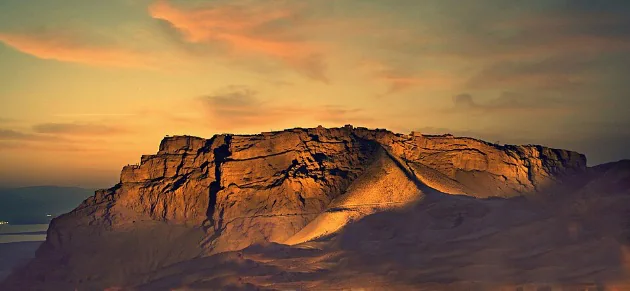
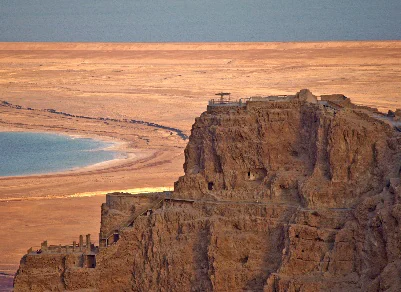
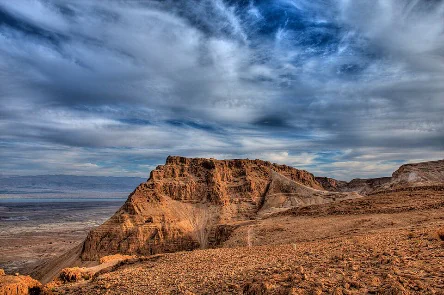
Masada is an ancient fortress built by King Herod the Great in the 1st century BCE, on an isolated rock plateau on the eastern edge of the Judaean Desert, overlooking the Dead Sea. It is a UNESCO World Heritage Site.
Herod built Masada as a winter palace and a place of last resort. The Roman bathhouse he built is the most well-preserved in the world. The dryness of the desert preserved organic materials – food, clothing, military equipment, ancient scrolls – that would normally disappear over millennia.
In 73 CE, around 960 Jewish rebels made their last stand here against the Roman army. Rather than surrender to captivity and slavery, the community chose collective death. This act of defiance defines one of the most powerful strands of Jewish identity: death over surrender. "Masada shall not fall again."
One of the oldest synagogues in the world stands on this summit – built and used while the Temple in Jerusalem was still standing.
Archaeology Confirmed 2,000-Year-Old Descriptions
The greatness of Masada is not simply its impressive preserved structures. As with most major sites in the Holy Land, the most fascinating thing is when scriptures meet findings on the ground. Masada's history and final stand were well documented by Josephus Flavius. The descriptions in writing from 2,000 years ago fit the findings on the ground almost to the letter.
Importance as a Modern Pilgrimage Site
The vast excavations of Masada were carried out in the early 1950s by Yigael Yadin. The timing proved critical in turning Masada into a modern pilgrimage site. A nation of people who had nearly been exterminated needed a model of resistance for its young generation. Masada provided exactly that.
The victories of 1949 and 1967 gave the site new meaning: it may have fallen before, but it will never fall again. For this reason, Jews from all over the world celebrate their Bar and Bat Mitzvahs on top of Masada – as part of the chain of generations who fight for their people and their survival.
Top Tips When Visiting This Site
- When to visit: In summer (June–October), arrive early or climb the Snake Path at dawn for sunrise, then descend before the heat builds. The Snake Path entrance may close after 8:00 AM in extreme heat. In winter and spring any hour is fine. Floods occur in winter – follow all safety instructions.
- Snake Path vs. cable car: The Snake Path (~1 hour up) is for those in good shape. The cable car is excellent with children. A third option: drive via Arad and climb the Roman siege ramp – a shorter 25-minute ascent.
- With younger family members: Avoid peak summer heat. Pass through the film in the museum before going up – it gives children a visual anchor for what they are about to see.
10. Ein Gedi Ancient Synagogue ★ Insider Pick
The remains of an ancient Byzantine-period synagogue (3rd–6th century CE) sit within the Ein Gedi nature reserve on the western shore of the Dead Sea. The site is known for an elaborate, extraordinarily preserved mosaic floor – one of the finest of any ancient synagogue in Israel. It features a peacock, a menorah, zodiac animals, and a Hebrew inscription including a remarkable community curse: a warning against betraying the community's secrets.
That detail stops people in their tracks. What was the secret of the people of Ein Gedi? And what made it so important that it was woven into the very floor of the synagogue?
A Secret Formula for Balsam Oil
The prevailing research today suggests the community held the secret formula for producing balsam oil – the most expensive and sought-after product in Egypt and across the Roman Empire. Some researchers argue that Rome's military presence in Judea was motivated at least in part by protecting the Ein Gedi community that produced it. While Masada was conquered by Roman forces, the community of Ein Gedi continued to thrive – under Roman protection – until the Byzantine era.
This site also illustrates something worth noting: rare agricultural knowledge kept Jewish communities prosperous in the Israeli desert 2,000 years ago. Israel today leads the world in desert agriculture.
Top Tips When Visiting This Site
- Combining with the reserve and Dead Sea: The synagogue entrance is adjacent to the nature reserve entrance. A standard Judean Desert day typically includes Masada and the Dead Sea. Nature and hiking people: prioritise the reserve. History and archaeology people: the synagogue is unmissable.
- What to look for on the mosaic floor: The Hebrew inscriptions; the Hebrew zodiac; Jewish ritual objects; and the community curse inscription.
11. Shiloh ★ Insider Pick
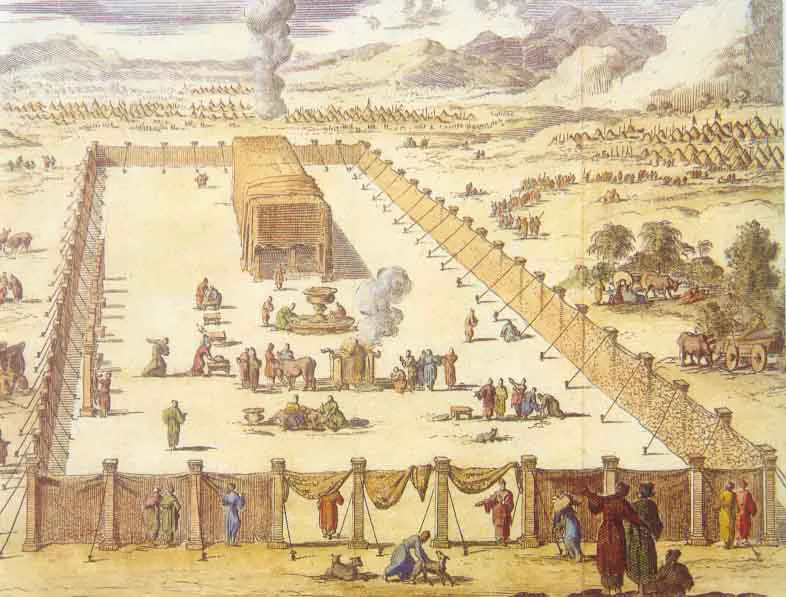
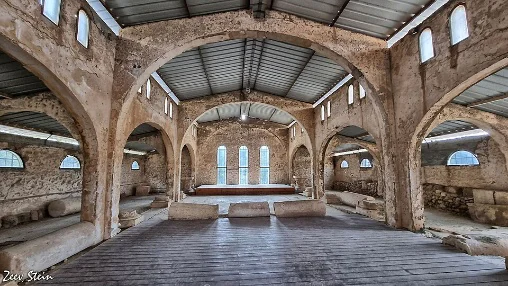
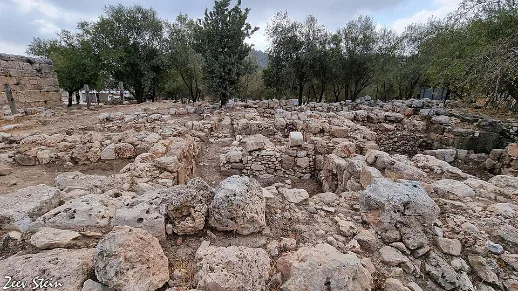
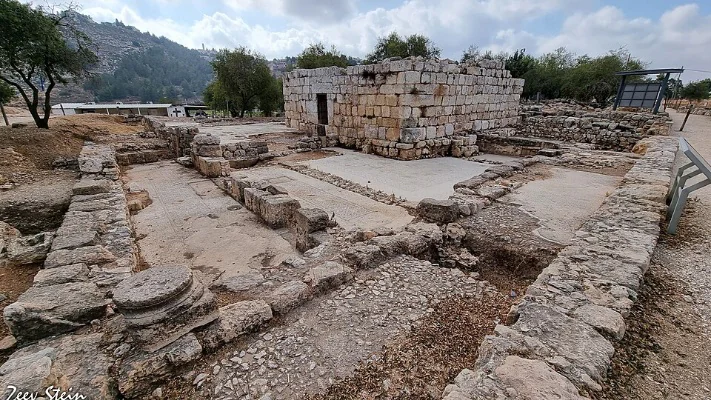
Shiloh is an ancient biblical city in the Samarian highlands of the West Bank, identified in the Hebrew Bible as the first permanent home of the Tabernacle – the portable sanctuary the Israelites carried through the desert. The Ark of the Covenant rested here for approximately 369 years. This is where the story of the Israelites as a settled people effectively begins. Almost entirely absent from mainstream tourist itineraries – an absence that says nothing about its significance.
The Resting Place of the Ark
When the Israelites entered the land of Israel, they did not go to Jerusalem. Jerusalem belonged to the Jebusites. The 12 tribes established their holy place at Shiloh – here the Ark of the Covenant had a permanent resting place in the Tabernacle. During the era of the Judges, everyone looked to the territory of the tribe of Ephraim, where the Ark resided.
The prophet Samuel – born after his mother Hannah prayed here for a child – was raised in Shiloh under the great priest Eli. He witnessed the abduction of the Ark by the Philistines, and Eli's death that followed. The loss of the Ark ended the period of the Judges. The tribes asked for a king; Samuel anointed Saul from the tribe of Benjamin – beginning the era of Kings.
Significance for Jews Today
Excavations at Tel Shiloh have uncovered remains from the Middle Bronze Age, Iron Age, Byzantine, and early Islamic periods. For observant Jewish visitors, standing where Hannah prayed – in the place where the Ark of the Covenant rested – carries enormous weight. For those motivated by history, Shiloh is the most powerful argument available for the ancient connection between the Jewish people and this land.
Top Tips When Visiting This Site
- Practical access: Carry passports – you are driving through West Bank checkpoints. Travel with a group or private tour, ideally with a guide who carries security training. Do not drive here alone.
- The visitor centre: The main event is the film, produced with over 150 participants. Do not skip it.
- With younger family members: Show drawings of the Ark and the Tabernacle in advance and watch the film in the visitor centre to build the visual vocabulary before approaching the ruins.
12. Cave of Machpelah, Hebron
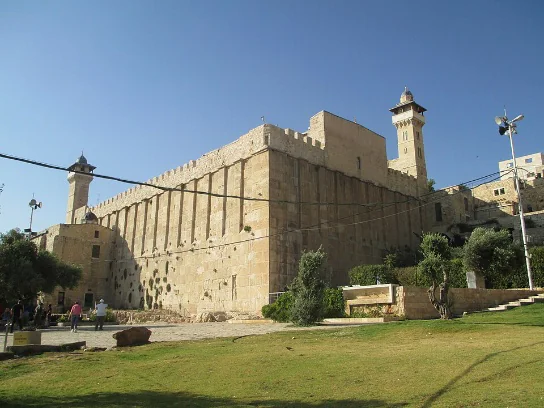

The Cave of Machpelah in Hebron is venerated as the burial site of the biblical patriarchs and matriarchs – Abraham and Sarah, Isaac and Rebecca, Jacob and Leah. It is the second holiest site in Judaism after the Temple Mount and the Western Wall. The structure built over the cave is one of the oldest buildings in continuous use in the world – its lower courses built by King Herod the Great in the 1st century BCE.
The Bible describes Abraham purchasing this cave to bury his wife Sarah – making it sacred to Judaism, Christianity, and Islam simultaneously.
The Structure That Tells Its Own History
The history of the structure itself tells the story of who has controlled this region: Herod's base; the Byzantines built a church on it; early Muslims converted it to a mosque; the Crusaders built a glorified church that still stands; the Mamluks converted it back to a mosque and barred Jewish prayer entirely. A visitor who walks in steps into a layered structure of Jewish, Christian, and Muslim religious construction that can feel genuinely overwhelming.
The most interesting part of this site is inaccessible. The cave beneath the structure – the actual burial cave – can be accessed only in rare and covert circumstances. What stands above is extraordinary. What lies beneath is even more so.
Top Tips When Visiting This Site
- Safety: Visit only with a guided or organised tour. Do not attempt alone.
- Access: Check online before visiting – some days of the year the site is open to Muslims only, or to Jews only, depending on the religious calendar.
- A guide is essential: This is one of the most complex sites in Israel. Going without a guide means missing almost everything.
- Dress code: Modest. Shoulders, knees, and neckline must be covered.
13. Ben Gurion's Tomb, Home and Research Center, Sde Boker
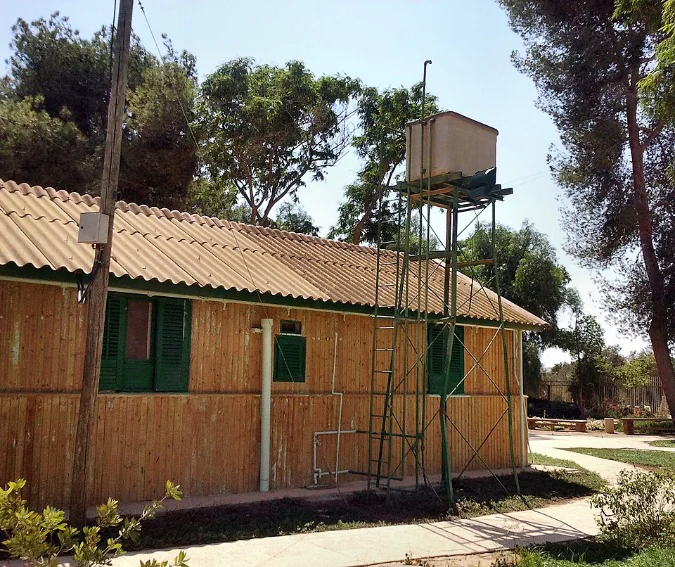
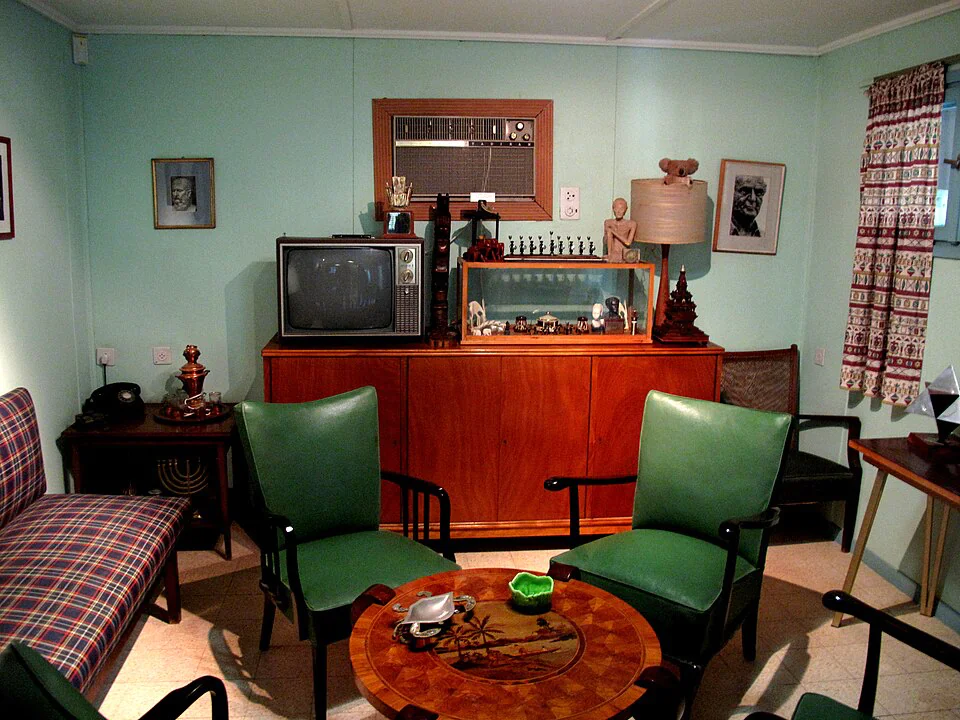
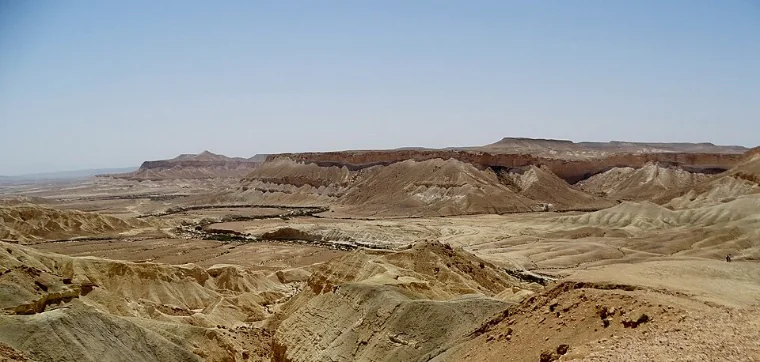
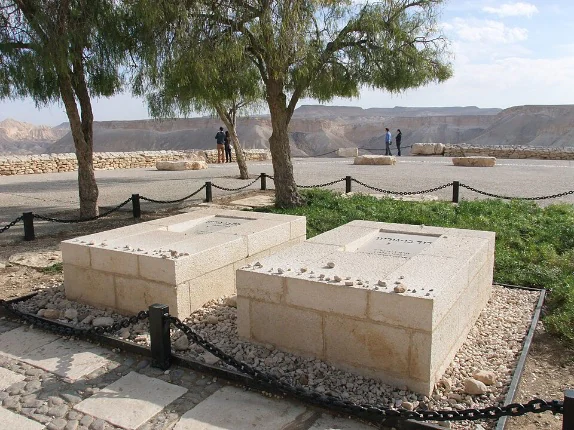
David Ben Gurion was the founding father of the State of Israel and its first Prime Minister, who declared independence on 14 May 1948. His tomb and home are at Kibbutz Sde Boker in the Negev Desert – where he chose to retire. The modesty of the home surprises almost every visitor. One of the most powerful figures in 20th-century history lived simply.
Ben Gurion's Guiding Principle
Throughout his life, one idea led Ben Gurion's inner compass above all others: how to make the desert bloom. Deeply knowledgeable in the history of the Jewish people and the scriptures, Ben Gurion understood that the story of the Jews in this land is the story of an ancient people returning to where they were first created as a nation. The story of the Jews is rooted in the desert, developed in the desert, and it is there where they belong if they wish to prosper.
Why He Moved to the Negev Desert
Surviving in the desert is extremely challenging. The desert must be embraced and tamed – fought and loved, learned and adjusted to. Ben Gurion realised that as leader of the new country, he had to set an example. His decision was clear: unlike other leaders who make themselves accessible in the capitals of their countries, Ben Gurion would set his home in the desert, more than three hours' drive from the centre of the country. He understood that he was an important enough reason for anyone who wished to meet him to make the journey.
The home is modest, reflecting the values of the early era of the country. Hiring one of the local guides to share the personal stories of Ben Gurion in his home is highly recommended.
The Tomb
Before his passing, Ben Gurion took his son to a vista point on a cliff gazing over the Zin Valley and described exactly how he wanted his tomb structured. The result is a giant park with desert vegetation, ibexes and hyraxes running freely, and gorgeous desert views – all designed to impress upon anyone who attends how lush and blooming the desert can be when you unveil its secrets.
The tombs of David Ben Gurion and his wife Paula are very modest – the main event is the desert research centre Ben Gurion asked his son to found above his tomb. His will to the young country of Israel was to never cease researching the desert and learning how the Jewish people and the rest of the world can benefit from it.
Top Tips When Visiting This Site
- Time to allow: About 1 hour for the home; 30 minutes for the tomb. 2 hours total.
- Combining with the Zin Valley: Highly recommended. Ein Ovdat, a beautiful desert hike with water in the middle of the Negev, is very close.
- The Research Center: Ask at the site what current exhibitions and research activities are available.
14. Anu – Museum of the Jewish People, Tel Aviv
Located on the Tel Aviv University campus, Anu – Museum of the Jewish People is the world's largest and most comprehensive museum dedicated to Jewish history. 'Anu' means 'we' in Hebrew. Reopened in its current form in 2021 following a major renovation, the museum covers the full sweep of Jewish history through immersive exhibitions, interactive displays, and an extraordinary genealogy database.
For Jewish families – especially those bringing children or teenagers – Anu offers something no other site provides: a direct, personal connection to their own family's place within Jewish history. Families who sit with the genealogy database and trace their own roots tend to find the experience genuinely moving.
Top Tips When Visiting This Site
- Time to allow: Minimum 2 hours. 3 is good.
- Booking: Required if you want a guide. Strongly recommended.
- Practical: The museum is within Tel Aviv University – bring ID for security. Consider visiting the nearby Nature Museum if travelling with children.
15. Peres Innovation Center, Tel Aviv
Opened in 2018, the Peres Center for Peace and Innovation in Tel Aviv is dedicated to the life and legacy of Shimon Peres – former President and Prime Minister of Israel, Nobel Peace Prize laureate, and architect of the Oslo Accords. It tells the story of Israel's founding generation, Peres's extraordinary life from his arrival as a young immigrant to his role building Israel's defence establishment and peace process, and his vision for Israel as a start-up nation.
The majority of the centre is dedicated to Israeli innovation – the technological developments made by Israel that have contributed to and sometimes changed the world. This is the fulfilment of Peres's vision: to use Israel's strongest asset – the Jewish mind – as a force for humanity.
Important: Book tickets online in advance for a Hebrew or English tour, or arrange a private guide. Tickets often sell out.
Top Tips When Visiting This Site
- Time to allow: The tour takes a minimum of two hours.
- How to book: Online via the centre's website. Book well in advance.
- Combining with other Tel Aviv sites: Plan this for the same day as Jaffa (Yafo). Consider the Jaffa flea market and ancient port before or after.
Plan Your Perfect Jewish Israel Experience with Shin Tours
Israel is extraordinary. It is the spiritual epicentre of the Jewish world, a place layered with 3,000 years of tangible history, and a destination that promises to be a trip of a lifetime.
But turning this potential into a journey that genuinely delivers – whether for a Bar or Bat Mitzvah, a personal pilgrimage, or a complex multigenerational family trip – takes experience that goes far beyond a simple checklist of sites. Too many tour operators offer the same recycled itinerary, where you see the monuments but leave without feeling a real, life-changing connection to your heritage.
The Shin Tours Difference
At Shin Tours, we believe your family's journey should be as unique as your story. As the world's number one Jewish heritage tour provider, we focus on helping you create moving, meaningful, and transformative moments.
We don't hand you a generic package. Instead, we start with a short, personal consultation to understand what matters most to every member of your group – what will engage the children, what will connect the grandparents, and what emotional outcome you are seeking. This allows us to design a bespoke private itinerary that is perfectly paced and filled with moments that bring you closer to your roots, your culture, and each other.
Ready to turn this extraordinary list of sites into your family's most memorable journey? Share a few details about your group and interests, and we will design a complimentary, tailor-made itinerary, which includes:
- Free advice on recommended sites and experiences for your group
- A sample itinerary based on previous highly rated tours
- More information on booking your experience with Shin Tours
You get to see your perfect tour before you book. Request your free custom itinerary here.