Planning a Jewish Heritage Tour of Morocco?
Morocco does something that no other destination quite manages – you walk through a mellah (Jewish quarter) at dusk, the call to prayer rising above mudbrick walls, and you feel the weight of a Jewish story that has been unfolding here for over two thousand years.
It's not a footnote – it's the main event.
The trouble is finding someone who treats it that way.
Most travel guides list the same handful of sites and move on. Many local guides can walk you through a synagogue but cannot tell you who prayed there, who built it or why the community that once filled it is now scattered across three continents. As a result, you end up with beautiful buildings and no story to put inside them.
That is what this post is for.
Over eight years of bringing Jewish families, couples and solo travellers to Morocco, I've learned which sites carry the deepest resonance – and more importantly, which stories unlock them.
What follows is the list we use to build a Shin Tours itinerary: nine sites I believe every Jewish traveller to Morocco should experience, two bonus experiences I always recommend and everything you need to know about travelling as an observant Jew in Morocco.
About Me
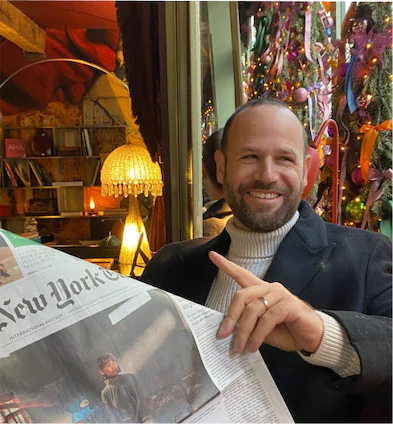
Hey, I'm Asaf Peled. I'm the founder and CEO of Shin Tours, which I set up in 2018. I started out as a registered Israeli tour guide in 2012 before going on to lead thousands of Jewish heritage tours across Israel, Italy, Portugal, Spain and of course to Morocco.
Shin Tours holds a 5.0 / 5.0 rating on TripAdvisor and has been awarded the Travellers' Choice Award.
How I Know These Sites Better Than Anyone
I didn't come to Morocco just as a Jewish heritage specialist. I came as someone who was curious – about the history, the architecture, the food, the warmth of the people – and the Jewish story found me at every turn.
Eight years later, I have built itineraries across nearly every major city in the country, developed relationships with local guides and community members who have opened doors most visitors never find, and watched hundreds of Jewish travellers arrive hesitant and leave moved.
Morocco surprises people. It surprised me.
If you are thinking about making this trip, I would love to help you plan it – contact us for a free custom itinerary built around your group, your interests and your travel style.
Click here to see a sample itinerary of one of our heritage tours of Morocco.
Is Morocco Safe for Jewish Travellers?
This is the question I hear most often before a trip.
It's also, in my experience, the one that dissolves fastest once people arrive.
Morocco is not an 'Arab country' in the way many people imagine when they hear that phrase. It's a Berber nation with a distinct identity, a long tradition of pluralism and a royal family that has historically positioned itself as a protector of Jewish life.
From the moment you land, you feel a warmth and a welcome that is genuine – not performed. I have seen it disarm even the most cautious travellers within hours.
That said, the question deserves a proper answer. Here it is:
A Brief History of Jews in Morocco
Jewish communities have lived in Morocco for over two thousand years. The first arrived as traders and refugees long before the arrival of Islam, settling across the country and establishing communities that would eventually number in the hundreds of thousands.
What makes Morocco genuinely unusual is the relationship between the Jewish community and the Moroccan state throughout history.
Jews served as merchants, diplomats, scholars, physicians and royal advisers across successive dynasties. The mellah – the Jewish quarter found in every major Moroccan city – was built close to the palace not as a place of confinement but as a place of proximity to power.
Jewish families were trusted advisers. They were part of the fabric of the country.
At its peak in the mid-twentieth century – before the founding of the state of Israel, in 1948 – Morocco's Jewish population numbered around 300,000. At the time, this was the largest non-Ashkenazi community in the world and the largest Jewish community in the Muslim world.
Jewish emigration from Morocco to Israel, France and beyond reduced that number dramatically after 1948. Most of those who stayed lived in Casablanca.
In 2020, an estimated 2,100 Jews remained.
The community is small. But it is active, it is respected, and the heritage it left behind is extraordinary.
What Was Morocco's Response After October 7?
When antisemitism spiked across Europe, the United States and Australia following the events of October 7, 2023, Morocco was a notable exception. This is actually a really common question I get from Shin Tours clients – especially Jewish families visiting from the US or Canada.
Morocco's peaceful response was not an accident.
It happened because of a centuries-old tradition of coexistence that is genuinely embedded in Moroccan culture and actively maintained by the monarchy.
King Mohammed VI has personally overseen the restoration of synagogues and Jewish cemeteries across the country and Jewish heritage is taught in Moroccan schools as part of national history.
Morocco is, by my reckoning, one of the only places in the world where Jewish travellers can move freely, visibly and without anxiety in 2026.
That is a remarkable thing – it's one of the reasons I keep bringing people here.
The 9 Best Jewish Sites in Morocco
Here is a quick overview of what we will cover and where:
| City | Site | Key Jewish figure |
|---|---|---|
| Casablanca | Museum of Moroccan Judaism | Simon Levy |
| Casablanca | Jewish Mellah & Temple Beth-El | – |
| Rabat | Jewish Mellah & Mausoleum of Muhammad V | Sultan Muhammad V & Rabbi Raphael Anawa |
| Fez | Jewish Quarter, Ibn Danan Synagogue & Cemetery | Maimonides & Rabbi Isaac Alfasi |
| Marrakesh | Jewish Mellah & Lazama Synagogue | André Azoulay |
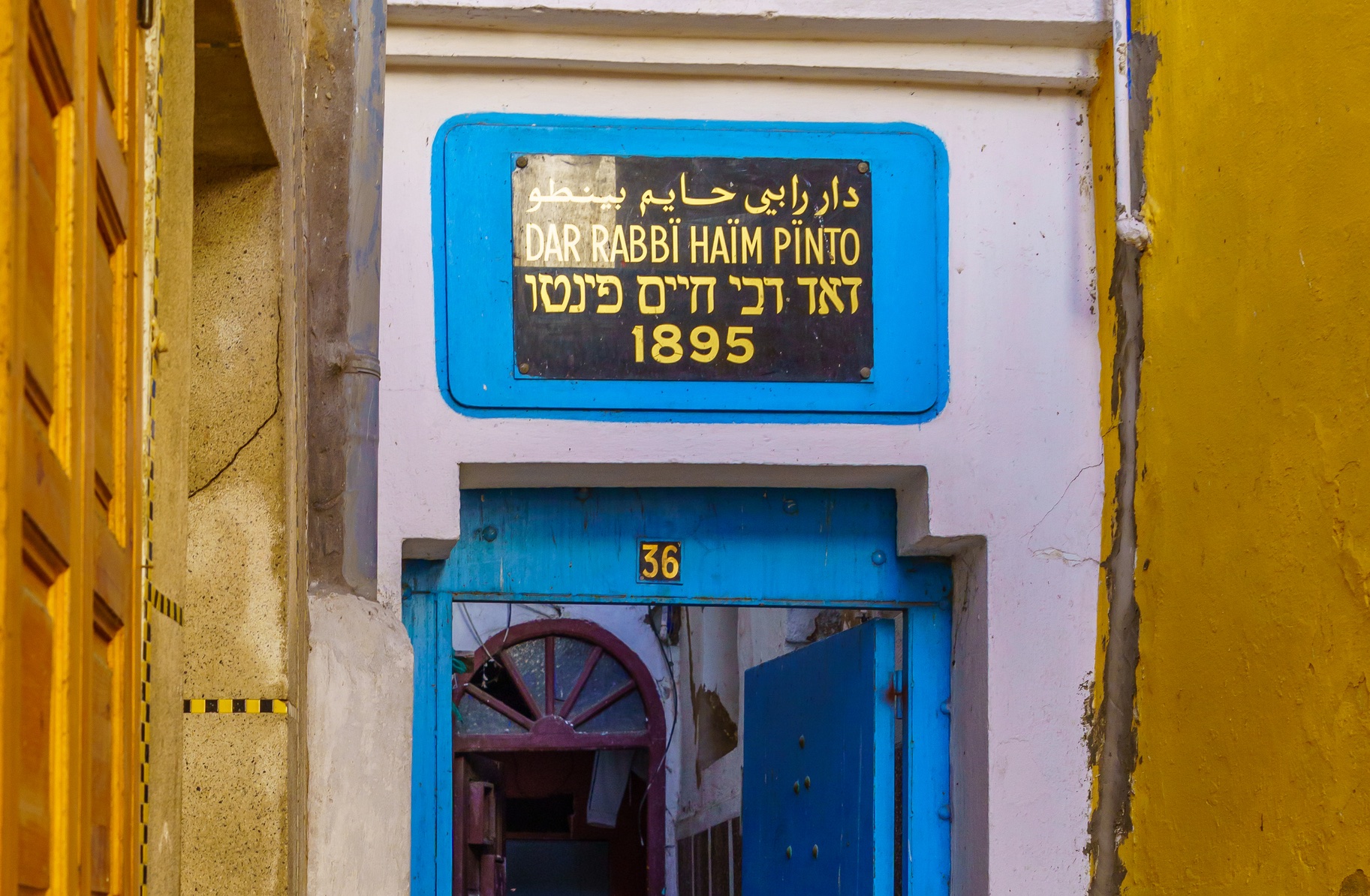
| Essaouira | Chaim Pinto Synagogue & Jewish Cemetery | Rabbi Chaim Pinto |
| Meknes | Talmud Torah Synagogue & Jewish Quarter | Rabbi David ben Aharon ben Hussein |
| Across Morocco | Hiloula pilgrimage sites | Various revered rabbis |
| Atlas Mountains | Berber-Jewish villages | – |
1. Museum of Moroccan Judaism, Casablanca
There is only one Jewish museum in a Muslim-majority country.
It's in Casablanca, and it is one of the most quietly extraordinary places I've ever visited.
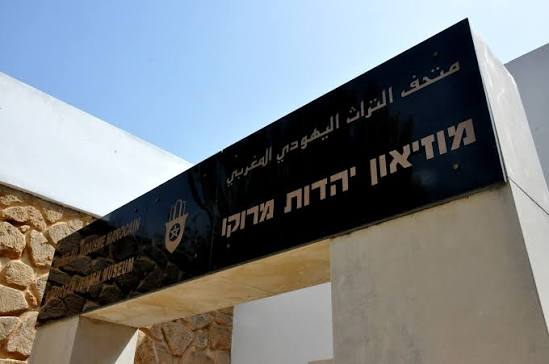
The Museum of Moroccan Judaism opened in 1997, created by Casablanca's Jewish community to preserve a heritage that was rapidly dispersing across the globe.
Walking through its galleries, you encounter Torah scrolls, Hanukkah menorahs, wedding costumes embroidered in gold, oil lamps and old photographs of synagogues that no longer exist in the form they were captured. It is a museum that knows its own urgency.
The building itself is not dramatic but what it contains is.
When I bring groups here, I always start with the story of the man most responsible for its existence.
The Story of Simon Levy
Simon Levy was a Moroccan Jewish intellectual born in Fez in 1934, who spent his life fighting to ensure that Jewish memory would not disappear from Morocco. He was the director of the Foundation for Moroccan Jewish Patrimony and one of the driving forces behind the Museum of Moroccan Judaism.
What makes his story particularly remarkable is that his activism was not confined to Jewish causes – he was involved in Morocco's independence movement and in human rights work throughout his life. He was tortured for his political beliefs but he kept going.
Levy understood that preserving Jewish heritage in Morocco was not a sectarian project – it was a project about the full complexity of Moroccan identity.
The museum he helped build reflects that understanding. It does not present Jewish Morocco as a tragedy or an absence. It presents it as a living tradition – one that shaped the country and still does.
What to Expect When You Visit
- Torah scrolls, religious artefacts and ceremonial objects from across Morocco
- Traditional Jewish-Moroccan costumes and jewellery
- Photographs documenting synagogue life across Moroccan cities
- Exhibits on Moroccan Jewish music, literature and cultural life
Jewish-Moroccan Cuisine in Casablanca
While you are in Casablanca, this is also the place to try Jewish-Moroccan cuisine.
With a community of about 2,000 people – the largest active Jewish community in Morocco – the city has kosher restaurants and food traditions that reflect centuries of Moroccan-Jewish culinary exchange. Some of the best kosher restaurants and cafes include Cercle d'Union, Cercle d'Alliance and Madame Fhal Bakery.
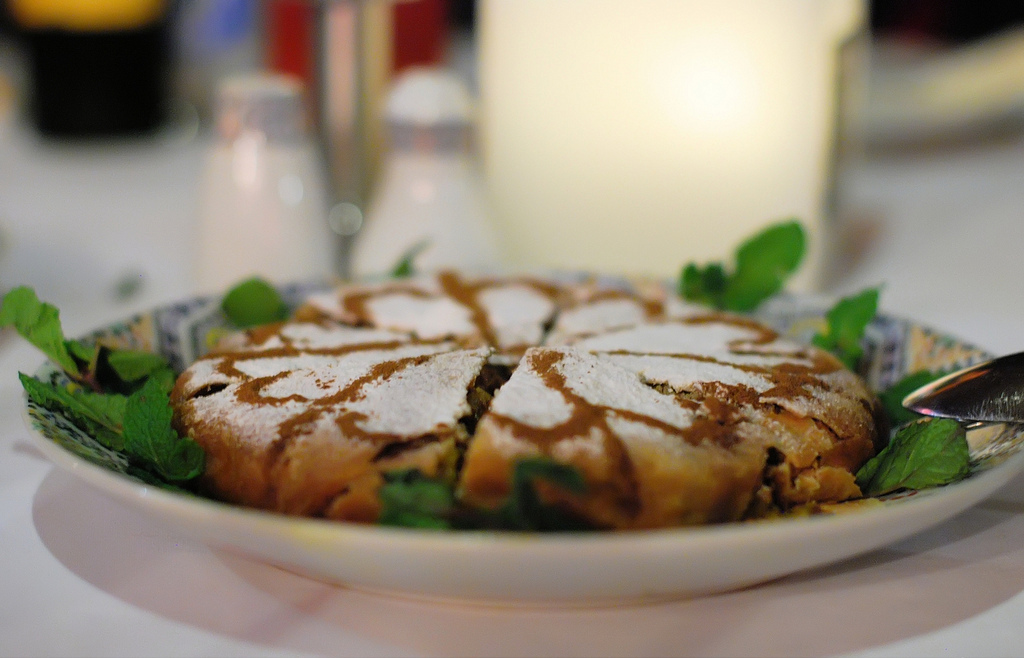
Look out for dishes like pastilla prepared with fish, Moroccan challah baked with anise and sesame and slow-cooked Shabbat stews adapted to Moroccan spices.
2. Casablanca Jewish Mellah & Temple Beth-El
Casablanca was once home to the largest Jewish community in the Maghreb (the broader North African region). At its height, the city had more than 80 synagogues and a network of Jewish schools, community organisations and cultural institutions.
Today there's only an estimated 79 synagogues remaining in all of Morocco.
Today, the mellah retains its character – a neighbourhood with community centres, a kosher infrastructure and a living population that keeps its traditions.
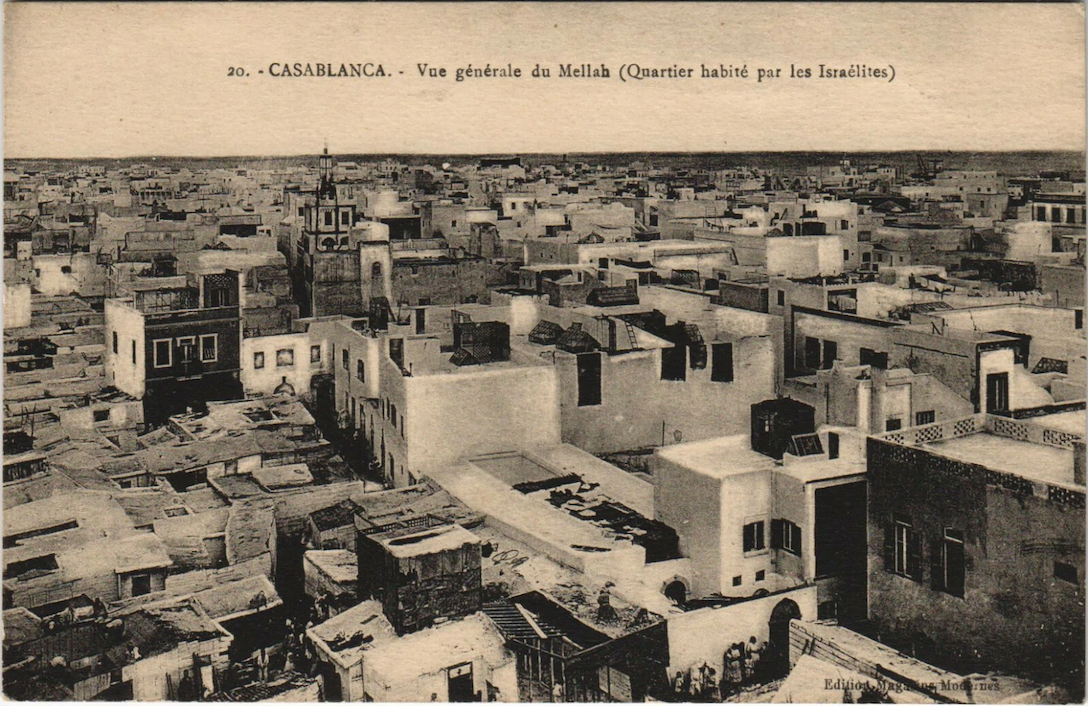
A walk through the Casablanca mellah gives you a sense of what Jewish urban life looked like in Morocco at its most organised and most self-sufficient.
It's not a museum district. People live here – and that matters.
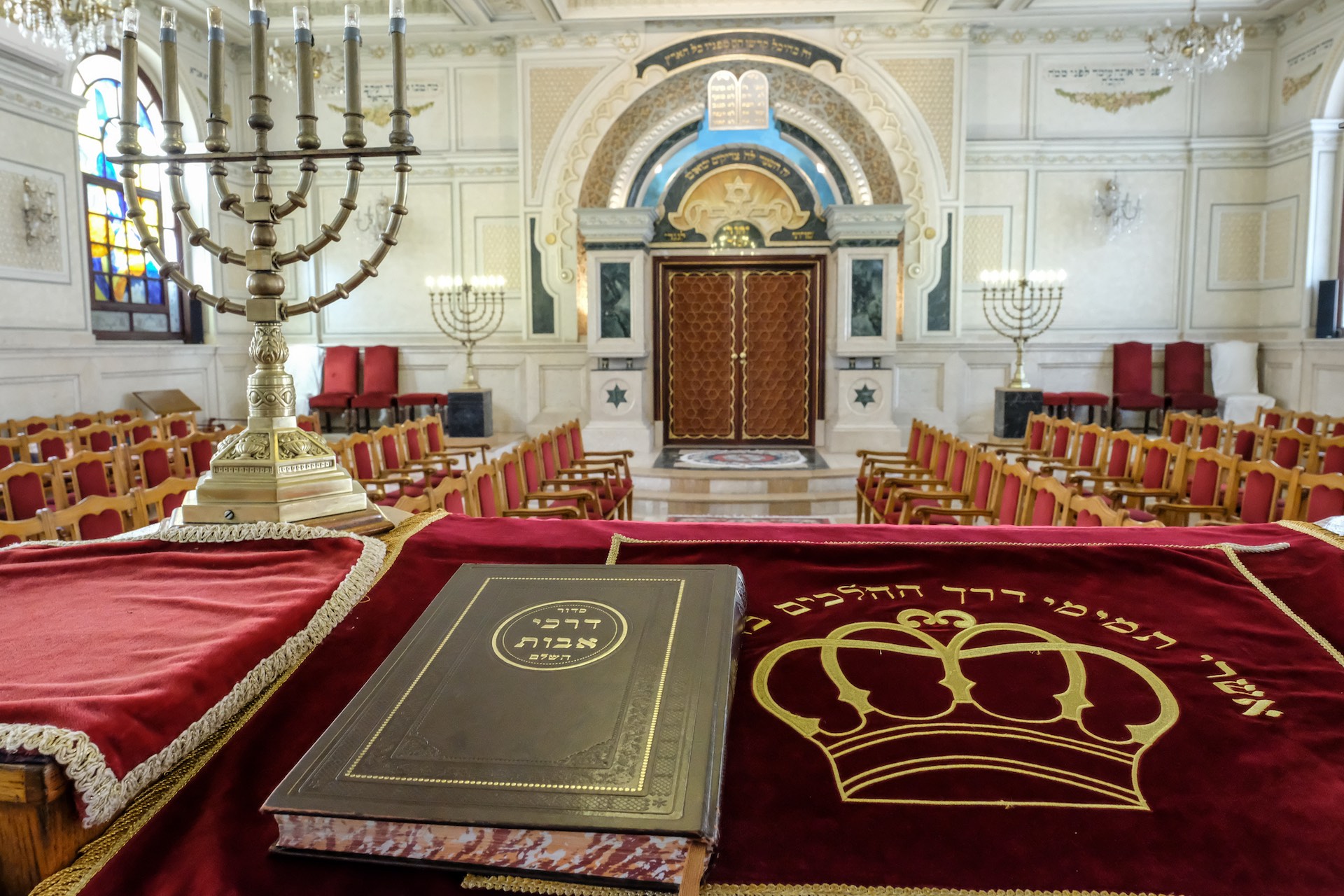
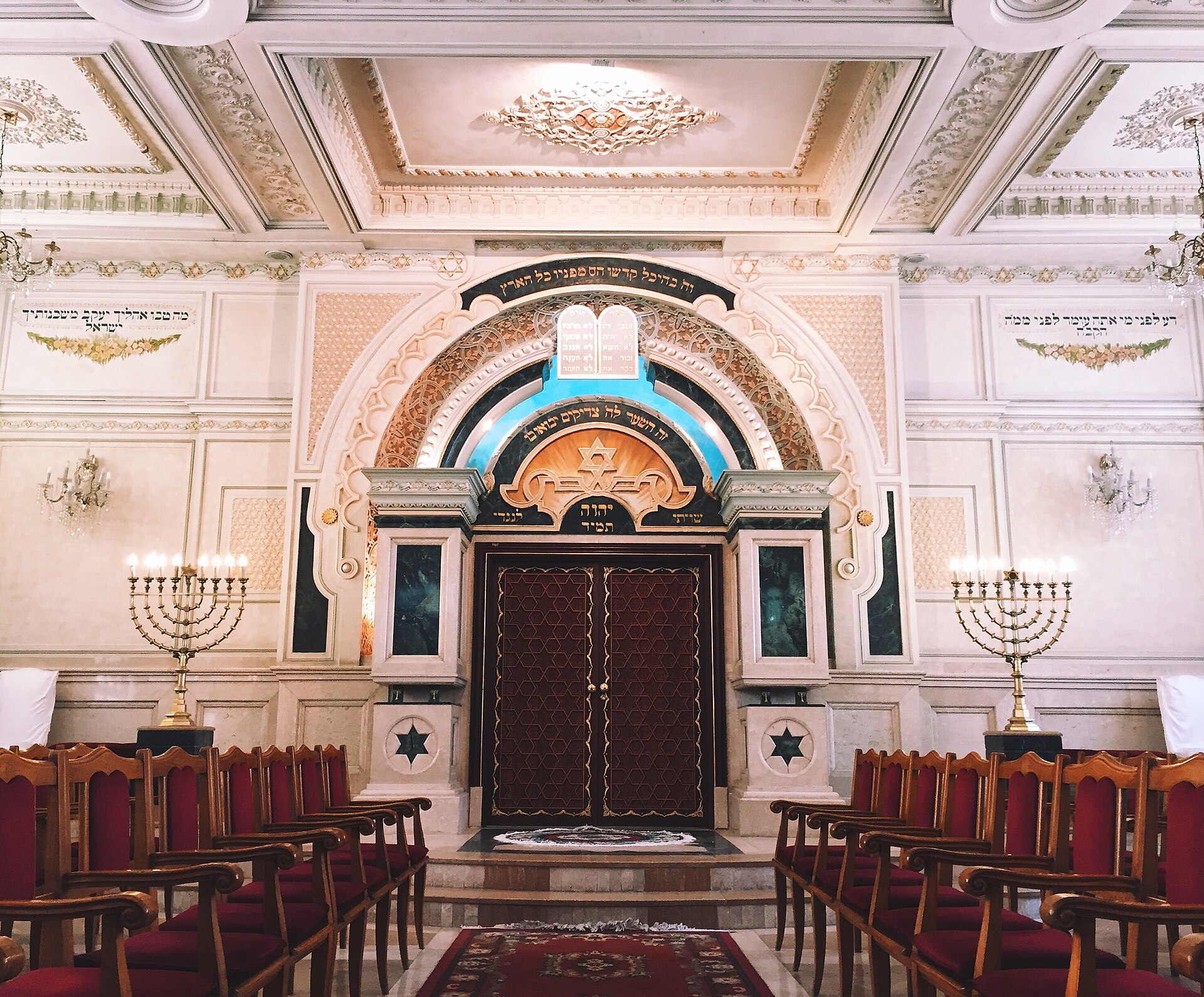
Temple Beth-El is the centrepiece of the community. Completed in 1949, it is one of the most visually striking synagogues I've ever encountered.
Its interior has been described as inspired by the work of Marc Chagall – the stained glass windows carry that same luminous, dreamlike quality. No other travel guide I'm aware of mentions this connection. It's worth seeking out for that alone.
What to expect when you visit:
- The Casablanca mellah neighbourhood, with its community centres and Jewish institutions
- Temple Beth-El – Chagall-inspired stained glass windows, completed 1949
- A living Jewish community, the largest in Morocco
3. Rabat Jewish Mellah & Mausoleum of Muhammad V
Rabat is Morocco's capital and the right place to tell two stories that sit at the heart of Jewish-Moroccan history: one about a king and one about a rabbi.
The Jewish mellah in Rabat is more recent than those in Fez or Marrakesh – it was built in the nineteenth century within the walls of the medina.
Jews have lived in Rabat since pre-Islamic times and the neighbourhood reflects a long, layered presence. It is a quieter visit than Casablanca or Fez – but the context you build here is essential.
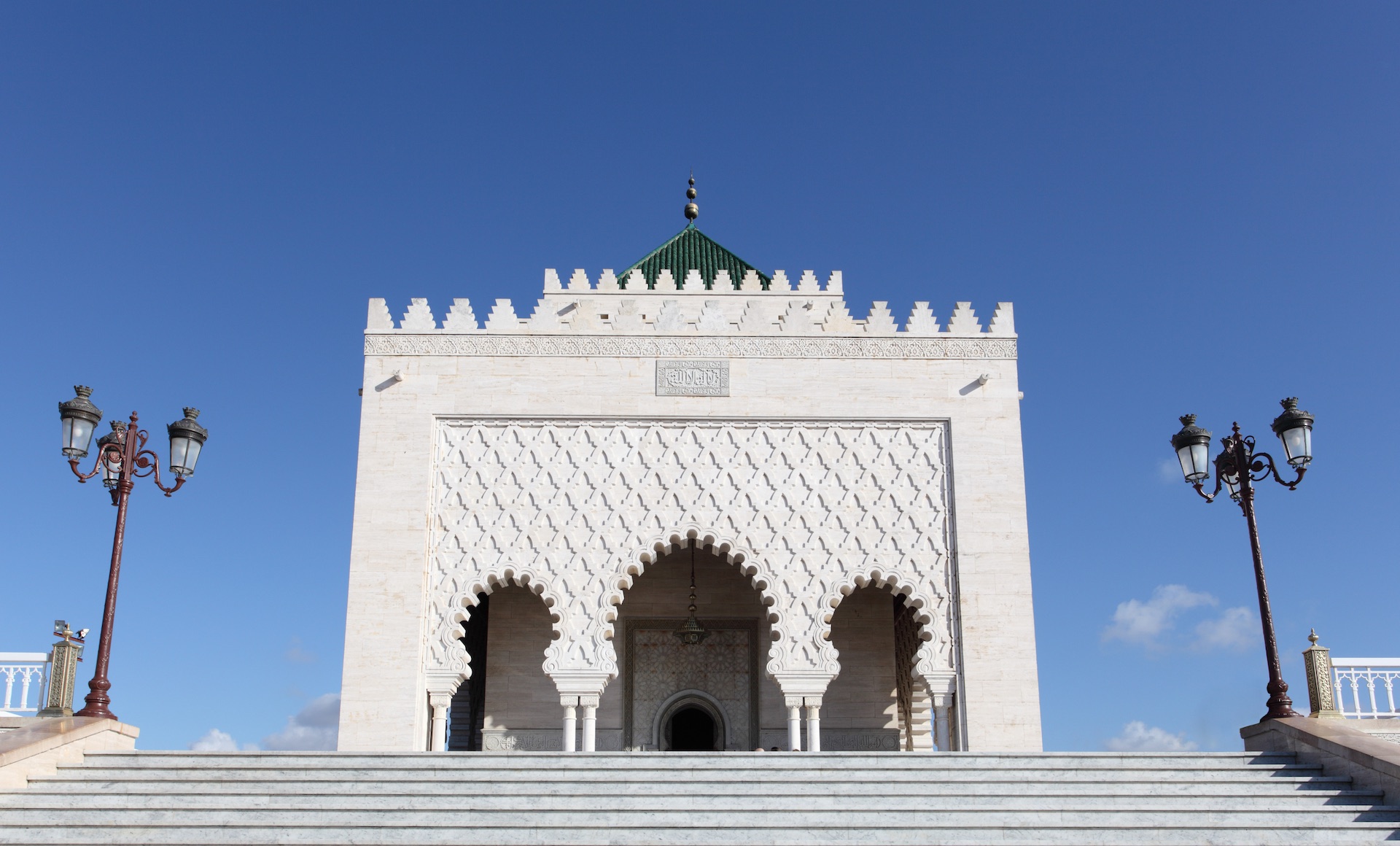
The Mausoleum of Mohammed V is one of the most beautiful buildings in Morocco – marble floors, gold leaf, 400 Moroccan artisans at work and designed with extraordinary care.
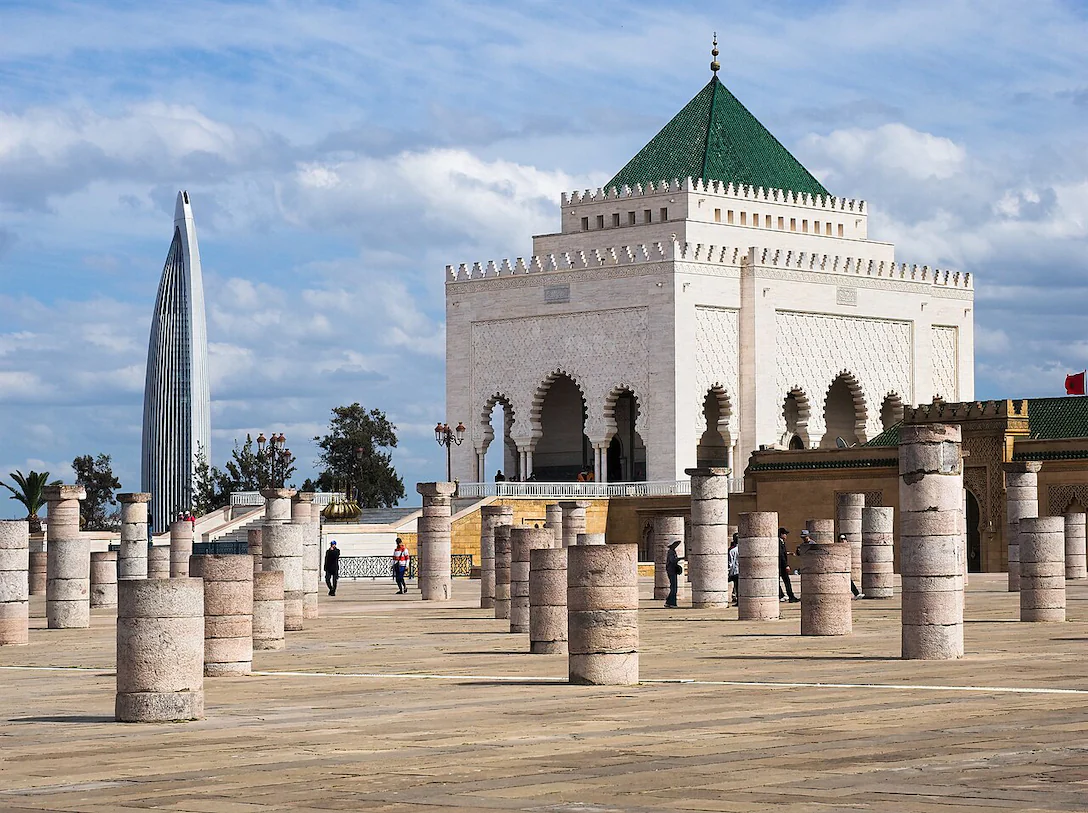
I take groups here because it is genuinely spectacular. But I also take them here to tell a story that defines what Morocco means for Jewish travellers:
During World War II, the Nazi regime pressured Sultan Mohammad V to identify and hand over Morocco's Jewish population.
Mohammed V instead protected Moroccan Jews.
His response – that he had "no Jews in Morocco, only Moroccans" – has passed into legend.
Whether those exact words were spoken is debated by historians, but what is not debated is his conduct: he attended Jewish community events during the war, he refused to enforce anti-Jewish laws imposed by the French Vichy government and he publicly maintained the dignity and belonging of Morocco's Jewish citizens at a moment when much of the world was doing the opposite.
The mausoleum is where he's buried. Standing inside it, with that history in mind, changes how the building feels.
While in Rabat, I also tell the story of Rabbi Raphael Anawa – born in 1848, died in 1935 – who became the first Chief Rabbi and President of the High Rabbinical Court of Morocco in 1918.
When he died, 20,000 people attended his funeral. His tomb in Rabat remains a destination for Jewish pilgrims to this day.
He's one of the most significant figures in Moroccan Jewish religious history and almost no travel guide mentions him.
What to expect when you visit:
- The Rabat Jewish mellah – a quieter, residential neighbourhood with deep historical roots
- Mausoleum of Mohammed V – architecturally spectacular, with a profound Jewish historical context
- Tomb of Rabbi Raphael Anawa – a pilgrimage site within the city
Thinking about visiting these sites? Let us build you a free sample itinerary – tailored to your group, your travel style and your specific interests. Asaf or one of his expert Jewish tour managers will respond personally.
4. Fez Jewish Quarter, Ibn Danan Synagogue & Jewish Cemetery
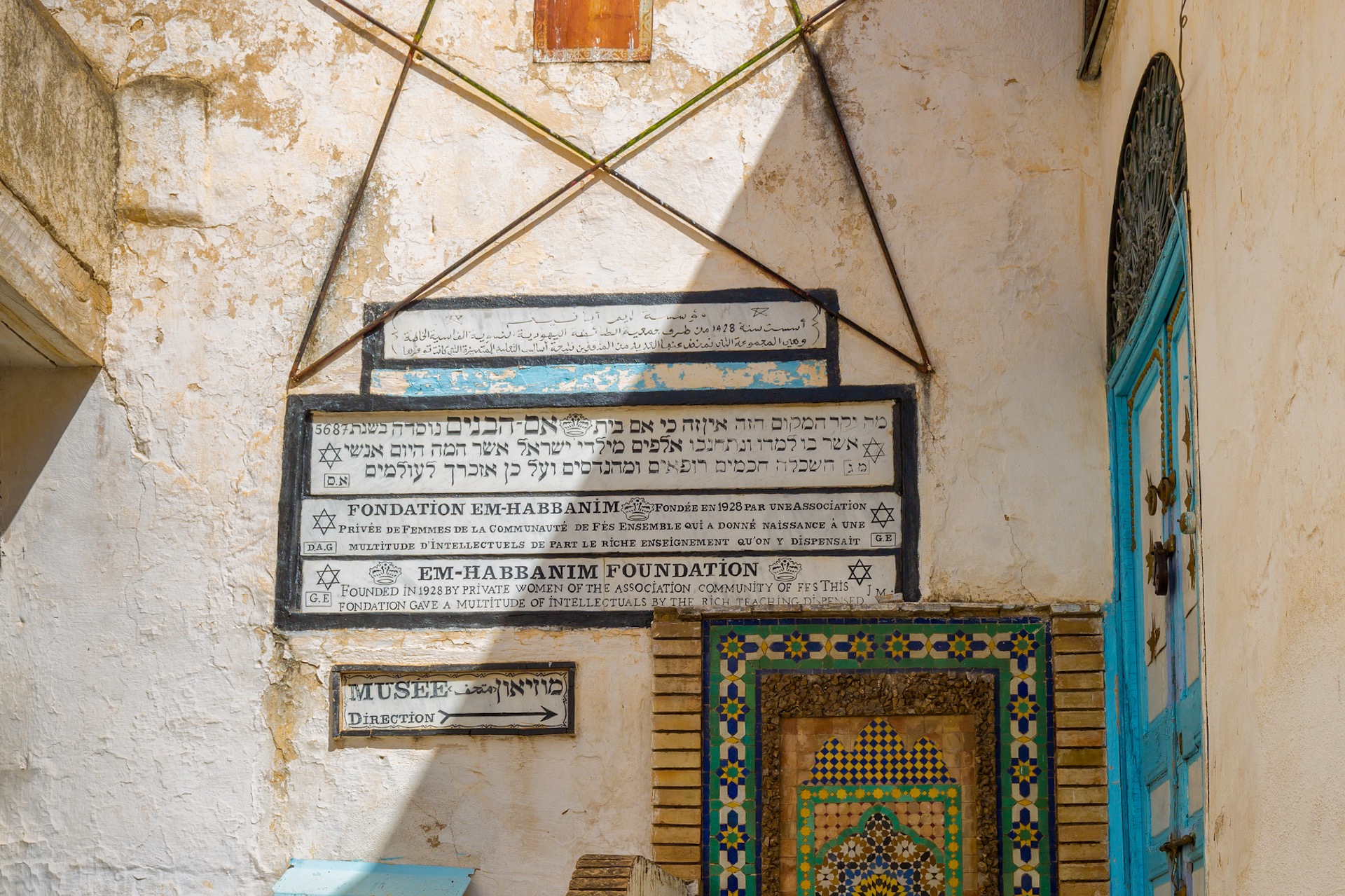
Fez is the oldest mellah in Morocco – dating to the fifteenth century – and it is the site I find myself thinking about most often when I reflect on what Jewish Morocco means.
The Jewish quarter in Fez is a maze within walls.
The architecture is distinctive – exterior wooden balconies, narrow streets, the smell of spice and cedar. The Sephardic influence is obvious here. This is where many of the Jews expelled from Spain in 1492 eventually settled and the cultural imprint of that migration still shapes the neighbourhood.
The Ibn Danan Synagogue is the jewel of the quarter – a seventeenth-century masterpiece of Moroccan craftsmanship, restored with support from American Express and the World Monuments Fund. The carved cedar wood and painted tilework show how Jewish and Islamic artistic traditions blended here over centuries. It is genuinely beautiful.
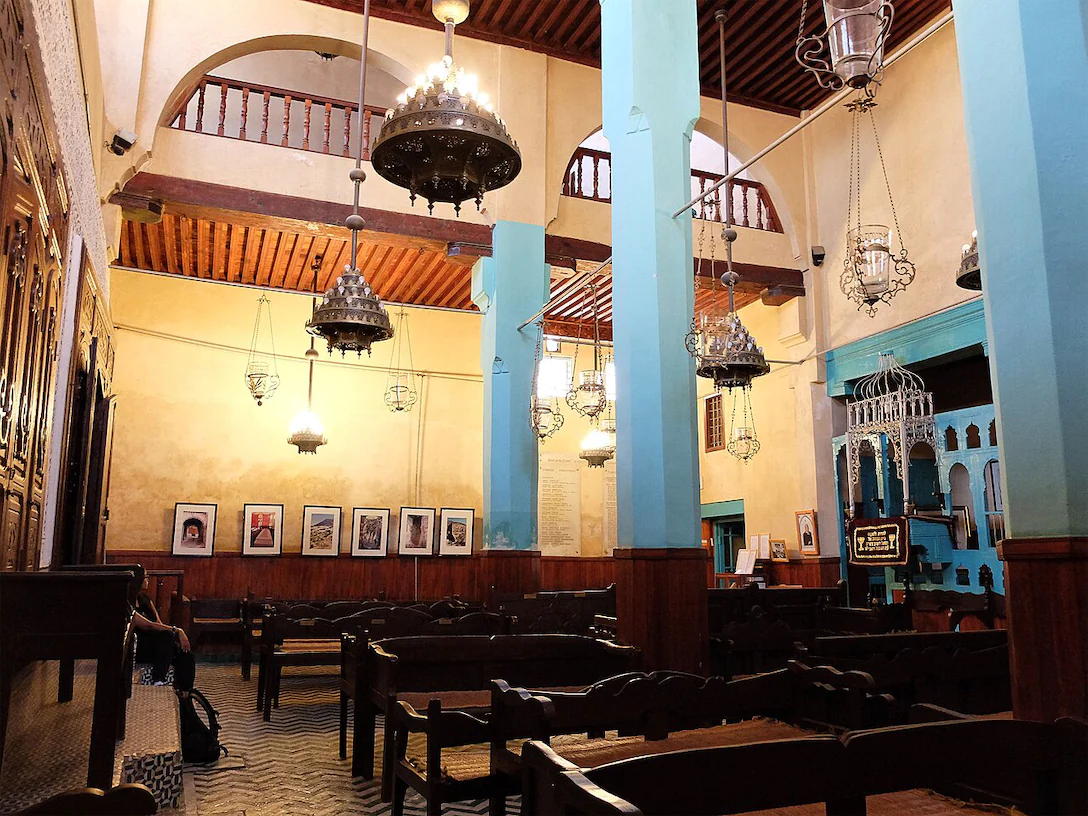
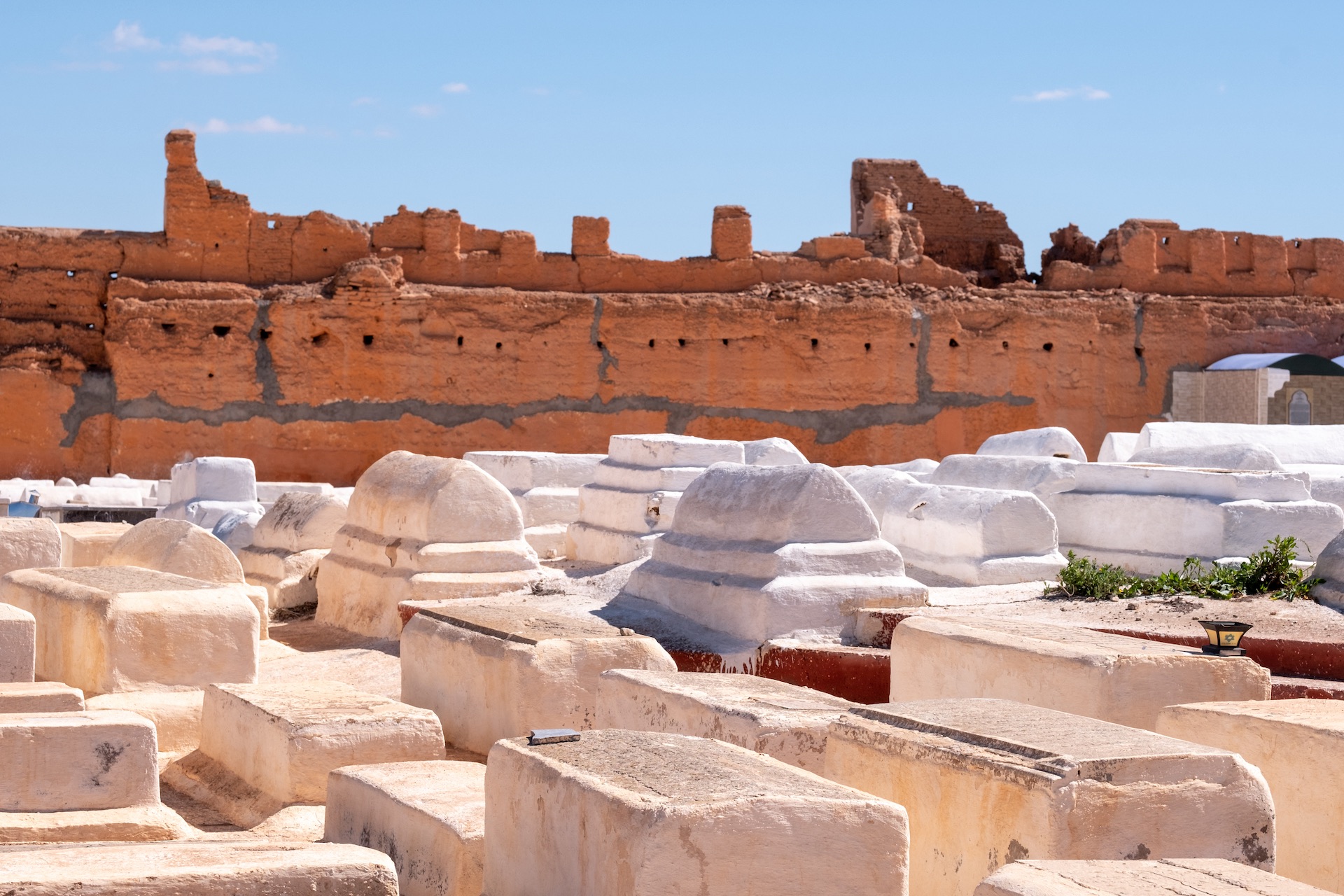
The Jewish Cemetery is worth visiting too. Tombstones dating back four hundred years sit alongside more recent graves, and the scale of it gives you a visceral sense of how large and long-established this community once was.
Maimonides – one of the greatest Jewish thinkers in history, philosopher, physician and codifier of Jewish law – lived in Fez from around 1159 to 1165, after his family fled persecution in Muslim Spain under the Almohad dynasty.
Maimonides' statue in Córdoba is one of top Jewish sites in Spain which I always recommend to visitors.
So who was he?
He was a young scholar at the time, trying to study and protect Jewish life under pressure, in a city that was itself under pressure. Fez became the place where he found enough stability to keep thinking.
He is buried in Tiberias, not Morocco – but Fez is where some of his most formative years unfolded. Telling his story here, in the streets he walked, is something that no guidebook can replicate.
I also speak about Rabbi Isaac Alfasi, a pivotal figure in the development of Jewish legal tradition and whose connection to Fez adds another layer to what this city represents in Jewish intellectual history.
What to expect when you visit:
- The Fez mellah – the oldest Jewish quarter in Morocco, rich with Sephardic history
- Ibn Danan Synagogue – a seventeenth-century masterpiece, beautifully restored
- The Jewish Cemetery – tombstones stretching back four centuries
- The story of Maimonides and his years in Fez
Bonus trip: Sufi ceremony
For clients booking a Jewish tour in Morocco with us, I always offer a bonus experience in Fez: a visit to a traditional Sufi ceremony.
The Sufis are a mystical sect of Islam whose practice of chanting and communal prayer has striking parallels with Kabbalah – the mystical tradition within Judaism.
Attending a ceremony in an ancient house in Fez, surrounded by chanting and music, is one of the most moving experiences I offer on any tour. It is not a Jewish site but it is a profoundly spiritual one – and for Jewish travellers with an interest in mysticism, the resonance is real.
More on this in the bonus experiences section.
5. Marrakesh Jewish Mellah & Al Azama Synagogue
The Marrakesh mellah was established in 1558 and sits directly adjacent to the royal palace – a physical arrangement that tells you everything about the relationship between Jewish communities and Moroccan power.
In 1947, the city's Jewish population exceeded 50,000, as stated in The Arab Weekly. Today fewer than 100 remain. The mellah endures.
Walking through it, you pass vendors selling herbs and spices, jewellery and crafts – the traces of a trading culture that was once entirely Jewish.
The Al Azama Synagogue, tucked down a narrow street, is one of the few remaining active synagogues in the city. Originally built in the fifteenth century, its riad-style courtyard and Hebrew inscriptions make it a genuinely beautiful stop.
The proximity of the mellah to the royal palace is not incidental.
Throughout Moroccan history, Jewish advisers served the royal court directly – a tradition that reflects the trust placed in Jewish families over centuries of shared history. The most prominent modern example of this tradition is André Azoulay.
The story of André Azoulay
Azoulay has served as a senior adviser to the Moroccan royal family for over three decades – first to King Hassan II, then to King Mohammed VI. He is Jewish.
That is not a detail that has ever been treated as an obstacle in Morocco. It has been treated as irrelevant to his role, which is the point.
In a region where Jewish belonging is contested almost everywhere, Morocco has produced a senior royal adviser who is openly and actively Jewish and who has worked to preserve the country's Jewish heritage throughout his career.
Telling his story here, in the shadow of the palace he has served, lands differently than telling it anywhere else.
What to expect when you visit:
- The Marrakesh mellah – established 1558, historically significant architecture
- Lazama Synagogue – fifteenth-century origins, riad-style courtyard, active today
- The Miara Jewish Cemetery – a peaceful and moving visit
- The royal palace exterior – the context for the André Azoulay story
6. Essaouira: Chaim Pinto Synagogue & Jewish Cemetery
At one point in its history, Jews made up nearly half of Essaouira's population. That fact alone is worth sitting with for a moment.
The city was a major Atlantic trading port and the Jewish community was central to its commercial life – merchants, traders and craftsmen who built wealth and reputation here over generations.
The Chaim Pinto Synagogue, named after one of the community's most revered figures, still functions when Jewish tour groups and pilgrims visit.
Rabbi Chaim Pinto was a celebrated kabbalist and community leader whose descendants became a significant rabbinical dynasty. His tomb in Essaouira is a pilgrimage destination – part of the broader Hiloula tradition we will come to shortly. The synagogue that bears his name carries that spiritual weight.
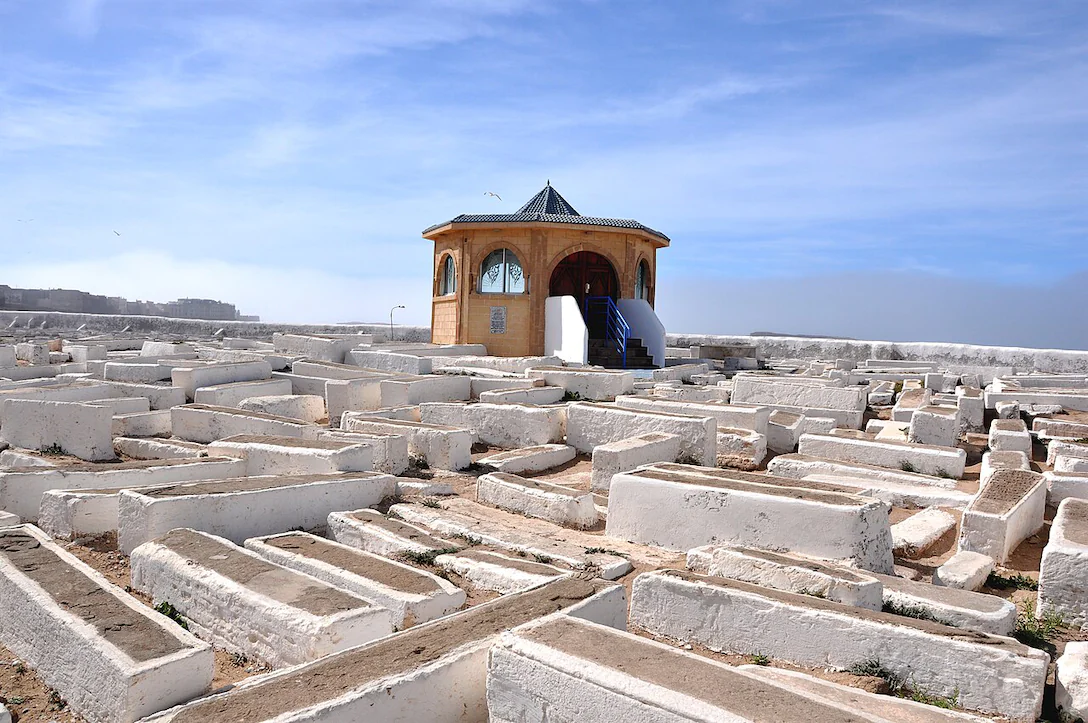
The Jewish Cemetery by the sea is one of the most atmospheric places I have visited anywhere in Morocco. It sits on cliffs overlooking the Atlantic – white-washed tombs, an ocean horizon, the sound of wind. It's the kind of place where you understand, without anyone having to say it, that the people buried here built something real and lasting.
What to expect when you visit:
- Chaim Pinto Synagogue – active for pilgrim groups, named after a revered kabbalist
- The Essaouira mellah – a community once nearly half the city's population
- Jewish Cemetery – clifftop location above the Atlantic, one of the most striking in Morocco
Planning a trip to Morocco that takes in these sites? Reach out for a free custom itinerary from Shin Tours – we will map out a route that fits your cities, your schedule and your interests.
7. Meknes: Talmud Torah Synagogue & Jewish Quarter
Meknes was once the imperial capital of Morocco, and its Jewish community reflected that status – educated, cultured and known across the region for its scholars and poets.
The Talmud Torah Synagogue is a small, elegant space filled with hanging lights – a former religious school for boys where Hebrew and Talmudic study formed the backbone of a Jewish education. It no longer functions as a school but the building remains intact and the atmosphere of the place is remarkably well preserved.
The mellah in Meknes is notable for its distinctive architecture – two mellahs, actually – an older one and a newer one built in the 1920s, when the community outgrew the original. The Berdugo family, a prominent local Jewish dynasty, was instrumental in establishing the newer quarter.
The figure I highlight in Meknes is Rabbi David ben Aharon ben Hussein – considered one of the finest Hebrew poets of the Moroccan Jewish tradition.
His work represents a kind of Jewish Moroccan literary culture that existed here for centuries and is now largely unknown outside specialist circles. Bringing it into the conversation, even briefly, adds a dimension to the visit that most tours never touch.
What to expect when you visit:
- Talmud Torah Synagogue – a beautifully preserved former religious school
- The Meknes mellah – distinctive architecture across two historic quarters
- The scholarly and poetic tradition of the Meknes Jewish community
8. Hiloula: Jewish Pilgrimage Across Morocco
The Moroccan Hiloula is something you will not find anywhere else in the Jewish world.
The Hiloula here is distinctly Moroccan.
Across Morocco, scattered in cities and countryside alike, are the tombs of revered rabbis who have been venerated by the Jewish community for generations. Each year, on the anniversary of a rabbi's death, thousands of Jews – Moroccan-born, Israeli, American, French – make the journey to pray at the tomb, light candles, touch the memorial stone and ask for blessings.
It's part religious pilgrimage, part family reunion, part living tradition that refuses to die despite the dispersal of the community that created it.
The Hiloula brings in far more than tourists. It's a gathering of people who feel a genuine, inherited connection to these places and these figures.
Being present at one – even as an observer – is one of the most powerful experiences Morocco offers a Jewish traveller.
Some of the most significant Hiloula destinations include:
- Rabbi Amram Ben Diwane, Ouazzane – his mausoleum draws pilgrims each May in one of the largest gatherings in the country
- Rabbi Nessim Ben Nessim, Essaouira province – celebrated at Ait Bayoud each May
- Rabbi David Benbaroukh, Taroudant – hundreds of pilgrims travel south to honour his memory
What to know about Hiloula:
- Events are calendar-based – check dates before booking travel
- Most are welcoming to respectful visitors regardless of background
- Travel to some sites requires a car – they are not accessible by public transport
- The atmosphere is celebratory, not solemn – music, food and community are central
9. The Atlas Mountains: Berber-Jewish History
This is the entry on this list that surprises people most. And it is the one I'm most proud to include.
The Atlas Mountains are not a Jewish site in any conventional sense. There's no synagogue, no mellah, no cemetery. But there is history here – ancient, unexpected and almost entirely absent from mainstream Jewish travel writing.
In the fifth and sixth centuries, Jewish merchants and refugees settled across North Africa, including in the communities that lived in and around the Atlas Mountains. Many of the Berber tribes in this region converted to Judaism during this period.
The tradition of Jewish practice among Berber communities continued for centuries – until the gradual conversion to Islam – and its traces survive in unexpected places.
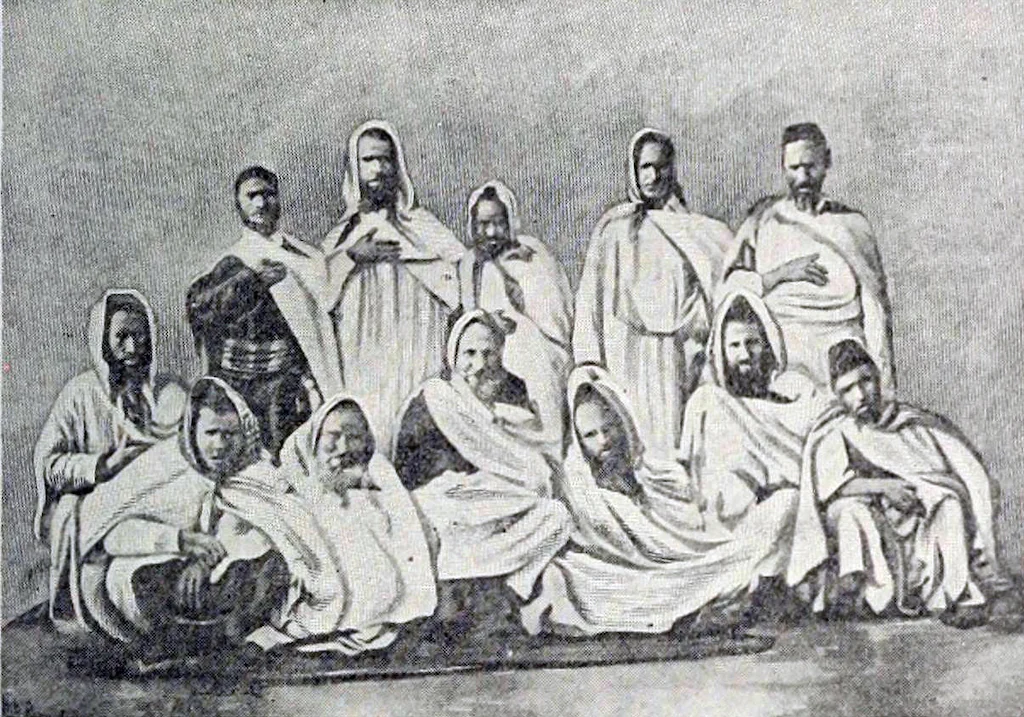
Image: Berber Jews ca. 1900
The Hamsa – the hand symbol found across Moroccan craft and decoration – is known in Islam as the Hand of Fatima.
In Judaism, the identical symbol is the Hand of Miriam, representing the hand of God and the five books of the Torah. Its presence throughout Moroccan Berber culture is not coincidental. It is a trace of shared history.
When I take groups into the Atlas Mountains to visit a traditional Berber family, I bring this history with me. Eighty percent of Morocco's population has rural tribal roots.
The connection between Berber and Jewish culture is a thread that runs through the country's identity, surfacing in symbols and customs that most visitors walk past without knowing what they are seeing.
What to expect when you visit:
- A guided visit to a traditional Berber family in the Atlas Mountains
- The story of Berber-Jewish history and the ancient Atlas Jewish communities
- The Hamsa symbol explained in its dual Jewish and Islamic context
- Stunning mountain scenery alongside cultural depth
2 Bonus Experiences I Recommend for Jews Visiting Morocco
These are not Jewish sites – they are experiences I've built into Shin Tours itineraries because they add something that no synagogue or mellah can – a felt sense of what Morocco is, beyond its monuments.
Bonus 1: A Night in the Sahara Desert
Picture arriving at a desert camp at sunset, on camelback, with a live Gnawa band playing as you approach.
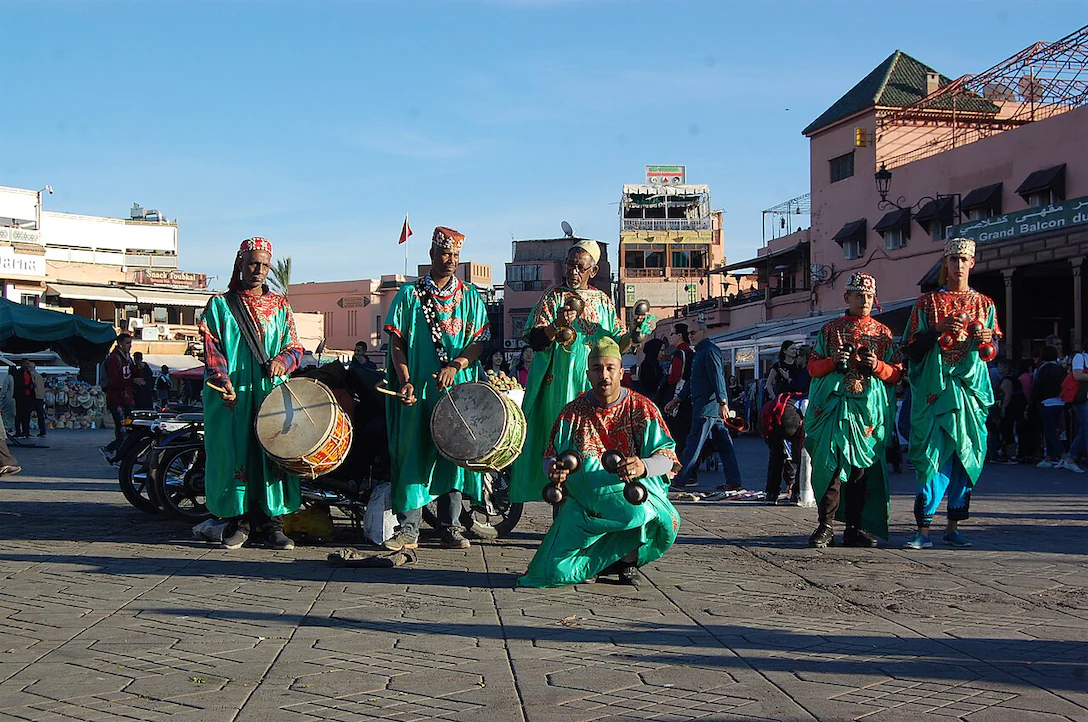
The Gnawa are musicians whose tradition descends from the African slaves brought to Morocco centuries ago. Their music – played on the guembri, a three-stringed instrument made from camel skin, and the krakeb, metal castanets whose sound echoes the rattle of shackles – is a music of freedom and spiritual longing.
Put Gnawa music on your favourite streaming service before your trip. You'll understand immediately why it moves people.
The evening unfolds around a fire in the middle of the desert: Moroccan food, a fire show and stargazing under a sky with no light pollution. We arrange this in the Agafay Desert – around an hour from Marrakesh – or in the Sahara itself.
For observant travellers, we can arrange kosher-friendly catering for the evening.
The experience does not require compromise. It requires planning – and that is what we do. For more information please contact us directly.
It's a night to be remembered. Every time.
Bonus 2: A Sufi Ceremony in Fez
In an ancient house in the medina of Fez, in a room lit by lantern light, a group of men sit in a circle and chant.
The Sufis are a mystical sect within Islam whose practice centres on the direct, personal experience of the divine – through music, chanting, movement and communal prayer.
Students of Jewish mysticism will recognise the impulse immediately.
Kabbalah and Sufism share a preoccupation with the same questions: How do you approach the infinite? What does devotion feel like from the inside?
I include this experience because it is unlike anything else on a Morocco itinerary – and because for Jewish travellers with a spiritual dimension to their journey, it offers a bridge between traditions that have more in common than most people realise.
You will not find this in a guidebook, you need a connection to get into the right room with the right community. That is what eight years in Morocco gives you.
Is Morocco Kosher-Friendly? What Jewish Travellers Need to Know
The short answer is: yes, with planning you can enjoy kosher food in Morocco.
Casablanca is the most straightforward city for observant travellers. With the largest active Jewish community in Morocco, it has kosher restaurants, kosher shops and a community infrastructure that understands and accommodates religious practice.
When creating a Kosher Jewish tour in Morocco, I usually work closely with the Chabad House in Casablanca. They can assist with catering and Shabbath prayers.
In other cities, the situation requires more preparation. Fez, Marrakesh, Rabat and Essaouira do not have the same dedicated kosher infrastructure, but with advance notice, many riads and hotels can accommodate kosher dietary requirements – particularly if you work with a tour operator who knows which properties to approach and how.
Observing Shabbat is possible across Morocco if it is built into your itinerary. Casablanca has active synagogues with Friday evening and Saturday services. In other cities, services are less regular but can often be arranged through community contacts.
A few practical points for observant travellers:
- Synagogues are typically closed to visitors on Shabbat – plan site visits for weekdays or Sunday mornings
- Dress modestly when visiting religious sites – covered shoulders and knees for both men and women; men should bring a kippah
- Photography is generally permitted at sites but not during services – always ask first
- The Hiloula pilgrimage events are fully observant environments – no preparation needed beyond knowing when they occur
If you are planning an observant trip to Morocco and want guidance beyond these basics, contact us directly – this is something we navigate regularly and I am happy to advise.
Experience Morocco's Jewish Heritage With Shin Tours
Morocco is a country that rewards depth. The more you know about what you are seeing, the more it gives you back.
I founded Shin Tours in 2018 and I've spent eight years planning, booking and managing Jewish heritage tours across Morocco – developing relationships with local guides, community members and properties that most visitors never access.
With a 5.0 / 5.0 TripAdvisor rating and Travellers' Choice Award, Shin Tours is one of the world's top-rated Jewish tour operators.
When you travel with us, you get:
- A free custom itinerary built around your group's interests, travel style and specific requests
- Expert guidance from Asaf or one of his experienced Jewish tour managers
- Access to sites, communities and experiences that independent travellers rarely find
- Kosher and Shabbat-friendly arrangements managed on your behalf
- The stories behind every site – the people, the history, the meaning
Get your free custom Morocco itinerary here. You will receive a sample plan that shows you exactly what a well-paced, professionally designed Jewish heritage tour of Morocco looks like – at no cost and with no obligation.
You can also learn more about our Morocco tours, including sample itineraries, here.
Can't I Just Plan This Trip Myself?
You can, Morocco is a safe and accessible country, and many of the sites on this list are open to independent visitors.
What you will find harder to access independently are the stories, the community connections, the off-itinerary experiences and the logistical knowledge – kosher arrangements, Shabbat services, which guide to trust in which city – that make the difference between a good trip and a genuinely memorable one.
That knowledge takes years to build. We've already built it.