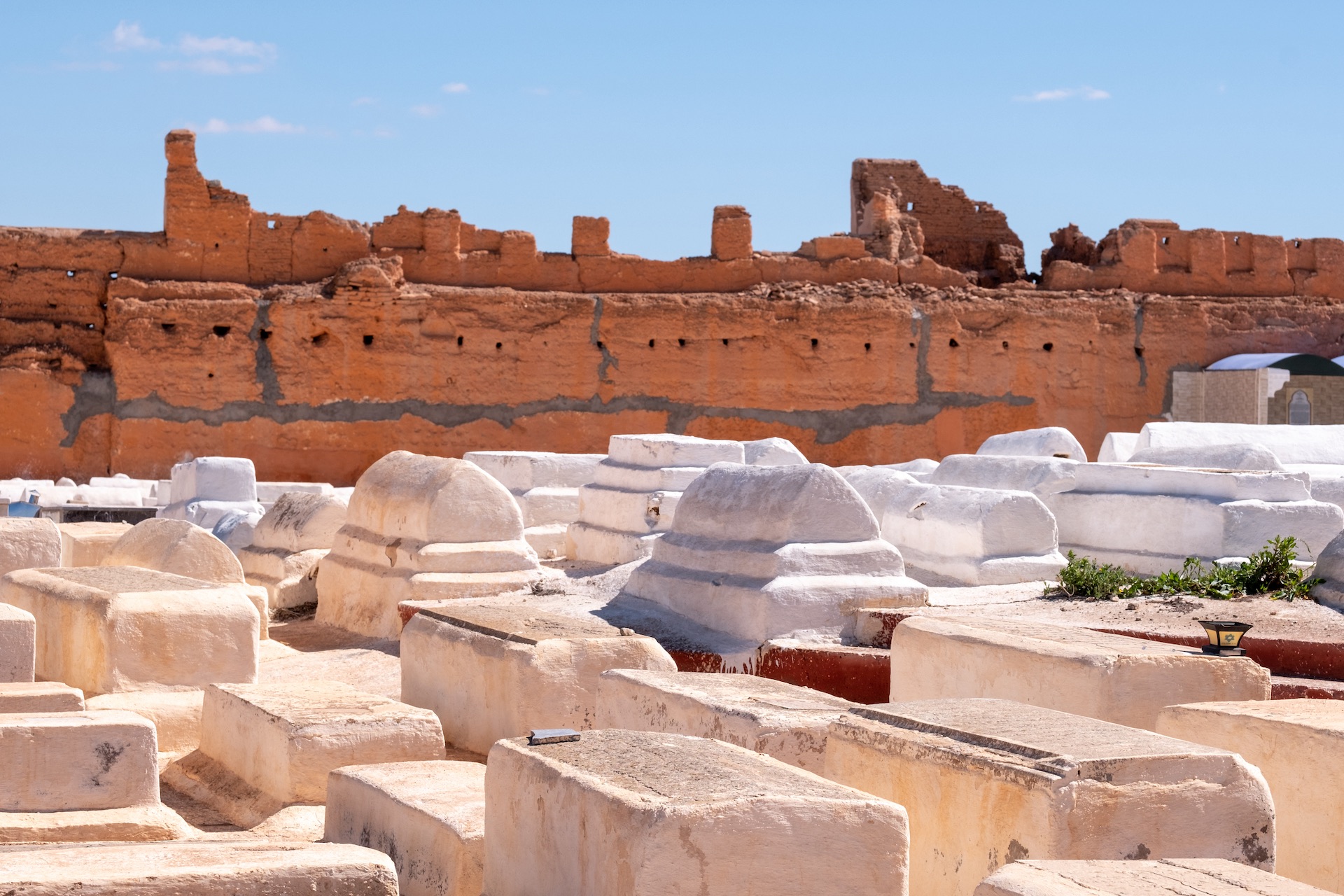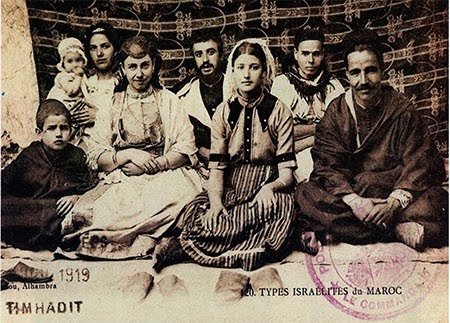
Casablanca holds the largest Jewish community in Morocco – and the largest in the entire Arab world. Its story is younger than you might expect. This is not a lost heritage. It is a living community, still here, still active, still welcoming visitors.
Casablanca’s Jewish history is modern. The community grew in the 19th and 20th centuries after the port reopened for trade in 1831, drawing Jews from Morocco’s older inland and coastal towns. It became the country’s largest Jewish community – and remains the largest in the Arab world today.
Key Facts: Jewish Casablanca
- Casablanca has the largest Jewish community in Morocco and the Arab world
- The community is modern – roughly 200 years old, far younger than Fes or Marrakech
- It grew by absorbing migrants from Morocco’s declining ancient communities
- The population peaked at 74,782 in 1952 and represented a third of Morocco’s Jewish population
- Today it numbers around 1,000 to 2,500, depending on the source
- Home to the only Jewish museum in the Arab world, plus active synagogues and a Chabad centre
- Most of the community left from the 1960s, but Casablanca remains the country’s beating Jewish heart
Casablanca allows something that none of Morocco’s other Jewish cities do: the chance to see Jewish sites and participate in Jewish prayers, Shabbat meals and visit Jewish families. This is something we offer as part of our private Jewish tours of Morocco.
Below, I’ll walk you through where this community came from, how large it grew, what remains today, and how you can experience it for yourself.
What Is the Jewish History of Casablanca?
Casablanca's Jewish community is modern by Moroccan standards. It formed in the early 19th century and grew rapidly after the port reopened for trade in 1831, becoming Morocco's largest Jewish community and the largest in the Arab world – a position it still holds.
Morocco's Jewish story stretches back more than two thousand years. Casablanca's chapter is much shorter.
For centuries, the great centres of Moroccan Jewry lay elsewhere – in the ancient inland cities and the older coastal towns. Casablanca was a minor port. Its Jewish community, by comparison, is a recent creation.
That is the key to understanding it. While the ancient communities of Fes, Marrakech and Essaouira slowly declined, Casablanca grew. It absorbed their people. It became the destination, not the origin.
The trigger was commerce. After the port reopened for trade in 1831, Casablanca began its transformation into Morocco's commercial capital. Jewish merchants and artisans moved in from the interior and the older coastal towns, drawn by opportunity. Historian Jean-Louis
Cohen explained how European economic penetration drove traditional Jewish crafts out of the inland markets, pushing Jews toward the coast for work.
This makes Casablanca the inverse of its siblings.
Where the older communities emptied, Casablanca filled. It is the youngest of Morocco's four great Jewish cities, and it became the largest by absorbing the rest.
How Old Is the Jewish Community in Casablanca?
Casablanca's Jewish community is roughly 200 years old. It traces to the early 19th century and grew after the port reopened in 1831 – far younger than the ancient communities of Fes or Marrakech, which date back many centuries.
Age is where Casablanca stands apart. Fes had an established Jewish mellah in the 15th century. Marrakech's Jewish community is older still.
Casablanca's community, by contrast, is a child of the modern age. There were Jews in the area long before – the city sits on the site of ancient Anfa – but the community as we know it is a 19th-century creation.
That youth is not a weakness. It is the reason Casablanca survived.
As emigration hollowed out the ancient communities through the 20th century, Casablanca – young, urban, commercial – held on.
Why Did Jews Come to Casablanca?
Jews came to Casablanca mainly for economic opportunity. As the port reopened and the city became Morocco's commercial capital, Jewish merchants and artisans migrated from the interior and older coastal towns. This was internal Moroccan migration toward work – not refugees fleeing Europe.
The pull was the merchant trade opening up in the port city.
Casablanca became Morocco's economic engine, first under the sultans and then dramatically under the French Protectorate. Where there is trade, there is opportunity, and Jewish merchants followed it.
The mechanism was specific. British philanthropist Moses Montefiore visited in 1864 and negotiated protégé status for Moroccan Jews in certain cities. European powers then backed the Jewish traders who set up business in Casablanca, and the community grew on the back of that commerce.
This is worth stating plainly, because a common misconception gets it wrong.
Casablanca's Jewish community did not form from European refugees. It formed from Moroccan Jews moving internally – from the interior and the old coast toward the new commercial capital.
The refugee story belongs to a different, wartime chapter, not to why this community exists.
How Large Was Casablanca's Jewish Community?
Casablanca's Jewish community peaked at 74,782 in 1952 – the largest in Morocco and one of the largest anywhere in the Arab world. Emigration from the 1960s reduced it sharply, though it remains the country's largest surviving Jewish community today.
The numbers tell the story of both the growth and the departure. They also come with a health warning: sources count differently, and estimates vary. The table below shows the range with its sources rather than pretending one figure is definitive.
Casablanca's Jewish population across two centuries
| Year | Jewish population (Casablanca) | Source |
|---|---|---|
| 1866 | ~1,800 | Secondary / historical record |
| 1910 | ~5,000 | Secondary / historical record |
| 1936 | ~40,000 | Secondary / historical record |
| 1951–52 | 74,782 | Cohen / Quest-CDEC |
| 2018 | ~2,500 | US State Dept, community leaders |
| Current | ~1,000 | World Jewish Congress |
A note on the peak.
Counts differ because some include only Moroccan Jews while others count French and Algerian Jews living in the city too. The honest range is 74,782 at the low end to potentially 100,000 registered as Jews came to Casablanca for emigration out of Morocco.
Was Casablanca the Largest Jewish Community in Morocco?
Casablanca held the largest Jewish community in Morocco, peaking at roughly 75,000–100,000 in the mid-1950s. As the older inland and coastal communities declined, Casablanca absorbed their migrants and became the hub of Jewish life – and remains the largest Jewish community in the Arab world.
By 1960, 45% of all Morocco's Jews lived in Casablanca.
This was not because Casablanca alone was thriving while the rest declined. It was because Casablanca was the place people moved to as the older communities emptied. The city concentrated what remained.
That concentration is why it still leads today, even at a fraction of its former size.
How Many Jews Are in Casablanca Today?
Estimates vary. Casablanca is home to somewhere between about 1,000 and 2,500 Jews today. The World Jewish Congress gives around 1,000; the US State Department, citing community leaders, puts roughly 2,500 in the city. All sources agree it is the largest Jewish community in Morocco and the Arab world.
Here is where honesty matters more than a tidy number.
The World Jewish Congress lists Casablanca at around 1,000 Jews – the largest of Morocco's communities, ahead of Rabat, Marrakech and the rest. The US State Department's 2018 religious freedom report, drawing on community leaders, estimates 3,000 to 3,500 Jews in Morocco, with about 2,500 in Casablanca. Some tour and community sources cite figures higher still.
So the truthful answer is a range: roughly 1,000 to 2,500, with the exact figure depending on who is counting and when. What no source disputes is the ranking. Casablanca is first.
Why Did Jews Leave Casablanca?
Jews left Casablanca mainly from the 1960s, after Moroccan independence in 1956. The departure had many overlapping causes – economic pressure, regional tension, the pull of Israel and family abroad, and uncertainty about the future – reducing a community of tens of thousands to a few thousand within a generation.
The reasons were tangled, and it is a mistake to reduce them to one. Some left for Israel, some for France or Canada, some to rejoin family already gone. Some feared the future; others simply followed the economic tide.
You can read more about why Jews left Morocco here.
What Jewish Sites Are There in Casablanca?
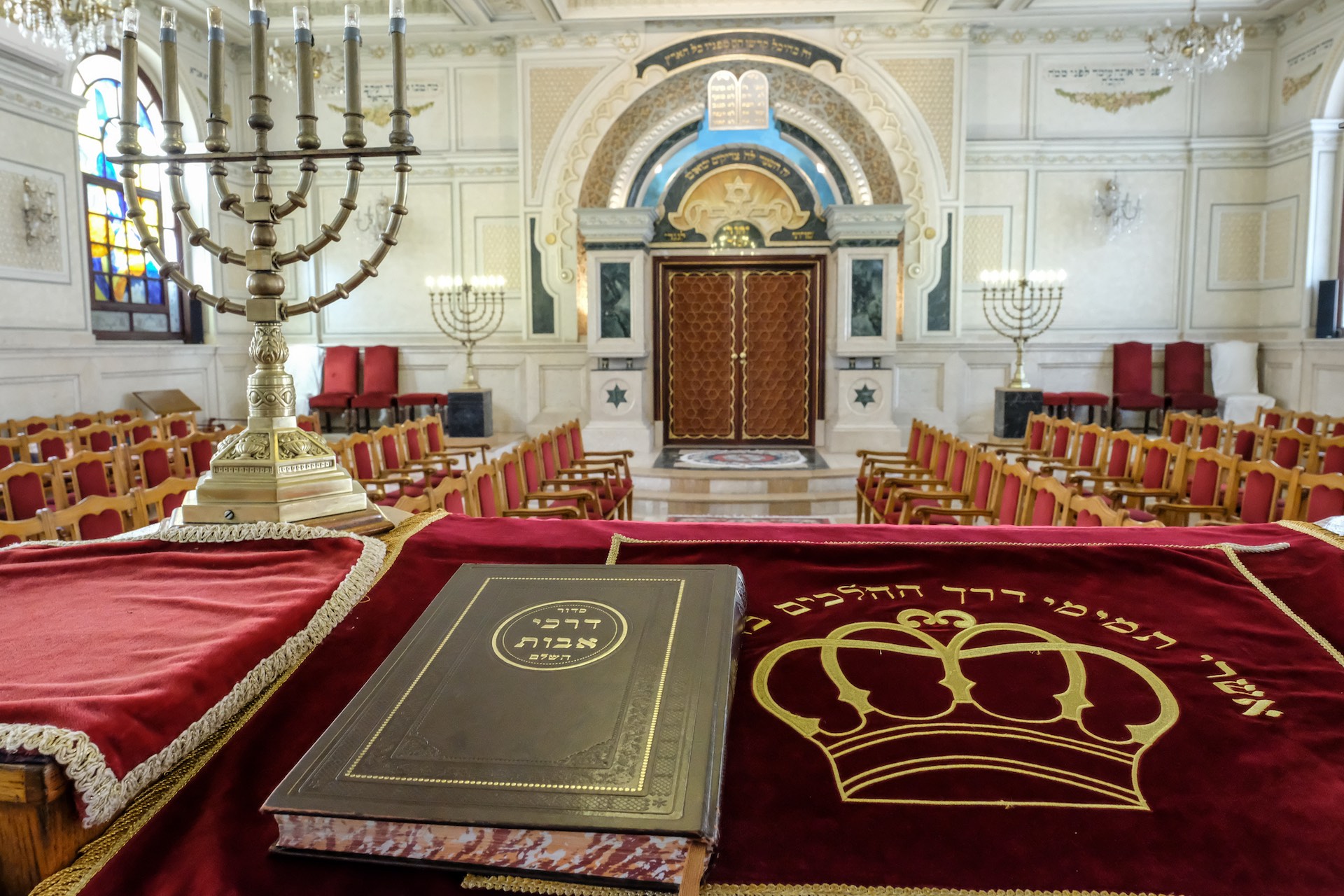
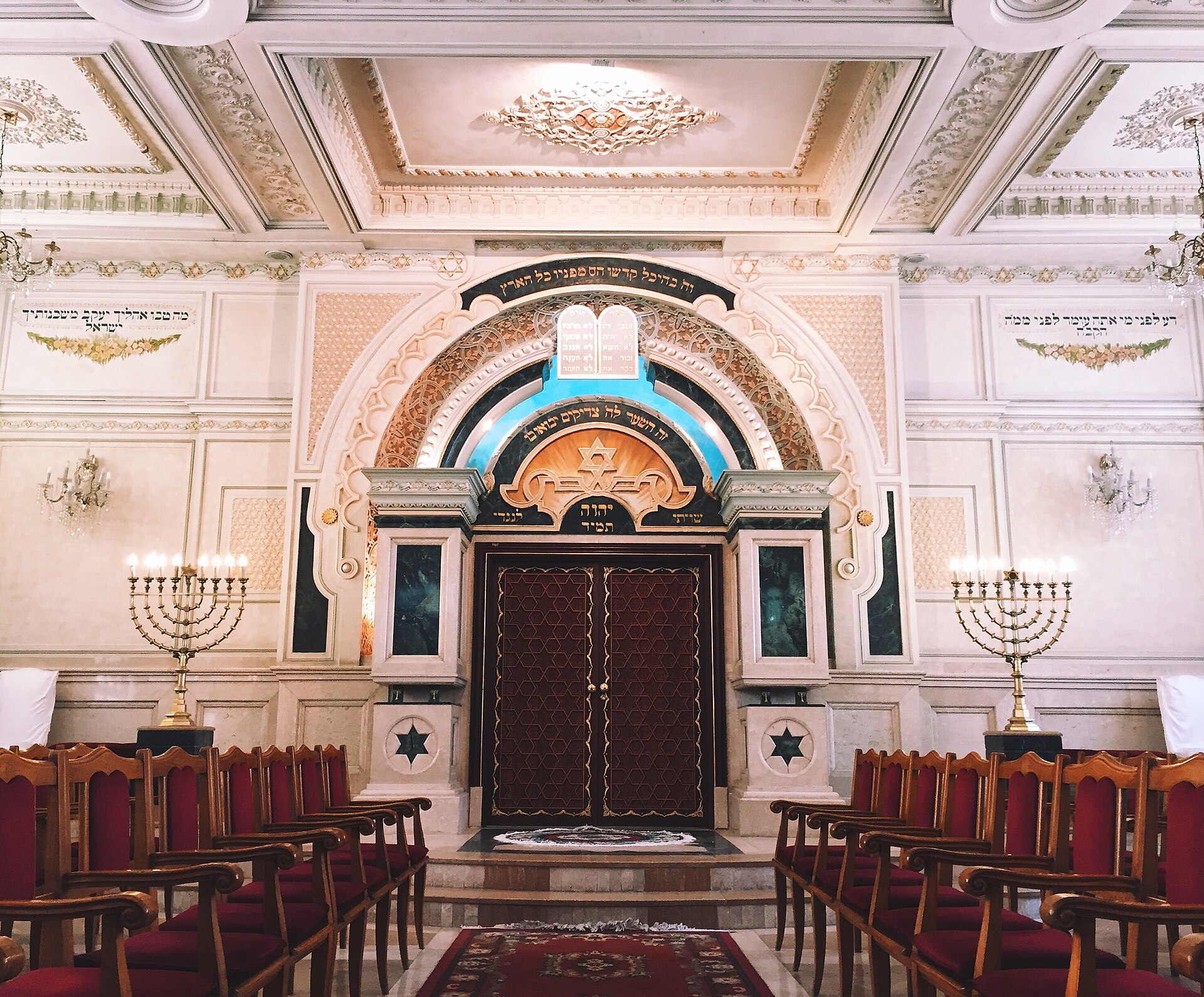
Casablanca has the richest set of living Jewish sites in Morocco. They include the Museum of Moroccan Judaism – the only Jewish museum in the Arab world – the landmark Temple Beth-El, the restored Ettedgui Synagogue, an active Chabad centre, and the historic Mellah. Unlike heritage-only quarters elsewhere, most are still in active use.
This is the heart of what makes Jewish Casablanca different. In Fes or Marrakech, you visit what was. In Casablanca, much of it still is.
The distinction that matters is active versus heritage. An active site has a living function –
people pray there, gather there, keep it running. A heritage site is preserved but no longer in daily use. Casablanca is unusual in how much falls into the first category.
The main Jewish sites of Casablanca
| Site | What it is | Active or heritage | Why visit |
|---|---|---|---|
| Museum of Moroccan Judaism | The only Jewish museum in the Arab world, in a former orphanage in the Oasis district | Active (working museum) | Torah scrolls, ritual objects, clothing, reconstructed synagogue interiors |
| Temple Beth-El | Landmark synagogue built 1949, known for its stained glass | Active (working synagogue) | The centrepiece of community worship; ~500 seats, luminous stained glass |
| Ettedgui Synagogue | Historic synagogue near the old medina, restored and rededicated in 2016 | Active (restored) | A restoration attended by King Mohammed VI; ties the old city to the living community |
| Chabad of Casablanca | Active Chabad-Lubavitch centre | Active (community hub) | Minyan, community life, a welcoming point of contact for visitors |
| The Mellah | The historic Jewish quarter, south of the old medina | Heritage (community moved out) | The community's origin point; kosher butchers and the old market remain, but Jews no longer live or worship here |
Read more about the best Jewish sites to visit in Morocco here.
Museum of Moroccan Judaism
The Museum of Moroccan Judaism opened in 1997 and is the only Jewish museum in the Arab world. Housed in a former Jewish orphanage in the Oasis district, it holds ritual objects, clothing, photographs and reconstructed synagogue interiors from communities across Morocco.
This is the anchor of any Jewish visit to Casablanca. It sits in the Oasis neighbourhood – not in the old Mellah, a point worth stressing, since the two are often confused.
Founded in 1997, it was renovated and reopened in 2016. Its director, Zhor Rehihil, is a Moroccan Muslim scholar with a doctorate in Jewish studies – itself a small emblem of the Muslim-Jewish relationship the museum documents.
Inside, you'll find Torah scrolls, embroidered caftans, oil lamps, marriage contracts, and full reconstructed synagogue rooms. It is a serious collection, and it rewards a slow visit.
Temple Beth-El
Temple Beth-El is Casablanca's landmark synagogue, built in 1949. Known for its striking stained glass, it functions as the centrepiece of the city's Jewish worship and seats several hundred. It remains active today.
Beth-El – sometimes called Le Temple Algérien, after the Algerian Jewish immigrants who established it
– is the synagogue most visitors come to see.
The stained glass is the reason. Light pours through it and scatters colour across the interior, catching the chandelier. It is the working heart of the community, not a museum piece.
This is the synagogue Shin Tours visits with travellers, and it sits on the edge of the old Mellah.
Ettedgui Synagogue
The Ettedgui Synagogue is a historic Casablanca synagogue near the old medina, restored and rededicated in 2016 in a ceremony attended by King Mohammed VI. Its restoration reconnects the old city with the living community.
For years this synagogue stood closed, awaiting restoration. That work is now done. Its rededication – attended by the King – was part of a wider royal effort to preserve Morocco's Jewish heritage. It stands in the old town, a bridge between the community's origins and its present.
Chabad of Casablanca
Chabad of Casablanca is an active Chabad-Lubavitch centre serving the city's Jewish community and visitors. It offers a minyan and a point of contact for travellers, reflecting the community's living, functioning religious life.
For a visiting Jewish traveller, Chabad is often the easiest entry point.
It is the kind of institution you find in living communities and not in extinct ones – which is precisely the point about Casablanca.
The Casablanca Mellah
The Casablanca Mellah is the city's historic Jewish quarter, in the southern part of the old medina. Unlike the walled mellahs of older cities, it was porous and unwalled. The community has long since moved out to the newer city, so this is a heritage site, not where Jews live or worship today.
The Mellah is where the community began, but it is not where the community is.
From the early 20th century, as Casablanca's new European city rose, Jews moved out of the Mellah into the modern quarters. The wealthy left first; over time, the historic quarter was largely emptied and partly demolished.
A small residual presence and some kosher butchers remain in the old market. But the honest picture is clear: the living community relocated, and the Mellah today is a place of memory rather than daily worship.
How Do You Visit Jewish Casablanca?
Jewish Casablanca is best explored with the Museum of Moroccan Judaism as your anchor, alongside Temple Beth-El and the Chabad centre. Because this is a living community, a local guide helps arrange respectful synagogue visits. Dress modestly at active sites and check opening times in advance.
Visiting a living community is different from touring a monument. You are, in a real sense, a guest.
Start with the museum – it gives you the context everything else builds on. From there, Temple Beth-El and the Chabad centre show you the community in its present-day form. The Mellah and the Jewish cemetery round out the historical picture.
Practical notes matter here. Active synagogues are not always open to drop-in visitors, and access is easier when arranged in advance. Casablanca also has a working kosher infrastructure – kosher restaurants, butchers, bakeries and a Jewish social club – so a visit need not feel like a history lesson.
Booking in these kinds of experiences is exactly what we provide through our private Jewish heritage trips to Morocco.
There's a reason travellers keep coming. Morocco receives tens of thousands of Jewish visitors each year for pilgrimages, holidays and family occasions – a living bond between the community and its diaspora.
Frequently Asked Questions
Where Is Casablanca's Jewish Quarter?
Casablanca's historic Mellah sits in the southern part of the old medina, but the community moved out long ago.
Most Jews now live and worship in the newer city, where the main synagogues, kosher facilities and the Museum of Moroccan Judaism are found. The Museum sits in the Oasis district, not the Mellah.
What's Special About the Museum of Moroccan Judaism?
Opened in 1997, it is the only Jewish museum in the Arab world. Set in a former Jewish orphanage, it displays ritual objects, clothing, photographs and reconstructed synagogue interiors. It stands as the anchor of any Jewish visit to Casablanca.
Which Moroccan City Has the Most Jews?
Casablanca – the largest Jewish community in Morocco and the Arab world. Estimates range from around 1,000 to 2,500 depending on the source, far more than Rabat, Marrakech or any other Moroccan city. Read more about Jews in Morocco today here.
Are There Any Active Synagogues in Casablanca?
Yes. Several synagogues remain active, including the landmark Temple Beth-El and the community's Chabad centre. Casablanca historically had more than 80 synagogues; around 30 remain in service today.
Are There Hiloulahs in and Around Casablanca?
Yes. The region hosts hiloulot – pilgrimages to the tombs of revered rabbis – drawing Moroccan Jews and diaspora visitors. One is held for Rabbi Eliyahu HaCohen, known as Qandil el-Blad. Read more about Hiloulas in Morocco here.
Experience Living Jewish Casablanca With Shin Tours
I've spent over twelve years leading Jewish heritage tours through Morocco, guiding thousands of travellers each year – and Casablanca surprises people most of all.
This isn't only history. It's the largest living Jewish community in the Arab world: active synagogues, a thriving Chabad, kosher tables, and the only Jewish museum in the Arab world. My team and I know these places and the people who keep them, and we build trips that let you experience this heritage as something present, not just past.
When you request a free custom itinerary, here's what you
get:
- A tailored itinerary built around your interests and travel group, with the synagogues, community sites and
heritage places that matter to you mapped out - A personal call with me to talk through your trip and what you're hoping to connect with
- A sample itinerary to review before you commit to anything
You can also learn more about Shin Tours if you want the fuller
picture first.
Casablanca is where Morocco's Jewish story is still being written – the largest living community in the Arab world, and more accessible to visit than most people expect. Request your free custom Morocco itinerary, and let's plan a journey into a heritage that's still very much alive.
Asaf Peled
Asaf Peled began operating Jewish tours as a registered guide in Israel in 2012, before founding Shin Tours in 2018 and opening up Jewish heritage tours in the Middle East, North Africa and Europe.