What Caused the Jewish Exodus From Morocco?
No single event caused it. Moroccan Jews emigrated between 1948 and the 1970s for several reasons at once: the founding of Israel, political uncertainty after independence in 1956, regional Arab-Israeli tension, and better economic prospects abroad. Morocco issued no expulsion order.
I have organized Jewish heritage tours to Morocco for years, and this is the question I hear most at the mellah gates of Fez and Marrakesh.
The honest answer resists a single headline. What I hear from our local Moroccan guides on the ground, is that visitors expect a story of persecution and eviction. What they find is more human and more complicated.
What Were the Main Factors?
The three main factors in the Jewish exodus from Morocco were:
- The creation of the state of Israel in 1948
- Moroccan independence in 1956
- Morocco joining the Arab League in 1958
The creation of Israel in 1948 was the first great pull. For many families, it answered a religious longing carried for generations. For others, it offered a fresh start.
Then came independence in 1956. When France withdrew, a French-educated Jewish middle class faced a new Arab state and an uncertain future. Some feared for their standing as a religious minority. Many simply saw wider opportunities in Europe and beyond.
Regional politics sharpened the unease. Morocco joined the Arab League in 1958, cut ties with Israel, and pan-Arab sentiment (inspired by Egypt's Nasser) spread through public life – even as the monarchy kept its long tradition of protecting Jews. That tension between a protective throne and a restless street sits at the centre of the whole story.
Economics mattered as much as fear. Israel actively recruited immigrants, France offered a familiar language, and Canada opened its doors. Once part of a family left, relatives followed, and the movement fed itself.
The result was steady, not sudden. And that gradual character is exactly why "expulsion" is the wrong word.
Did Morocco Ever Formally Expel Its Jews?
No, Morocco never expelled its Jewish population. The emigration was gradual and largely chosen, and between 1956 and 1961 the independent government banned it. King Mohammed V had earlier refused Vichy France's orders to deport Morocco's Jews during World War II.
Unlike Iraq, Egypt or Libya, where Jews fled in fear after riots and mass expulsions, Morocco stands apart. Historian Jessica Marglin, in The Forgotten Exodus, a podcast by the American Jewish Committee, frames it well – Moroccan Jews who left "did so really, with a real choice," and their numbers fell in a long decline rather than a cliff-edge flight.
There is irony here.
The worst violence – the 1948 riots in Oujda and Jerada, which killed more than 40 Jews – struck border towns that were departure points for Israel. The bloodshed aimed to stop Jews leaving, not to force them out.
If anything, the pressure ran the other way. After independence, Morocco outlawed emigration to Israel and withheld passports from Jews.
When emigration resumed, it came at a price. Israel paid the Moroccan state a sum for each Jew allowed to leave – a covert arrangement that some describe as holding a community for ransom rather than expelling it. The distinction matters, and it is why so many Moroccan Jews bristle when they hear the word "expelled."
None of this erases the fear that shaped individual choices. But the record is clear: no decree, no eviction, no order to go. To understand the Jewish community in Morocco today, that difference is everything.
Why Did Jews Leave Morocco in the 1950s?
Emigration surged through the 1950s as independence approached, in 1956. Fear of losing status in a new Arab state, the pull of Israel, deep poverty, and organised Zionist emigration through the Cadima operation drove tens of thousands out. The peak years were 1955 and 1956.
The decade opened in the shadow of 1948. The founding of Israel and the Oujda and Jerada riots pushed the first large wave out, and the Jewish Agency's Cadima operation organised mass departures from 1949 to 1956, moving around 90,000 people to Israel.
As independence neared, fear of the unknown drove the numbers to their height. Then, within months of independence, in March 1956, the new government banned emigration to Israel – and the movement went underground.
| Period | Event | Approx. numbers (to Israel) |
|---|---|---|
| 1948 | State of Israel founded; Oujda & Jerada riots (~44–47 killed) | ~18,000 that year |
| 1949–1956 | Cadima organises mass aliyah | ~90,000 total |
| 1955–1956 | Pre-independence surge | 24,994 (1955), then 36,301 (1956) |
| March 1956 | Independence; emigration to Israel then banned | – |
| Jan 1961 | Egoz (Pisces) ship sinks, 44 Jewish passengers lost; ban eased | – |
| 1961–1964 | Operation Yachin (secret Israel–Morocco deal) | ~97,000 |
The ban did not hold the community in place, it pushed emigration into secret channels, and in January 1961 the Egoz, a boat carrying Jews to Israel, sank with 44 aboard. The tragedy drew international pressure, and Morocco eased its stance.
What followed was the largest single operation of all – but it belongs to the 1960s.
Under the secret Operation Yachin, Israeli agents and the Moroccan monarchy moved roughly 97,000 Jews to Israel between 1961 and 1964. By the mid-1960s, the community that had defined Moroccan Jewry for centuries was a fraction of its former size.
Where Did Moroccan Jews Emigrate To?
Most Moroccan Jews emigrated to Israel. In 1948, there were around 275,000 Jews in Morocco and the majority of those went to Israel – 274,180 emigrated between then and 2016. By 1978, France had received about 80,000, drawn by language and schooling, followed by Canada, Spain and the United States. A later wave after the 1967 Six-Day War went mainly to France and Canada.
Israel was the overwhelming destination, home to the great majority through Cadima and Operation Yachin. But it was never the only one.
France drew the second-largest share, and the reason lies in the classroom. For generations the Alliance Israélite Universelle ran French-language schools across Morocco – in 1956, there were 83, teaching some 33,000 students. That education gave many Moroccan Jews a natural bridge to the Francophone world.
| Destination | Approx. numbers | Notes |
|---|---|---|
| Israel | ~275,000 (1948–2016) | The overwhelming majority; via Cadima and Operation Yachin |
| France | ~80,000 | French-language ties through AIU schooling; the post-1967 wave |
| Canada | ~20,000–27,000 | Francophone Quebec (Montreal); northerners to Toronto |
| Spain | ~5,000 | Haketia-speaking northerners from Tangier and Tetouan |
| United States | ~4,000 | Smaller, later-arriving community |
The story did not end in the early 1960s. The 1967 Six-Day War raised tensions across the region, and Morocco's Jewish population fell from about 60,000 to 35,000 by 1971 – this time toward France and Canada rather than Israel.
Today the descendants of these families form a wide diaspora, while the Jewish community in Morocco today numbers fewer than 3,000.
Why Did Morocco Have Such a Large Jewish Population?
Morocco's Jewish community was among the oldest and largest in the Muslim world, with roots stretching back around 2,000 years to Roman times. Its numbers grew after 1492, when Sephardic Jews expelled from Spain under the Alhambra Decree found refuge there and joined the long-established local community.
The earliest firm evidence sits in the Roman ruins of Volubilis, where archaeologists found Hebrew and Greek epitaphs, including one mentioning a third-century synagogue leader. Older traditions trace Jewish arrival even further back, but Roman times mark the solid record.
Two communities eventually met and merged. The long-settled local Jews were the Toshavim, the "residents." After 1492, Sephardic refugees fleeing the Spanish Inquisition arrived as the Megorashim – the "expelled" – bringing Andalusian language, cuisine and craft.
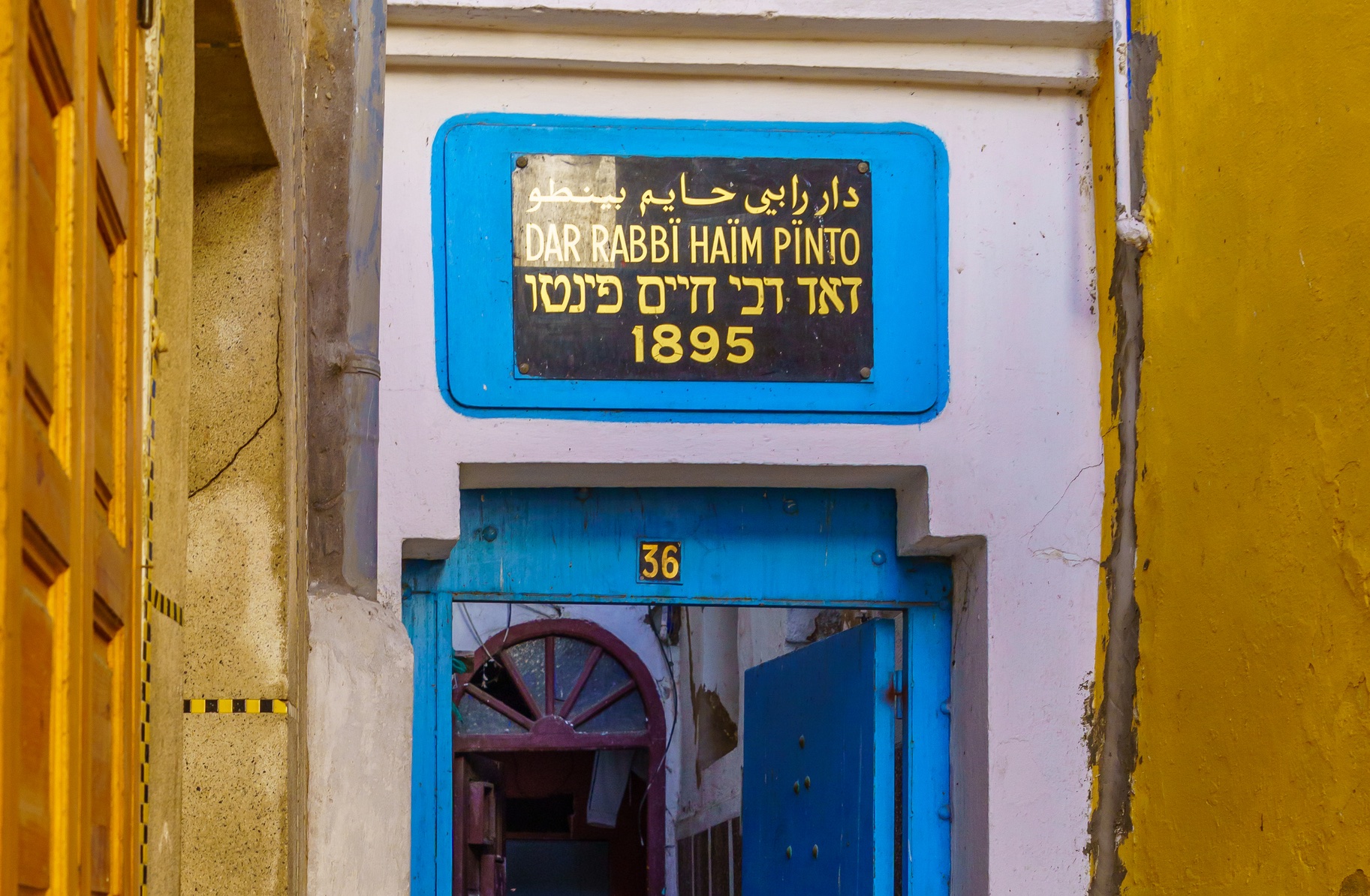
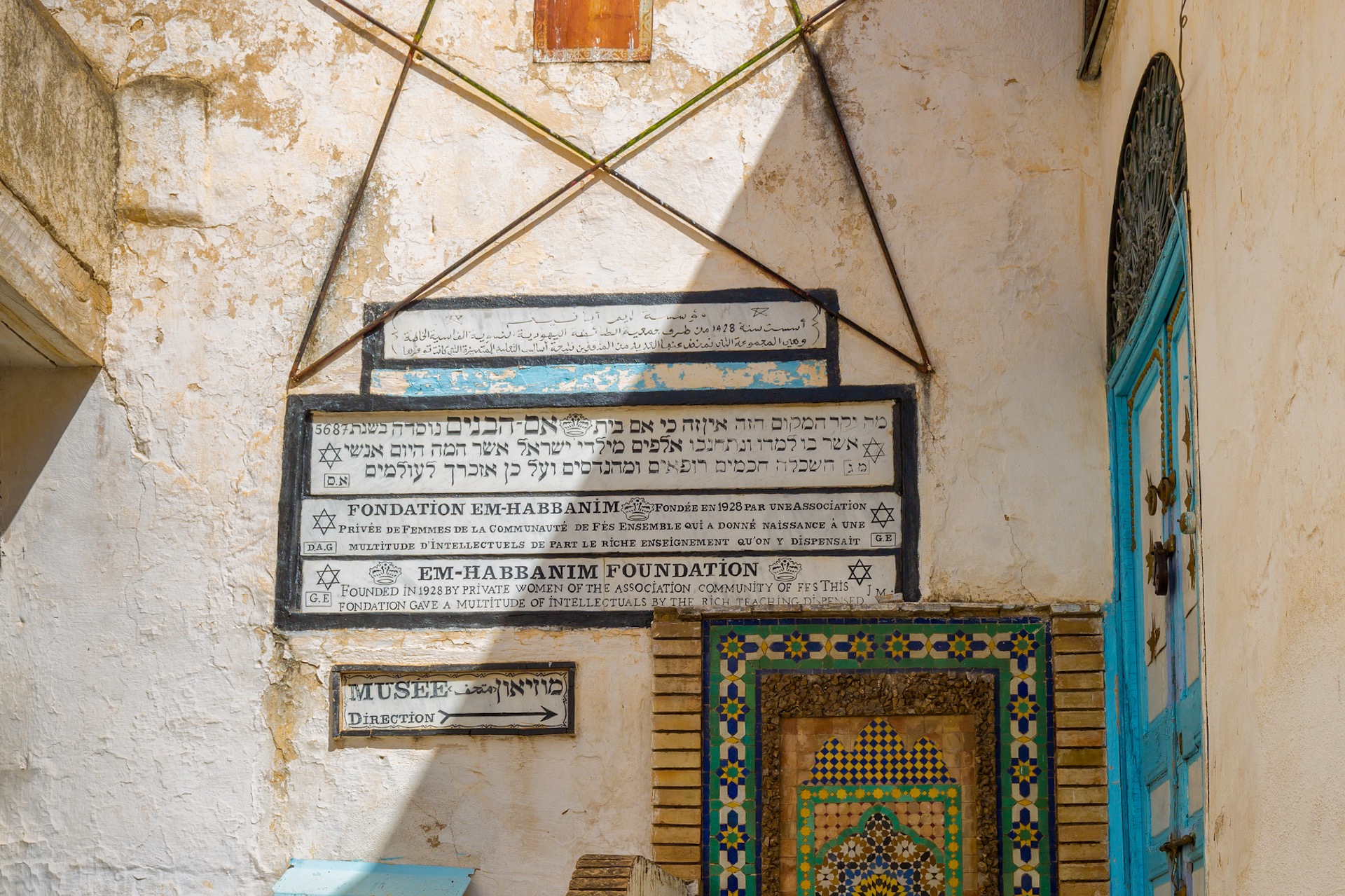
They lived in a quarter called the mellah – a word derived from the Arabic for salt, tied to the brackish ground of the first such district in Fez and to the salt trade Jewish families often worked. A Moroccan adage captures how deeply they belonged: "Morocco without Jews is like bread without salt."
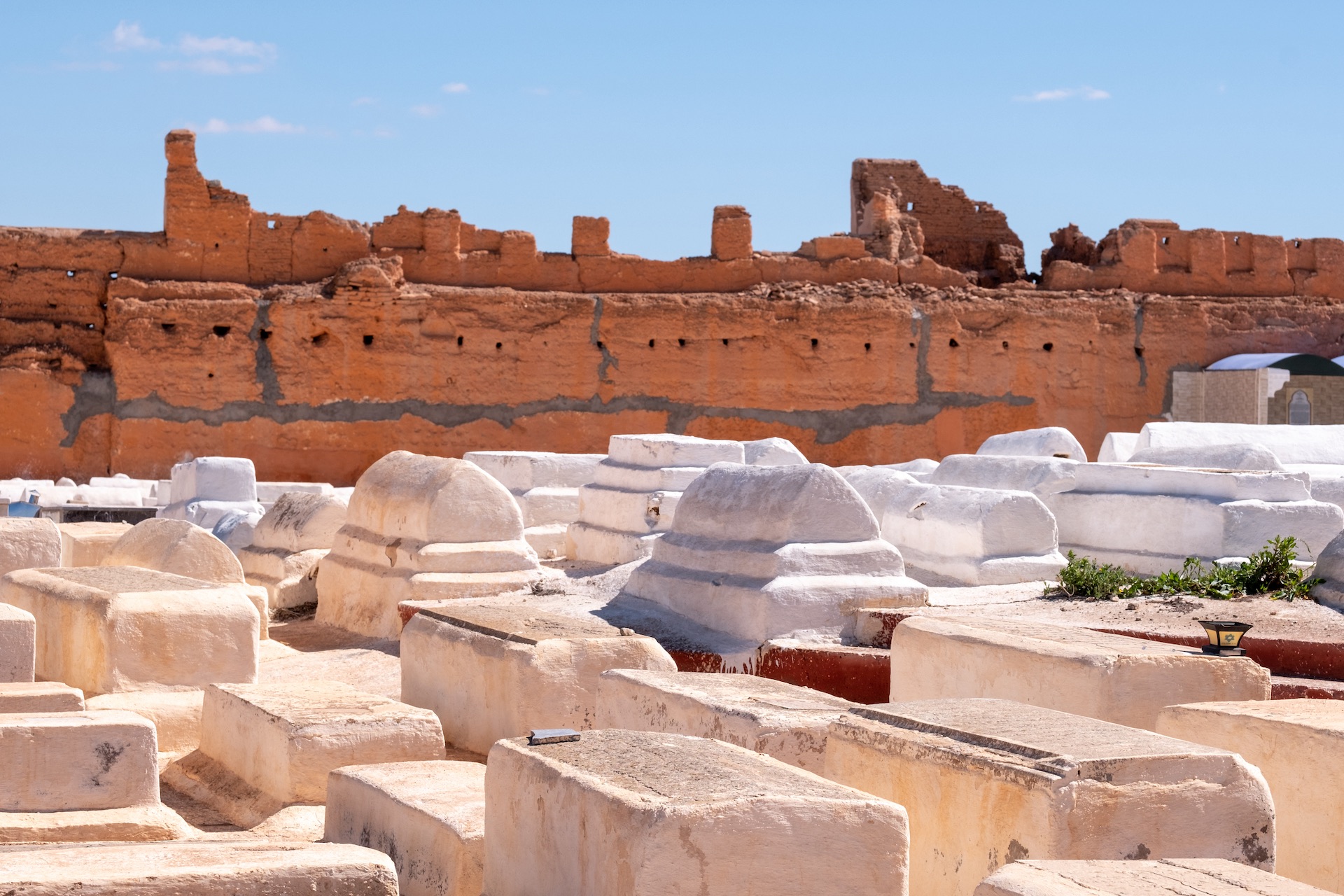
This was a rooted, ancient civilisation, not a recent settlement – synagogues, cemeteries, rabbinical courts and a thousand years of scholarship. Understanding that depth is what makes the scale of the departure so striking, and why so much of the heritage still stands.
You can still walk it today across the Jewish heritage sites across Morocco.
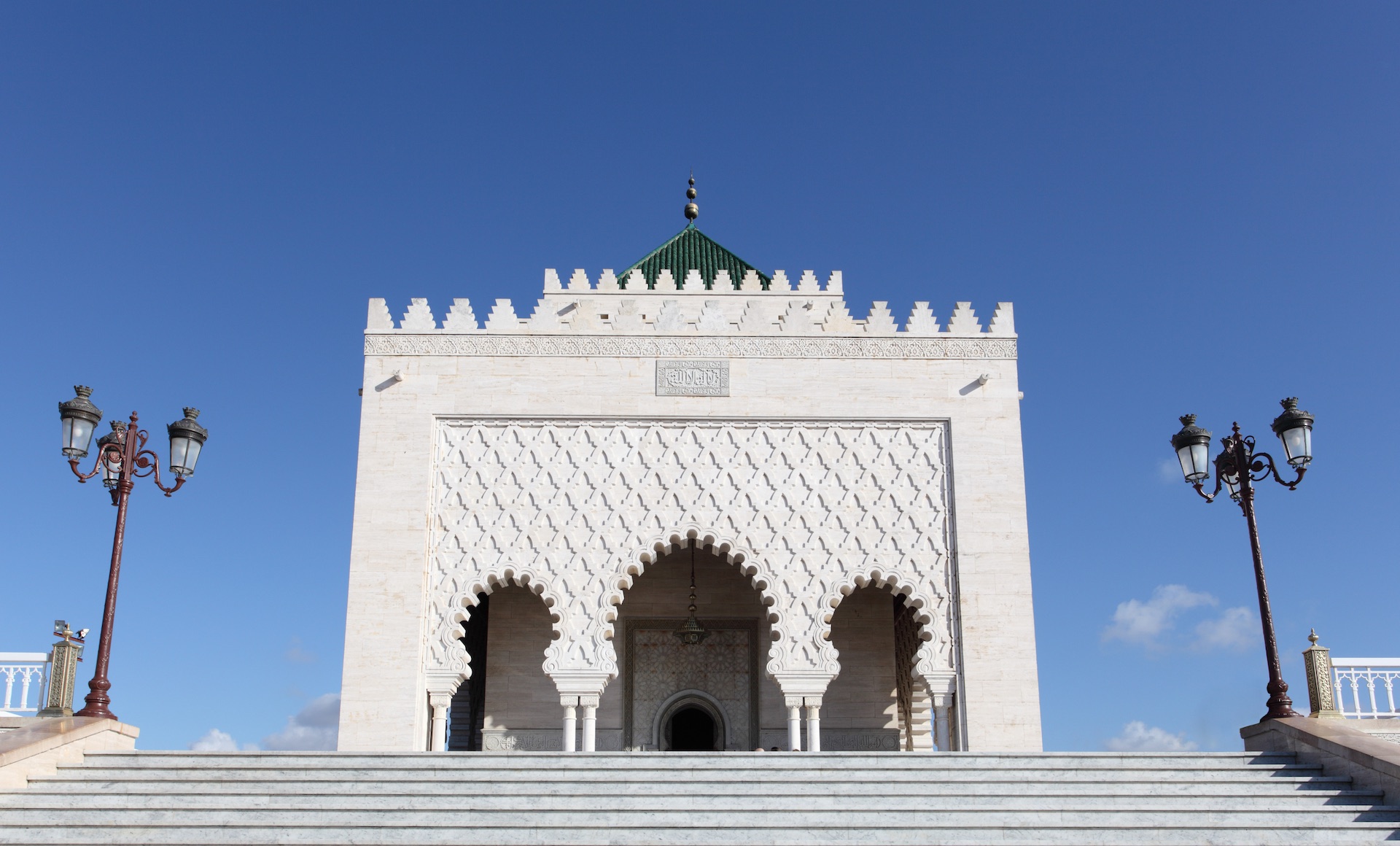
For the deeper medieval story – the golden ages, the expulsions, the Sephardic inheritance – see Sephardic Jewish history in Morocco. And the community's endurance owes much to the crown: during World War II, Mohammed V's protection of Moroccan Jews kept them from deportation when he told Vichy officials there were "no Jews, only Moroccans."
Plan Your Moroccan Jewish Heritage Journey With Shin Tours
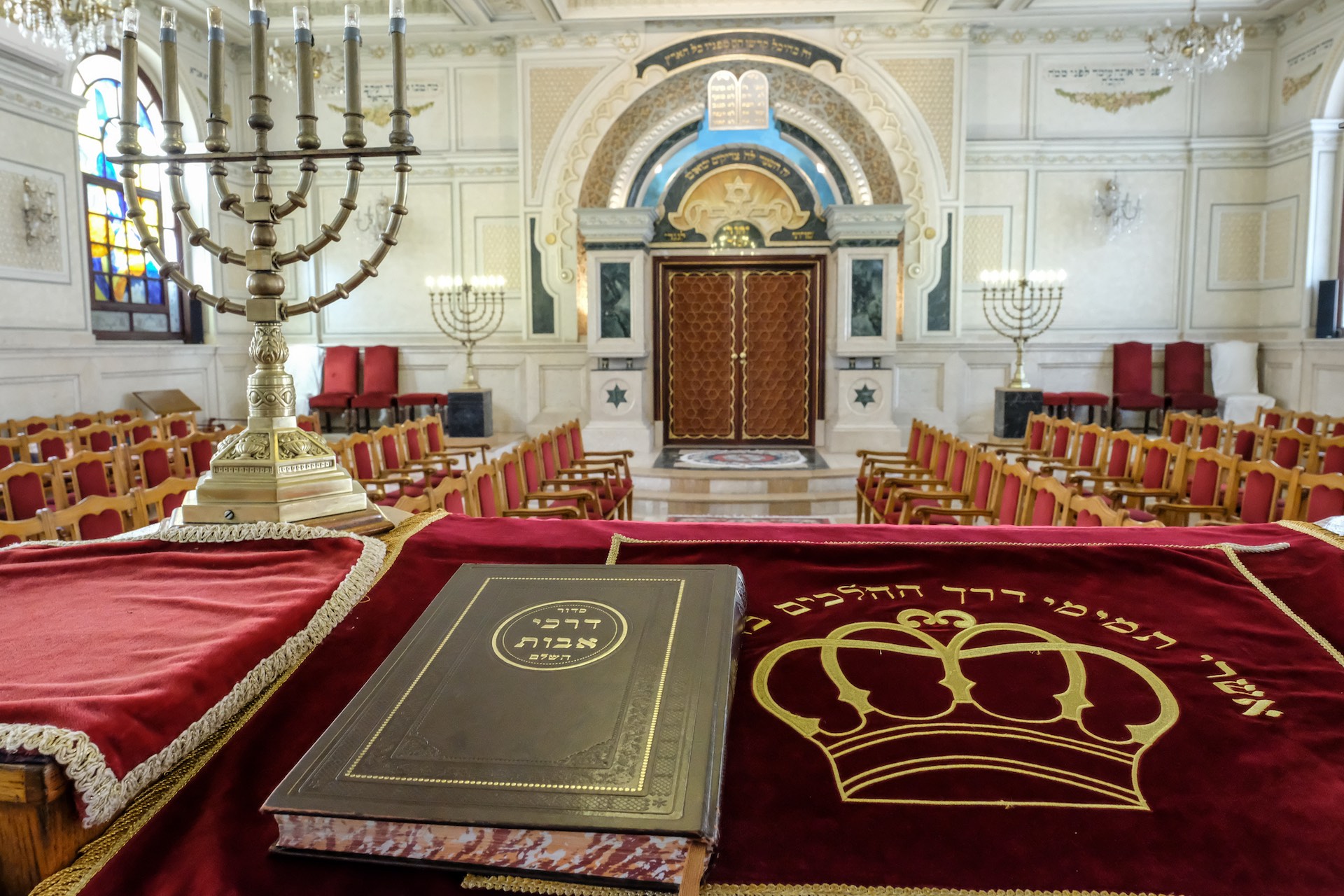
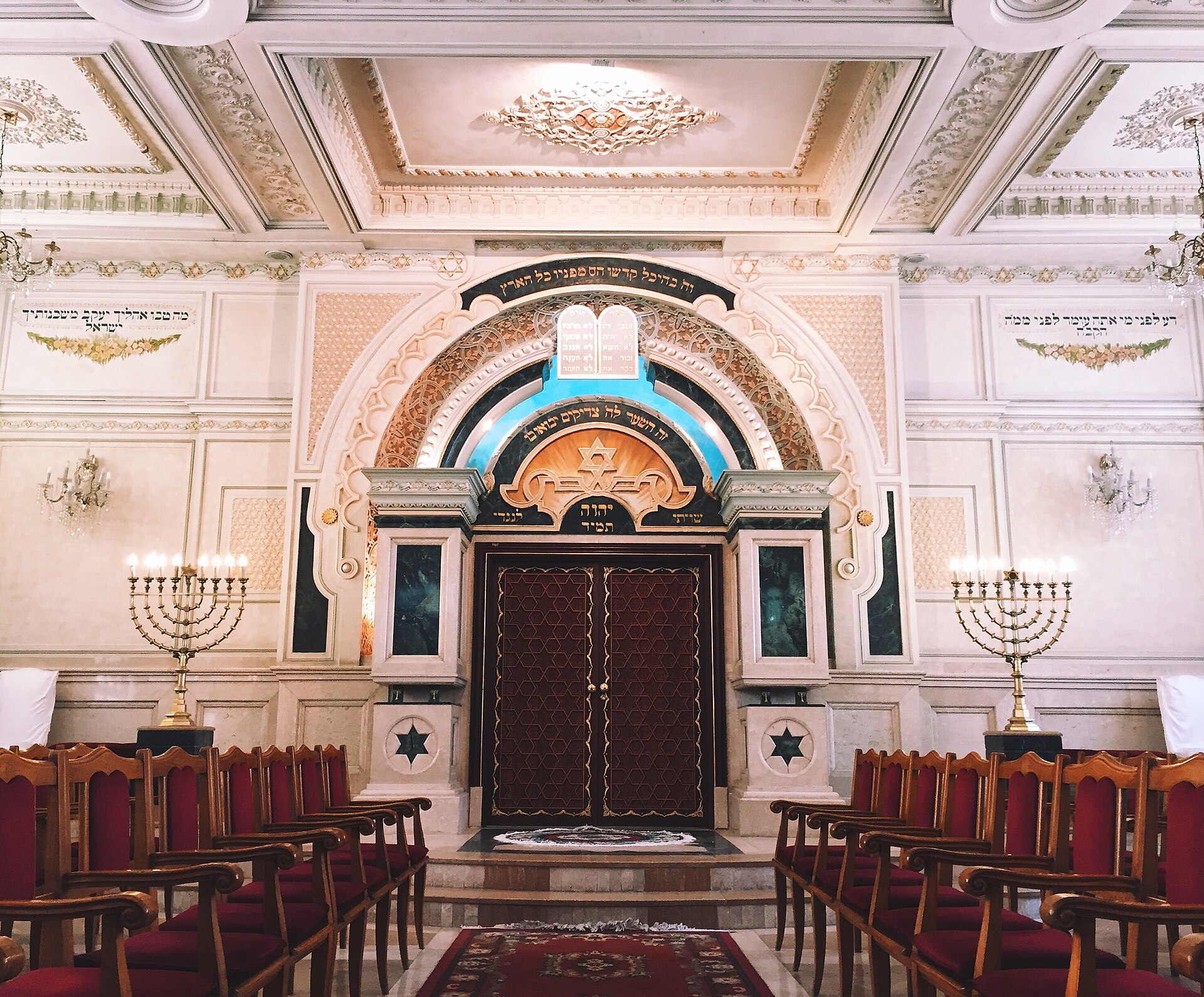
I've spent over a decade organizing private Jewish heritage trips to Morocco, guiding travellers through the Morocco this history left behind – the mellah of Fez and mellah of Marrakech, the synagogues that once served a community of hundreds of thousands, and the cemeteries where a thousand-year presence still speaks.
My team and I work with local guides, drivers and historians who bring context most visitors never find alone.
When you request a free custom itinerary, you get:
- A tailored itinerary built around your interests and travel group
- A personal call with me to talk through your trip
- A sample itinerary to review before you commit to anything
You can also learn more about how Shin Tours works if you want the fuller picture first.
The community may have gone, but its footprint remains – and Morocco stays one of the most welcoming places in the world for Jewish travellers.
Request your free custom Morocco itinerary and let's plan a trip that shows you what endured – with Jewish heritage tours in Morocco built around your family's story.