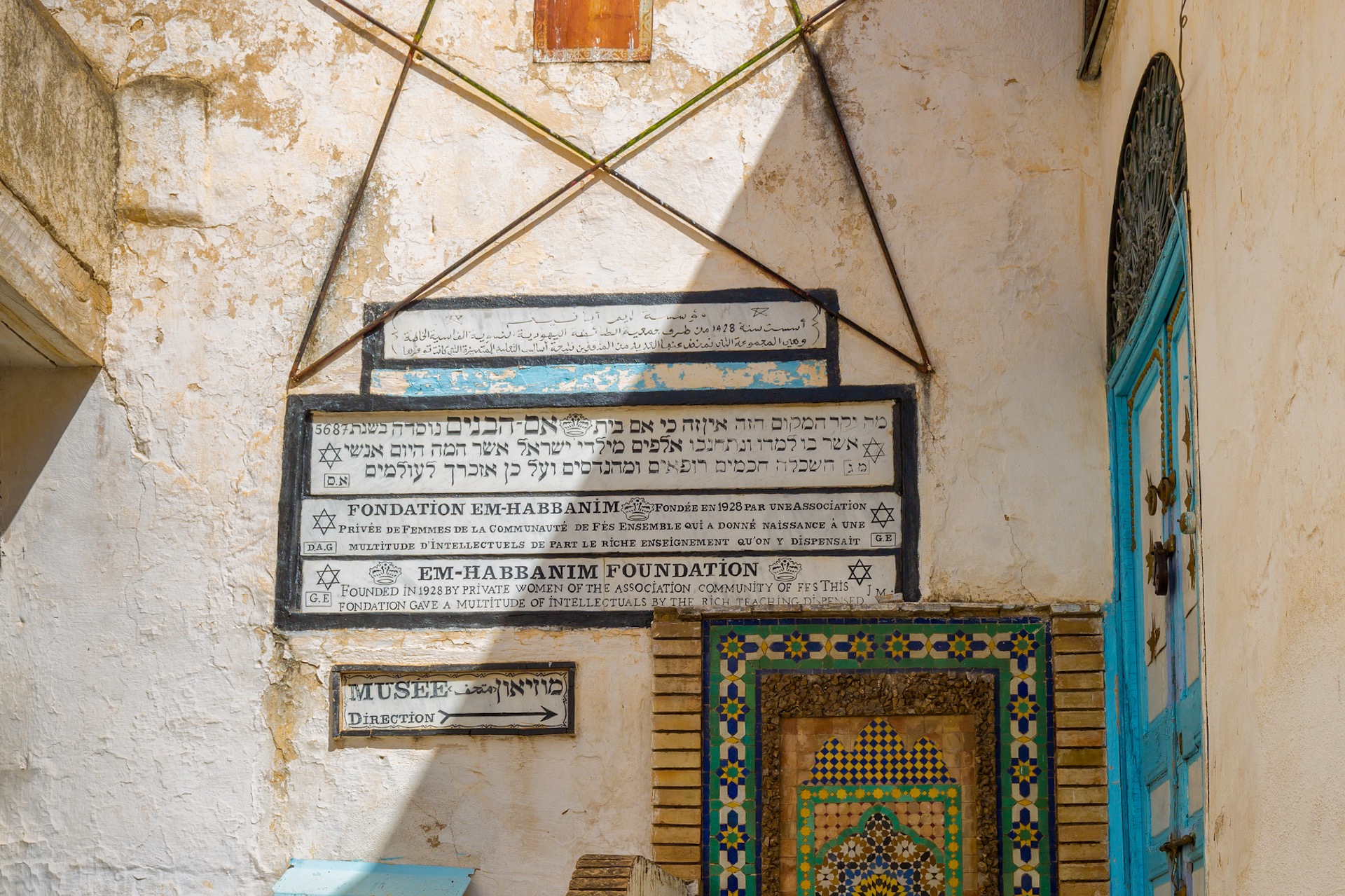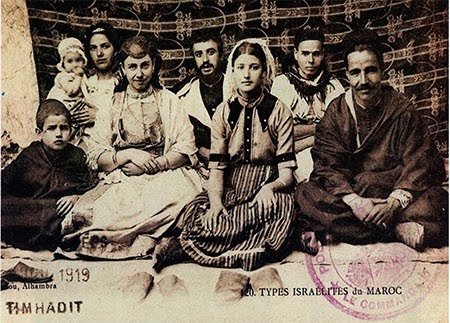
Tucked into the south-eastern corner of Marrakech’s medina, a short walk from the crowds of Jemaa el-Fnaa, lies a quarter with a very different rhythm from the souks around it. This is the Mellah – the historic Jewish quarter of Marrakech, and one of the most storied Jewish neighbourhoods in Morocco.
The Marrakech Mellah is the historic Jewish quarter of Marrakech, set in the south-east of the medina beside the royal palace and the Bahia and Badi palaces. Established in the mid-16th century under the Saadian dynasty, it is Morocco’s second-oldest Jewish quarter after Fez, and for centuries it was the heart of the city’s Jewish life.
Its history is genuinely contested in places, so this guide is careful to separate what’s documented from what’s tradition, and to give you a clear picture of what the quarter is, why it matters, and what it’s like to visit today.
In brief:
- What it is: Marrakech’s walled historic Jewish quarter, formerly named Hay Essalam
- Where: South-east medina, by Place des Ferblantiers, near the Bahia and Badi palaces
- Founded: Mid-16th century, under the Saadian sultan Abdallah al-Ghalib (exact year debated)
- See: The Lazama Synagogue, the Miaara cemetery, the spice souk and tinsmiths’ square
- Today: A working local neighbourhood, restored in the 2010s, with a small but active Jewish community
There’s more to the Mellah than a single definition, though – from the debated story of its founding, to what its name actually means, to what you can still see in its lanes today.
Here’s the fuller picture.
What is the Marrakech Mellah?
The Marrakech Mellah is the city’s historic Jewish quarter – a walled district in the south-eastern medina, near the royal palace and the Bahia and Badi palaces, originally known as Hay Essalam. Founded in the mid-16th century, it was for centuries the centre of Jewish life in Marrakech and is considered the second-oldest Jewish quarter in Morocco.
The quarter sits beside the Kasbah and the royal palace complex, a position that was deliberate – keeping the Jewish community close to the seat of power made it easier for the sultan to extend his protection and gave the royal administration ready access to the community’s trade and taxes. For centuries, the Mellah was a walled quarter whose gates were closed at night, and one of the main commercial districts of the city.
It’s worth clearing up a common misunderstanding, though – the Mellah was not a ghetto in the European sense.
Life inside the Moroccan mellah cannot be compared to the European ghetto, and the quarter was strikingly porous: Muslims passed through its gates daily to trade, and it was mixed enough that Christian merchants, European captives, and even visiting ambassadors were housed within its walls.
Marrakech even gained a reputation as a place where former forced converts could return openly to Judaism – a degree of openness that makes the “ghetto” label misleading.
What makes the Mellah of Marrakech unique?
The Mellah stands apart through its distinct architecture, its layers of Jewish heritage, and its lived-in local character.
Unlike the blank-walled, inward-facing riads of the wider medina, its buildings are known for outward-facing balconies and larger windows onto the street. Restored heritage sites sit alongside a working local market, giving the quarter a quieter, more reflective feel than the busy souks nearby.
The architectural contrast is the detail visitors notice first – a typical medina house turns inward, presenting a plain wall to the street and opening only onto a hidden central courtyard. Mellah buildings, by contrast, are recognised for opening outward – with balconies and larger windows facing the lanes, a feature that stands out against the surrounding quarters.
The overall effect today is of a neighbourhood that feels distinct from the medina around it: restored synagogues and heritage sites threaded through everyday streets, a spice market and workshops still serving locals rather than tourists.
Why is it called a “mellah”?
The name comes from the Arabic word for salt. It is said to trace back to the first Moroccan mellah in Fez, which was established on a salty or brackish patch of ground – and from there “mellah” came to be the general term for the walled Jewish quarters set aside in Moroccan cities from the 15th century onward.
The word itself is not disputed – mellah relates to salt. What’s less settled is exactly why.
The most widely supported explanation is geographic.
As argued by Julio Calvo-Serrano et al, the name originally referred to the salty marsh area to which the Jews of Fez had been transferred, and it then spread as the generic name for a Jewish quarter. Meanwhile, a related account traces it to a nearby salt store or salt deposit.
But local history tells another story.
One of our best local guides we use for our Jewish heritage trips through Morocco, Youssef Sebti, told me that "mellah" actually refers to the salt trade. The arrival of Sephardic Jews in Morocco came at a time when salt was a valuable commodity – almost as expensive as gold by weight – and many Jews became wealthy merchants from the trade.
In an article by the World Jewish Congress, another reason is attributed to a grim task – supposedly Jews were once made to salt the heads of executed prisoners for public display.
These theories are best treated as competing traditions rather than a settled origin.
Who lived in the Mellah of Marrakech?
The Marrakech Mellah was home to generations of Jewish merchants, rabbis, scholars and craftsmen. Over the centuries, it housed everyone from Berber Jews with deep roots in Morocco to Sephardic families who arrived after fleeing Spain in 1492. Today, the surrounding streets are predominantly Muslim, with only a small Jewish presence remaining.
The community drew on two strands – the Toshavim, long-established Moroccan Jews, and the Megorashim, Sephardic Jews expelled from Spain in 1492, who settled across Morocco.
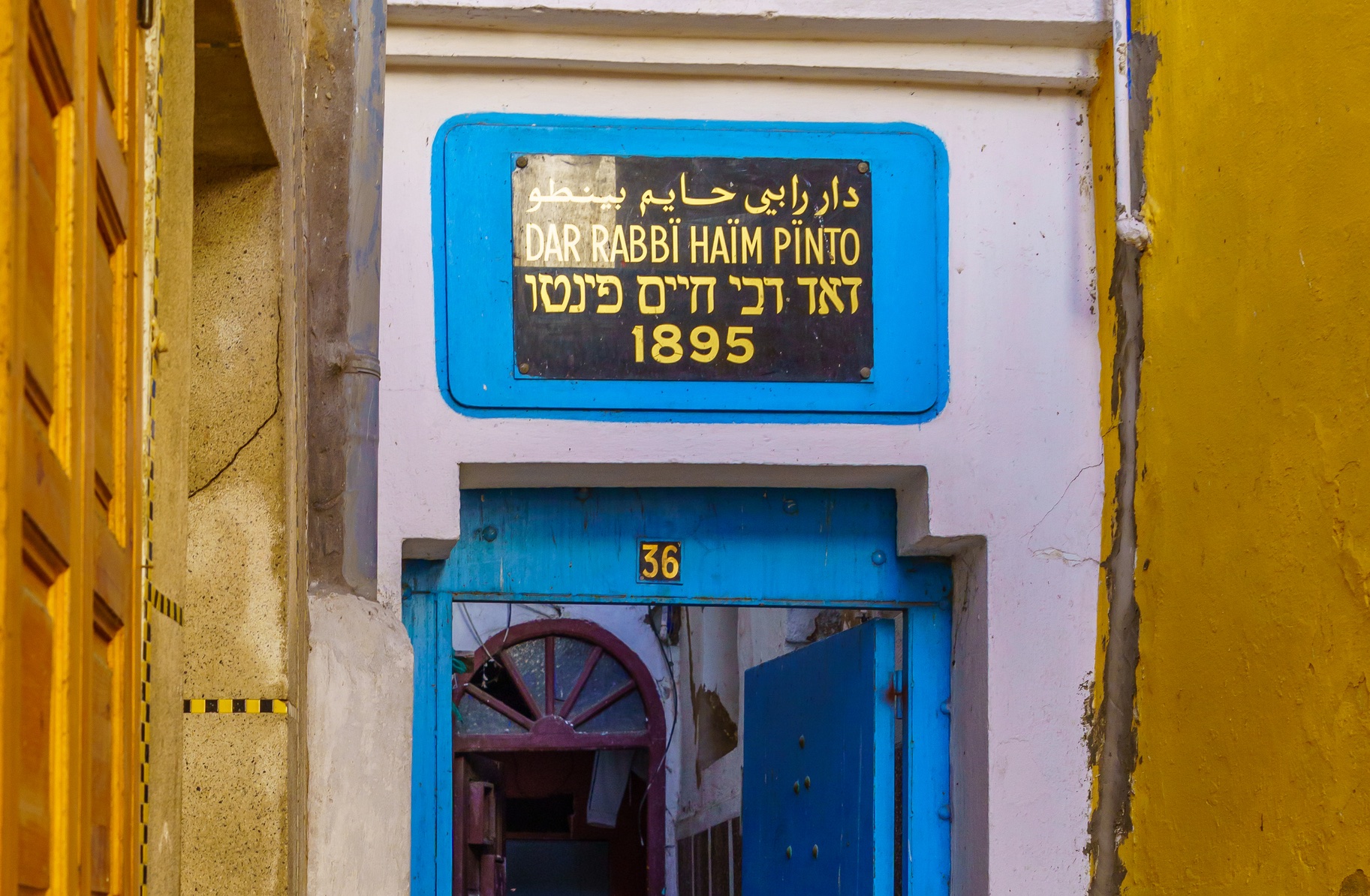
Among the figures remembered in connection with the quarter are revered rabbis such as Hanania Hacohen and Isaak Delouya, honoured at the Miaara cemetery, where annual Hiloula pilgrimages still mark the anniversaries of their deaths.
Two stories passed down among the Jews of Marrakech capture the quarter’s character better than any list of names:
- In one, a widow refused to leave her old home for the new mellah; the sultan let her stay, and when she died her room was sealed forever – a spot still remembered as “the Jewess’s Room.”
- In another, an attack on the newly built quarter is said to have been turned back by a wall of flame at the gate, summoned by the community’s leader, Mordechai ben Attar, whose blessing is why some still pause to touch the gate on passing.
Both are folklore rather than documented history, but they are part of how the community has long told its own story.
What is the history of the Marrakech Mellah?
The Marrakech Mellah was established in the mid-16th century under the Saadian sultan Abdallah al-Ghalib, making it Morocco’s second-oldest Jewish quarter after Fez. It grew into a major centre of Jewish life, reaching a peak population in the mid-20th century before large-scale emigration hollowed it out – a restoration programme in the 2010s has since revived much of its heritage.
The precise founding date is genuinely uncertain – and worth being honest about, because many sources state it with a confidence the evidence doesn’t support:
Emily Gottreich, in her article “On the Origins of the Mellah of Marrakesh,” puts the quarter’s creation to somewhere between 1553 and 1562, most likely under Abdallah al-Ghalib, who came to power in 1557.
The year “1557” is often repeated, but it appears to owe as much to Jewish oral tradition and to al-Ghalib’s accession as to any hard record, and the mellah is best understood as taking shape over several years, rather than being founded on a single date.
The Marrakech quarter was the second of its kind in Morocco and, like its predecessor in Fez, it was called a mellah.
| Period | Event |
| 1438 | First Moroccan mellah established in Fez |
| Mid-16th century (c. 1557; sources bracket 1553–1562) | Marrakech Mellah created under the Saadian sultan Abdallah al-Ghalib – Morocco’s second Jewish quarter |
| 16th–17th centuries | Grows into one of the city’s main commercial quarters; a walled district gated at night |
| Mid-20th century | Population reaches its peak – tens of thousands of residents (roughly 27,000–40,000; sources vary) |
| After 1948 and Moroccan independence (1956) | Large-scale emigration to Israel, France and Canada; the community shrinks dramatically |
| 2010s | Restoration programme; King Mohammed VI restores the quarter’s Jewish street names and the “El Mellah” name (2016–2017) |
Sources: Calvo-Serrano, J. et al, 2016, “Mellah: The Jews Quarter at the Medinas of Morocco. A New Interpretation of the Minority’s Space in The Islamic City” Procedia Engineering, 161: 1322-1329; Gottreich, E. 2003, “On the Origins of the Mellah of Marrakesh” International Journal of Middle East Studies, 35 (2): 287-305
How old is the Marrakech Mellah?
The Marrakech Mellah was founded in the mid-16th century, which makes it roughly 470 years old. It was created under the Saadian sultanate as the city's Jewish quarter, and has undergone major demographic change over the centuries – most dramatically in the mid-20th century.
Because the exact founding year is debated, it’s more accurate to say the quarter dates from the mid-16th century than to give a precise age. Its origins lie in the Saadian reshaping of Marrakech, when the dynasty rebuilt the city as a capital worthy of the name.
Is the Marrakech Mellah the oldest in Morocco?
No – the first Moroccan mellah was established in Fez in 1438. Marrakech followed about a century later, in the mid-16th century, making it the country’s second-oldest Jewish quarter.
The Fez mellah set the template – including the name — that later spread to Marrakech and other Moroccan cities.
What happened to the Jews of Marrakech?
The community shrank dramatically over the 20th century. After the establishment of Israel in 1948 and Moroccan independence in 1956, most of Marrakech’s Jews emigrated – chiefly to Israel, with others going to France and Canada. Today only a small community remains, though it is still active, and restoration work aims to preserve the quarter’s heritage.
According to the Times of Israel, only around 200 Jews are estimated to live in Marrakech today, a fraction of the quarter’s mid-century population. This estimate is corroborated by the World Jewish Congress, which puts the Marrakech community at around 250.
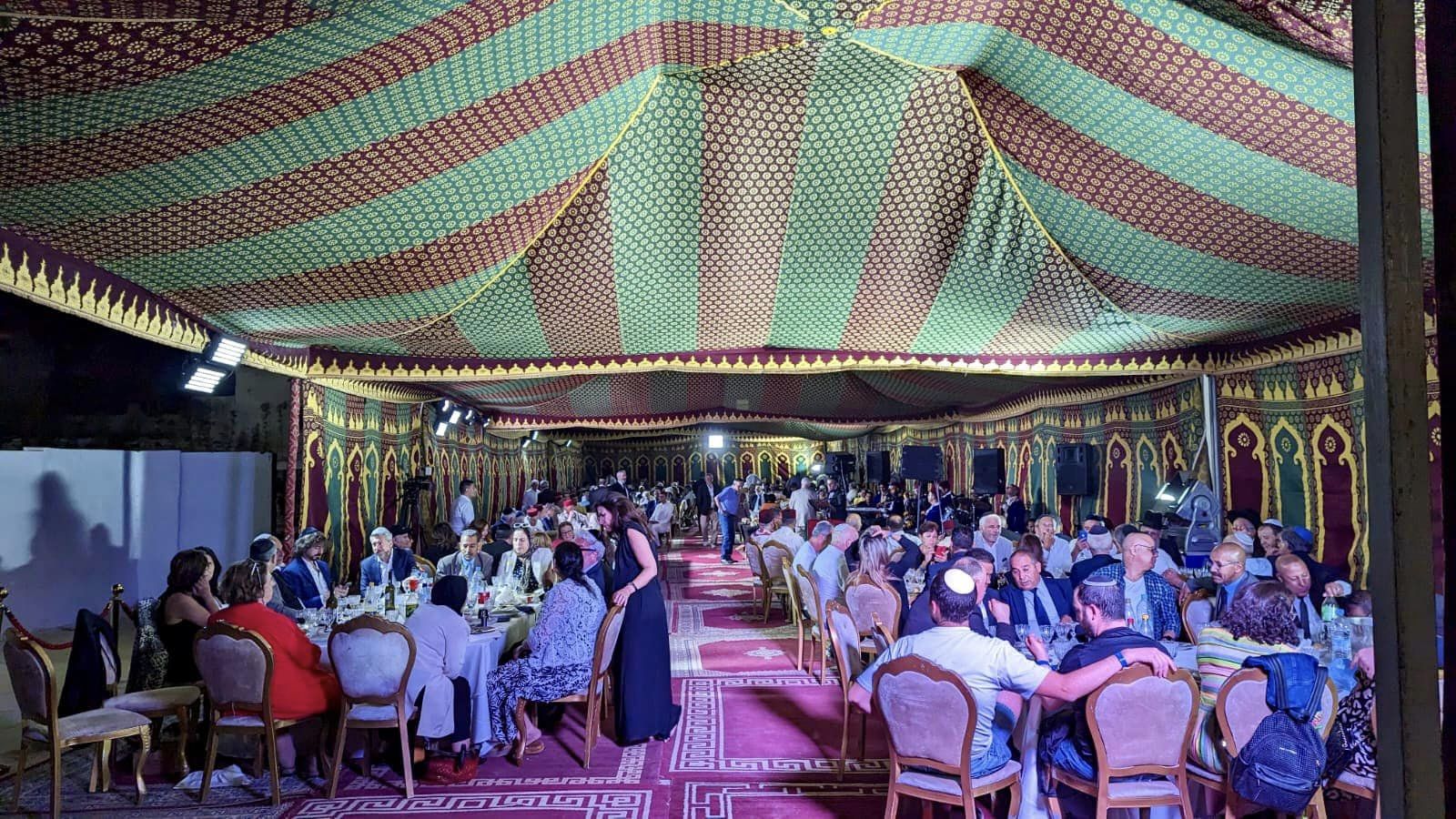
But “remnant” would be the wrong word – the community is small yet living, still hosting weddings, celebrations and a steady flow of visitors from abroad.
What is there to see in the Marrakech Jewish Quarter?
The Jewish Quarter’s main draws are the Lazama Synagogue (Slat al-Azama), the Miaara Jewish cemetery, and the local markets and spice souk, gathered around Place des Ferblantiers. Together they offer a window into the community’s heritage set against everyday Moroccan street life and the quarter's distinctive architecture.
| Site | What it is | Why visit |
| Slat al-Azama (Lazama) Synagogue | The best-known synagogue in the Mellah, built around a traditional courtyard | Blue-and-white tilework, a small museum of Moroccan Jewish life, still standing at the heart of the quarter |
| Miaara Jewish Cemetery | One of the largest Jewish cemeteries in Morocco, adjacent to the quarter | Thousands of whitewashed graves, rabbis’ mausoleums, and a moving sense of the community’s scale |
| Mellah market & Bab Mellah spice souk | The working local market at the quarter's heart | Spices, produce, fabric and jewellery sold to locals |
| Place des Ferblantiers | The tinsmiths’ square and main gateway to the quarter | Craftsmen working tin and metal; the natural entry point for a walk through the Mellah |
Source: Harroch,M. 2023, “Discover the Jewish Heritage of Marrakech and Fes,” Times of Israel
The Slat al-Azama (Lazama) Synagogue
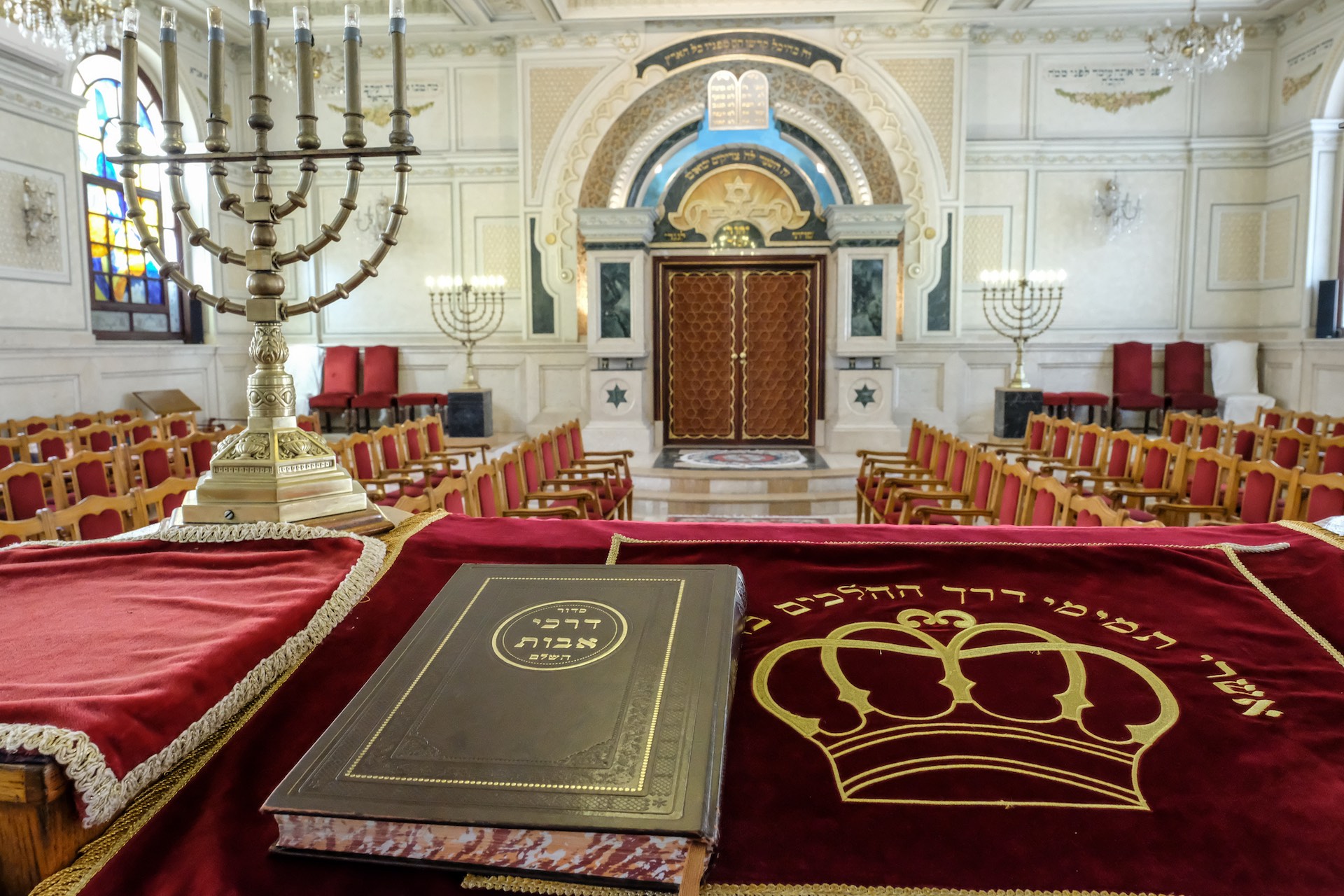
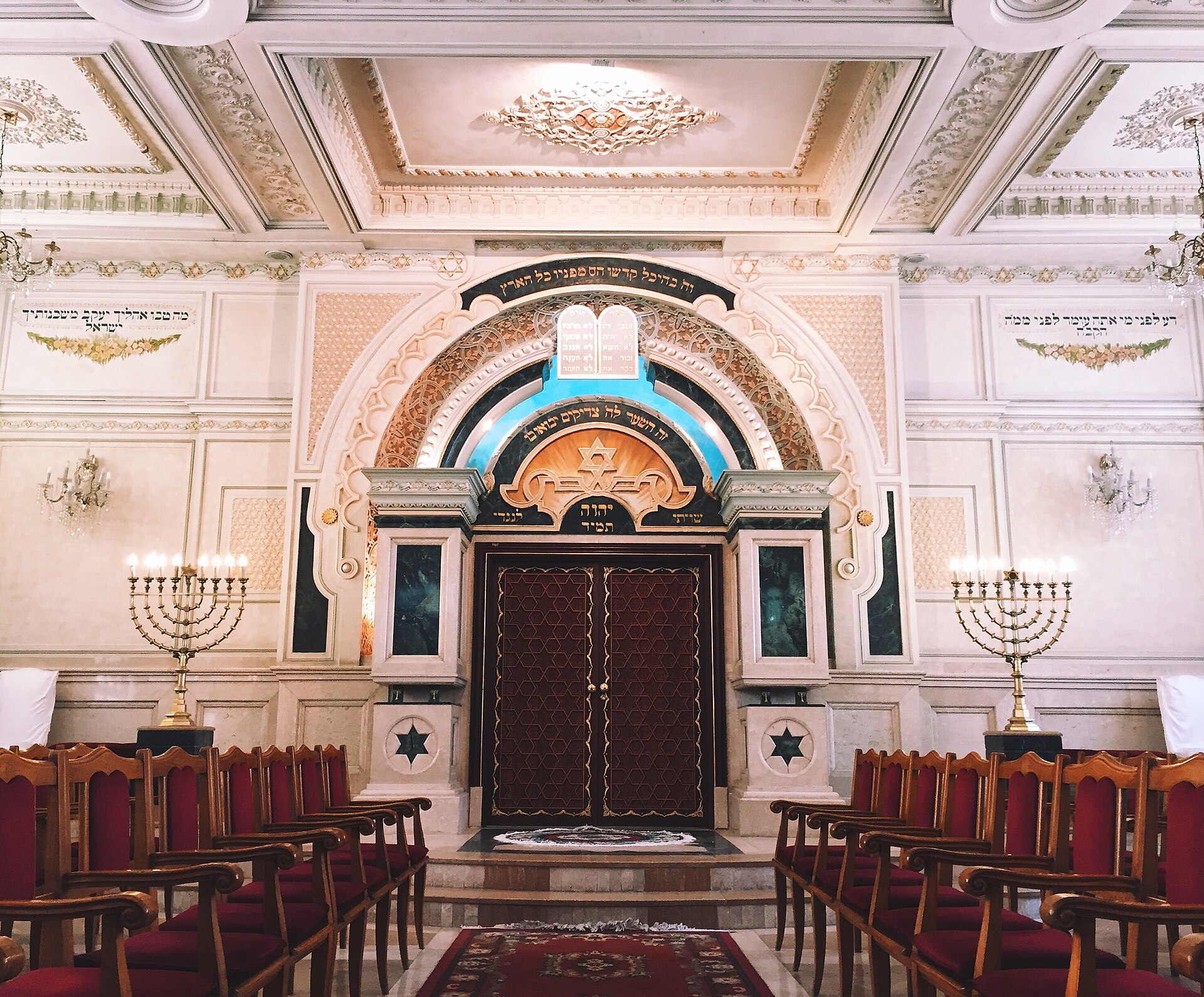
The Lazama Synagogue – its name taken from Al Azama, a reference to the Jews who fled Spain – is the best-known synagogue in the Mellah, built in the traditional Moroccan style around a blue-and-white tiled courtyard.
It is traditionally associated with the Sephardic exiles of 1492, though the building you see today dates from a much later restoration, around the turn of the 20th century. Several rooms around the courtyard now serve as a small museum of Moroccan Jewish history.
Lazama is a headline stop on any Jewish-heritage route through Morocco.
Read our full guide to the best Jewish sites in Morocco here.
Miaara Jewish Cemetery
A short walk from the Bahia Palace, the Miaara cemetery is one of the largest Jewish cemeteries in Morocco and sits right beside the quarter.
Accounts of its age vary – local sources date its founding to the 16th century, while others describe tombs going back some 600 years – but its scale is not in doubt: reporting from the Times of Israel describes a site of around 52 hectares holding more than 20,000 graves.
Its whitewashed tombs stretch out in their thousands beneath the Marrakech sky, divided into sections for men, women and children, with a row of mausoleums where prominent rabbis are buried. One corner is given over to the thousands of children lost to a 19th-century typhus epidemic.
The cemetery is still in use today, and a small exhibition near the entrance tells some of the community's story.
Mellah market & Bab Mellah spice souk
The heart of the quarter is its market. Around Bab Mellah (Mellah Gate), the spice souk draws locals for herbs, spices and herbal teas, alongside stalls of fresh produce, fabric and jewellery.
This is a working neighbourhood market rather than a tourist attraction – much of what marked it as specifically Jewish has faded, though the last kosher butcher in the Mellah still trades here, a small thread of continuity with the quarter’s past.
Visitors interested in the food side of that heritage can also find kosher options and cooking experiences in and around Marrakech, including the nearby Moroccan Culinary Arts Museum.
Place des Ferblantiers
Place des Ferblantiers – the tinsmiths' square — is both a sight in its own right and the main gateway into the Mellah. Craftsmen still work tin, brass and metal into lamps and objects in the workshops around the square, and it makes the natural starting point for exploring the quarter on foot.
How do you visit the Marrakech Mellah?
The Mellah sits within the medina and is best explored on foot. The easiest approach is via Place des Ferblantiers, a short walk from Jemaa el-Fnaa along Rue Riad ez Zitoun. Key stops include the Lazama Synagogue and the Miaara cemetery, and a local guide adds valuable context. Dress modestly at active synagogues.
The quarter is compact and very central – a roughly ten-minute walk brings you to the Bahia Palace, the Badi Palace and the Kasbah – so most people explore it on foot rather than arranging transport.
It is a working local neighbourhood, generally welcoming to visitors, and travellers who ask about it usually find it straightforward by day. As anywhere in a dense medina, ordinary common sense applies, and if you’re arriving after dark it’s worth having your accommodation easy to reach.
A knowledgeable local guide and a bespoke Jewish Morocco trip can open up the history in a way the lanes alone won't.
Frequently asked questions
Where is the Marrakech Mellah?
The Marrakech Mellah is in the medina, in the south-east of the old city near the royal palace and the Bahia Palace.
Established in the 16th century as the city’s Jewish quarter, it is most easily reached via Place des Ferblantiers, a short walk from Jemaa el-Fnaa.
Are there still synagogues in Marrakech?
Yes, at least three synagogues remain in Marrakech, though not all are active:
- The best known is the Slat al-Azama (Lazama) Synagogue in the Mellah, with its tiled courtyard and museum, which is open for visits.
- The main active congregation is the Beit El Synagogue in the Gueliz district.
- Al Fassayn is currently closed, having suffered structural damage in the earthquake of 2023.
Is the Marrakech Mellah worth visiting?
Yes, particularly if you’re drawn to Morocco’s Jewish heritage.
The Mellah offers a quieter, more reflective contrast to the busy medina, with highlights including the Lazama Synagogue, the Miaara cemetery and the spice souk.
Expect a working local neighbourhood rather than a polished tourist site, which for many visitors is exactly its appeal.
Visit the Marrakech Mellah With Shin Tours
I’ve spent over twelve years leading Jewish heritage trips in Morocco, guiding thousands of travellers each year – and the Marrakech Mellah surprises almost everyone.
What looks at first like a quiet corner of the medina is layered with centuries of Jewish life – the Lazama Synagogue, the Miaara cemetery, and streets where rabbis, merchants and mystics once lived. My team and I know these places and the people who still care for them – and we build trips that let you experience this heritage as something present, not just past.
When you request a free custom itinerary, here’s what you get:
- A tailored itinerary built around your interests and travel group, with the Mellah sites, synagogues and heritage places that matter to you mapped out
- A personal call with me to talk through your trip and what you’re hoping to connect with
- A sample itinerary to review before you commit to anything
You can also learn more about how Shin Tours works if you'd like the fuller picture first.
The Marrakech Mellah is one small chapter in one of the oldest and most enduring Jewish stories in the world – and it’s more accessible to visit than most people expect.
Request your free custom Morocco itinerary, and let’s plan a journey into a heritage that’s still very much alive.
Asaf Peled
Asaf Peled began operating Jewish tours as a registered guide in Israel in 2012, before founding Shin Tours in 2018 and opening up Jewish heritage tours in the Middle East, North Africa and Europe.