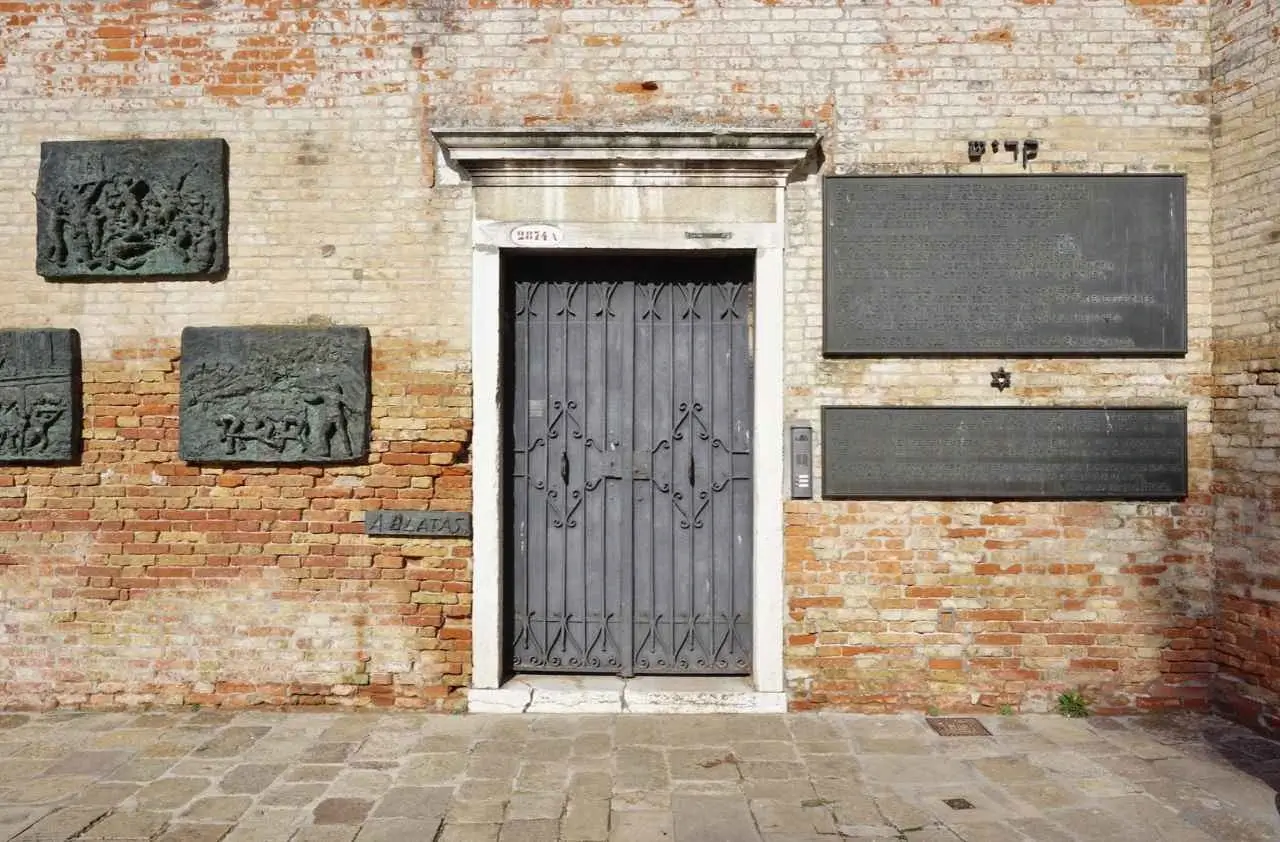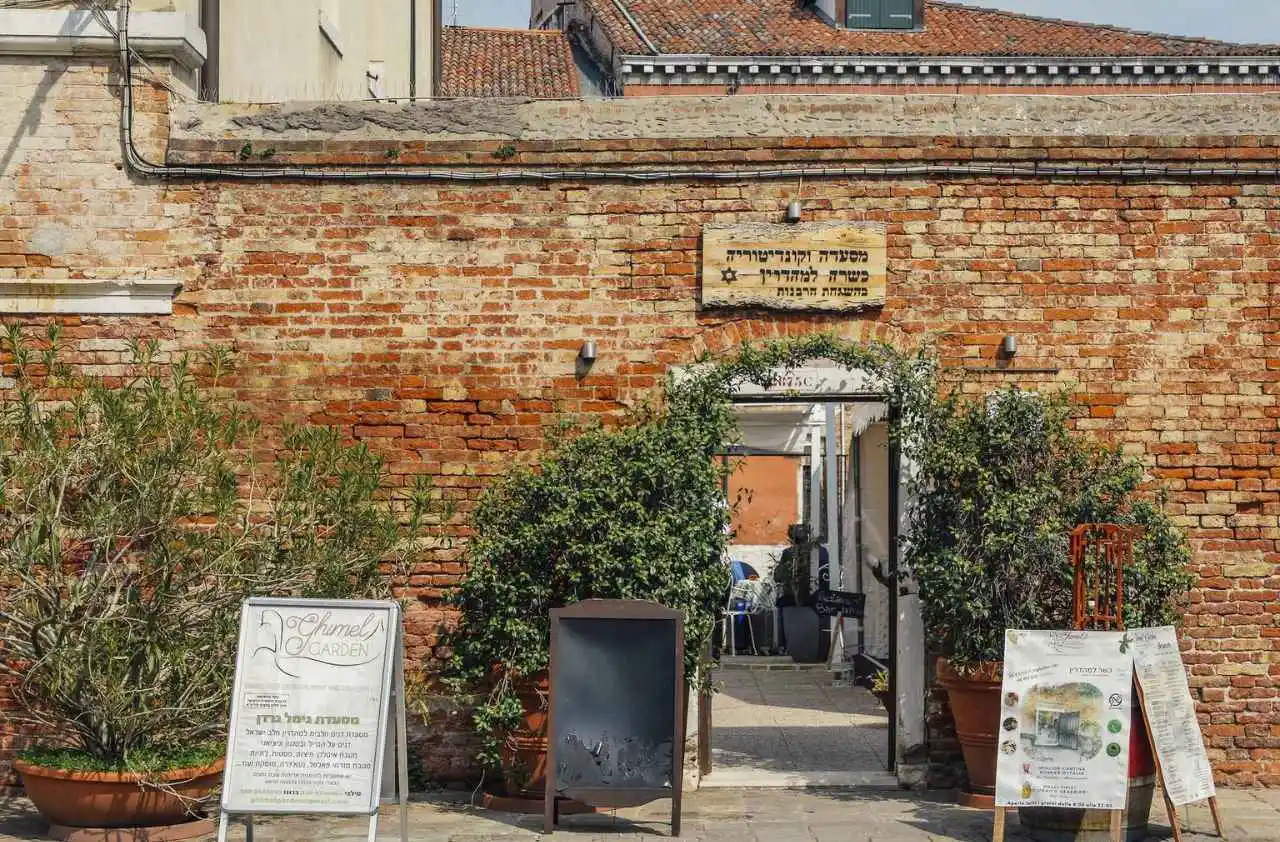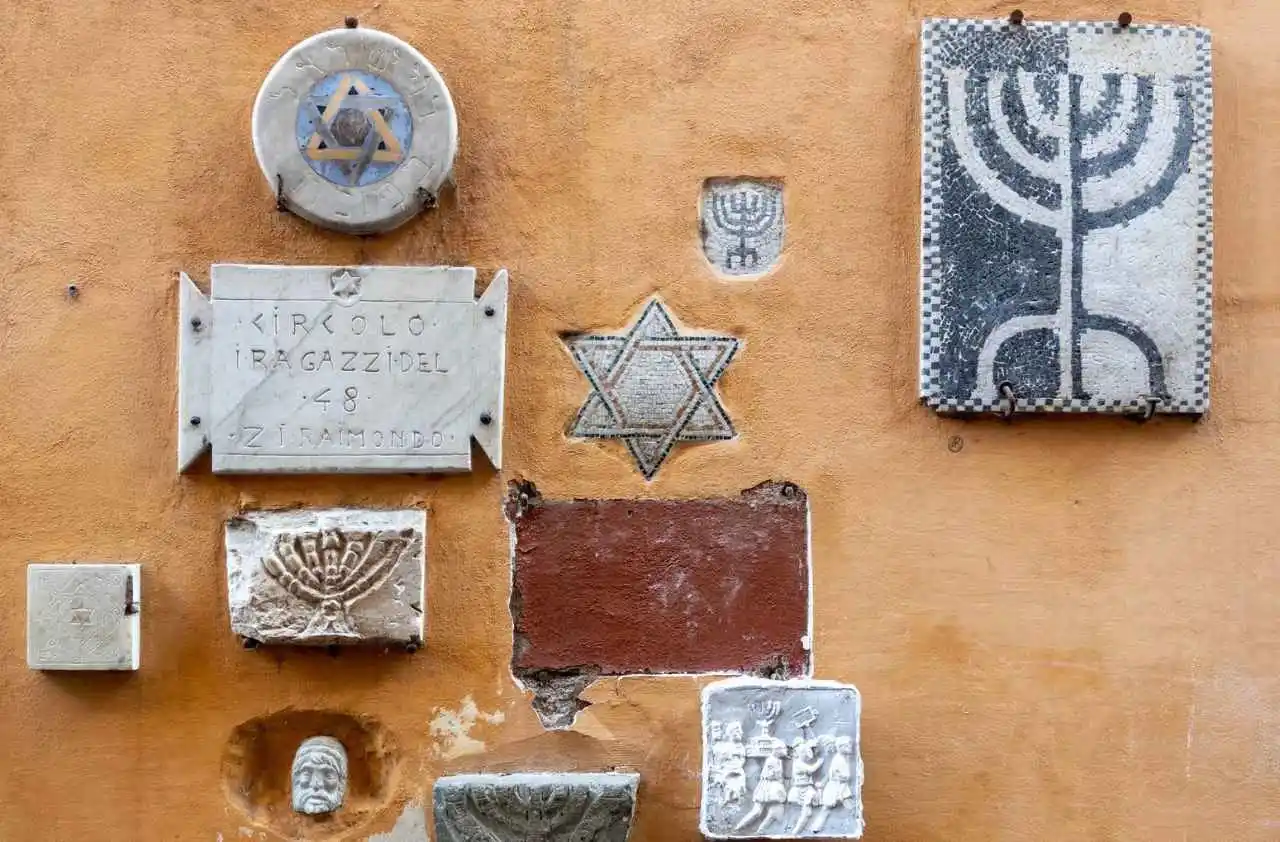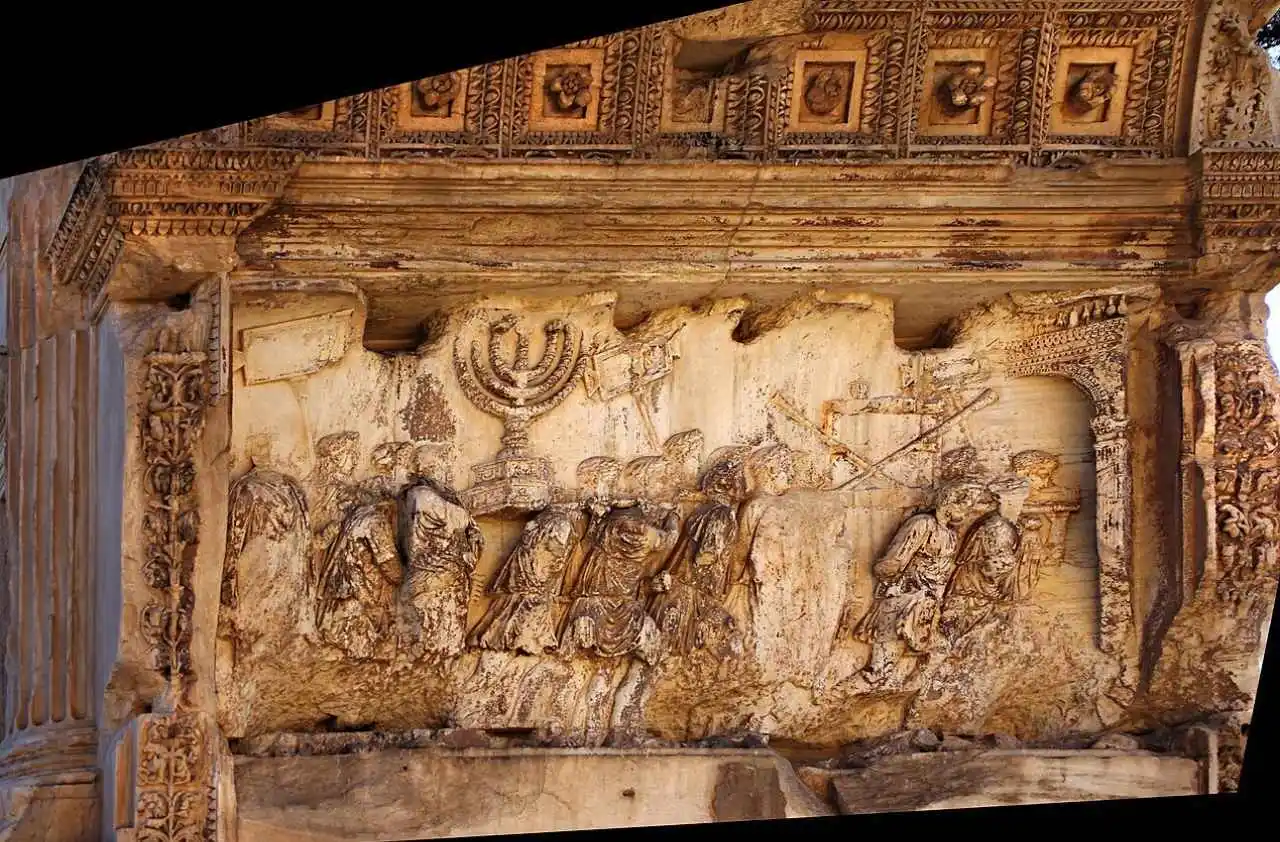
You can stand in the middle of Florence’s old Jewish ghetto and never know it. Its streets are gone, and the square that replaced them gives almost nothing away. Knowing where to look changes what you see.
Florence’s Jewish ghetto stood in the heart of the city, beside the old market, on ground Piazza della Repubblica now covers. The city demolished it in the 1880s and 1890s; you can still walk its site, find a plaque marking its oratories and visit the Great Synagogue and Jewish Museum.
Start with what the ghetto was, because almost none of it still stands.
What was Florence’s Jewish ghetto?
Florence’s Jewish ghetto was the enclosed district where Tuscany’s Jews were forced to live. Cosimo I de’ Medici ordered it in 1570, and it was in place by 1571, beside the Mercato Vecchio in the city’s center. Forced residence there ended in 1848.
Cosimo acted under pressure from the Pope, and the Uffizi’s exhibition on the Jews, the Medici and the ghetto traced the nearly three centuries that order began.
The location matters: the ghetto sat roughly midway between the cathedral and Palazzo Vecchio, so it was never on the edge of Florentine life; it was at its center.
That’s what makes Florence different.
If you’re mapping a wider trip, Florence belongs among the top Jewish sites in Italy, though it asks for a different kind of looking. Rome and Venice still show you their ghettos. In Florence, you reconstruct one from a square, a plaque and the stories that survived it.
How did Jews come to live in Florence?
Records place Jews in Florence from the 1320s, and the community took root after 1437, when Cosimo il Vecchio de’ Medici invited Jewish moneylenders to open pawn banks. Later arrivals, many of them Sephardic Jews from Spain, came as merchants.
Lucia, our COO for Italy, lives in Florence and has spent years walking this history. She points to language as the merchants’ advantage: a shared tongue across Jewish trading networks made business easier.
She also tells a story about the shape of the week: Christian merchants complained that between the two faiths’ days of rest, they lost Friday, Saturday and Sunday. So the city-state let business reopen on Sundays after Mass.
The Medici’s interest in Jewish merchants reached the coast too.
In 1591 and 1593, Grand Duke Ferdinando I de’ Medici issued the Livornine laws. They invited Jewish and other merchants to settle and trade in Livorno, with the right to a synagogue. Florence and Livorno grew from the same family’s choices, in two very different directions.
Why was the ghetto demolished?
Florence demolished its ghetto in the 1880s and 1890s, when the city redeveloped its old center. The clearance took the old market with it, and Piazza della Repubblica now covers the site. The ghetto had been opened decades before, so the demolition was not aimed at the Jewish community.
Lucia is firm on the order of events: by the time anyone knocked the ghetto down, its gates no longer held anyone in. Forced residence had ended in 1848, and the redevelopment was about the city center as a whole.
What replaced it is the square you’ll find today. Piazza della Repubblica sits open and wide over the ghetto and the old market together.
That’s why Florence’s ghetto has to be told rather than seen. Its story survives in records, in a handful of markers and in the people who know where to find them.
What can you still see where the ghetto stood?
Piazza della Repubblica now covers the site of Florence’s Jewish ghetto and the old market beside it. No ghetto buildings stand; a plaque on Via delle Oche marks the former Jewish oratories. Poet Salomone Fiorentino’s house shows Jewish life reached beyond the ghetto.
Lucia’s walk starts here, where the ghetto stood, and tells the story of Florence and its Jews from that spot. From there, it moves to nearby places where Jewish life carried on after the ghetto was gone; a full walk runs about three hours.
The Via delle Oche plaque is easy to miss. It’s one of the few markers in the old center that names the community’s prayer life before the Great Synagogue.
The walk also passes the house where the poet Salomone Fiorentino (1743–1815) lived. It stood outside the ghetto, a sign that some well-known Jews lived beyond its walls.
That detail changes the picture: the ghetto confined a community, but it never contained all of it.
What was life like inside the ghetto?
Life in Florence’s ghetto was crowded and closely controlled. Its gates were locked at midnight. Because the community could only build upward, buildings rose as high as eleven stories by the 17th century. Two main synagogues stood inside: the Italian and the Levantine, or Spanish.
The midnight lock and the climbing floors tell the same story: too many people, too little ground and nowhere to go but up.
Hold that eleven-story figure in your mind when you stand in Piazza della Repubblica. Today’s square is open sky where those tall buildings once crowded together.
The two synagogues point to two traditions living side by side; that Spanish thread runs straight through to the Great Synagogue, which still follows the Spanish (and Portuguese) rite.
Do any pieces of the ghetto survive?
Fragments of Florence’s Jewish ghetto survive at the Museo di San Marco. Stonework saved when the old center was cleared in the late 19th century includes architectural fragments carved with Hebrew inscriptions; the museum keeps them in its collection.
Everything else went with the demolition; these fragments are the closest you can come to the ghetto’s own stones.
San Marco is best known for Fra Angelico’s frescoes, which makes these pieces easy to miss. The museum has moved them between rooms and its lapidarium over the years, so check what’s on display before you plan a visit around them.
They’re worth pairing with the walk. Hebrew lettering in a museum case means more once you’ve stood where the stone came from.
Why is the Great Synagogue of Florence worth visiting?
The Great Synagogue of Florence is worth visiting for its scale. From the hills above the city, it’s the fourth most prominent building on the skyline, after the cathedral, Palazzo Vecchio and Santa Croce. Its green dome had to stay smaller than the cathedral’s.
After emancipation, Jewish Florence moved east, to the streets around the synagogue on Via Farini.
The synagogue was inaugurated in 1882. The Jewish Community of Florence calls it one of the most beautiful buildings erected in nineteenth-century Italy, built in the Moorish style with Moresque arches and arabesques.
Lucia ties that Moorish look to the Sephardic Jews who settled in Tuscany after the expulsion from Spain. Services follow the Spanish and Portuguese rite.
David Levi’s bequest paid for the building and its land. Its first stone, Lucia notes, was brought from Jerusalem.
In 1944, Nazi-Fascist forces placed mines in the synagogue.
Why is it so big for such a small community?
The Great Synagogue’s size was a political statement more than a need. About 2,000 Jews lived in Florence by the 1881 census. David Levi’s will asked for a place of worship worthy of the city of Florence, and a newly emancipated community built one to match.
Visitors are surprised by its size, Lucia says, and the gap between congregation and building is the whole point.
A newly emancipated community was taking its place in the city; it chose to do that in stone, on a scale Florence could see from its hills.
Stand under the dome and you’re looking at a declaration: Florence’s Jews belonged in Florence, and they built so no one could miss it.
What will you find in the Jewish Museum of Florence?
The Jewish Museum of Florence fills two floors inside the Great Synagogue. Its collection centers on ceremonial textiles and silver from roughly the 16th to the 19th century, and one room is dedicated to the Shoah.
Lucia describes the museum as made for visitors from outside the community. Its real subject is how Florence’s Jews absorbed the culture around them.
Two objects she points out make that visible:
- The first is a long white lace gown and cap for a brit milah; it looks like a baptism robe.
- The second is a ketubah decorated with nude figures; it’s rare, but typical of its time.
Both show a community living fully Jewish lives in a Florentine style. That balance is what the museum teaches best.
What does the museum reveal about Florence’s Jews under Fascism?
The Jewish Museum of Florence shows how fully the city’s Jews believed in Italy, which made Fascism’s betrayal sharper. One display sets a woman’s identity card beside her Fascist Party card. The 1938 racial laws then drove Jews out of public schools, as pupils and as teachers.
Florence’s Jews took part in the movement toward Italian unification. In 1861, Tuscany’s Jews gained citizenship.
That history is why the identity card display lands so hard. Lucia calls the 1938 racial laws a double betrayal, because these were people who believed in the Italian nation.
By historian Liliana Picciotto’s count, 311 Jews were deported from Florence. Her figure includes foreign Jewish refugees who were living in the city.
Where can you remember Florence’s deported Jews today?
Florence remembers its deported Jews at Santa Maria Novella station and in its streets. A monument stands at platform 16. Stolpersteine – brass ‘stumbling stones’ set into the pavement – mark the homes and arrest sites of victims across the city.
If you arrive in Florence by train, you’ll come through Santa Maria Novella, the city’s main station. Platform 16 is worth the short detour.
The Stolpersteine are easier to come upon by chance. Each brass square carries a victim’s name, set into the pavement in front of where they lived.
Inside the synagogue, the museum’s Shoah room carries the same memory indoors. Between the three, the city keeps the names in view.
Which Jewish sites outside Florence are worth a day trip?
Pitigliano and Ferrara, the two Jewish day trips from Florence, differ in how you reach them. Ferrara is about an hour from Florence by fast train. Pitigliano is a drive, and it fits best on the road between Rome and Florence.
Pitigliano or Ferrara – the choice comes down to whether you’re driving or taking the train.
| Pitigliano | Ferrara | |
|---|---|---|
| Getting there from Florence | By car | About an hour by fast train |
| Fits best | On the drive between Rome and Florence | A day trip by train |
| Jewish history | Community documented from the 15th century; known as “Little Jerusalem” | In 1492 the Este dukes welcomed Jews exiled from Spain |
| What you'll see | A synagogue built in 1598, restored and open to visitors | Three synagogues in one building on Via Mazzini, and the Museum of Italian Judaism and the Shoah (MEIS) museum |
| Best for | Travelers driving between Rome and Florence | Travelers basing themselves in Florence |
From Florence, Lucia would choose Ferrara. It was one of the most important Jewish communities in Italy, and the train makes it a straightforward day.
Pitigliano asks more of your route, which is why it suits a different traveler. When we plan Jewish heritage tours of Italy, we place each town where it fits the journey rather than forcing it in.
Is Pitigliano worth the trip from Florence?
Whether Pitigliano is worth the trip depends on your route: if you’re driving between Rome and Florence, the town’s 1598 synagogue makes a rewarding stop with a guide; from Florence, Pitigliano is too remote to justify the journey for its own sake.
Lucia describes Pitigliano as almost a Jewish village – a small Jerusalem. Its synagogue still stands, but almost no Jewish community remains.
That’s the trade-off. The building is there, and the people who filled it are mostly gone.
With a guide, you get the community’s story, along with the stones. On the drive between Rome and Florence, that’s an afternoon well spent. As a separate trip from Florence, the remote setting works against it.
Frequently Asked Questions
Can you visit Florence’s Jewish cemetery?
Florence’s historic Jewish cemetery on Viale Ariosto opens to visitors on set days, or by private appointment through the Jewish Community. Founded in 1777, it stayed in use until 1870. If a visit matters to you, arrange it well ahead.
Can visitors attend Shabbat services at the Great Synagogue?
Visitors can attend. The Jewish Community of Florence asks you to request a place at Shabbat services online at least a week in advance. Tourist visits to the synagogue and museum don’t run on Shabbat or Jewish holidays, so plan your sightseeing visit for another day.
Is there a dress code?
Men and women both need to cover their shoulders and their legs to the knee. Men cover their heads, and kippot are available at the entrance, so you don't need to bring your own.
Seeing Jewish Florence with Shin Tours
Our Florence days are built with Lucia, who lives in the city and has walked the old ghetto with our travelers for years. I choose every local guide we work with myself and visit every year to check the hotels, restaurants and guides, before anyone traveling with us does.
That’s how we know where the ghetto’s story still shows, how to book a place at Shabbat services and when Ferrara or Pitigliano belongs in your plans.
If you’re planning a Jewish heritage trip through Italy, we’ll:
- Shape a tailored itinerary through Florence, Rome and Venice.
- Arrange your synagogue and museum visits, and your Shabbat in Florence.
- Talk your plans through on a personal call with me.
Take a look at our Jewish heritage journeys in Italy, or get a free sample itinerary to see how we’d shape yours.
Asaf Peled
Asaf Peled began operating Jewish tours as a registered guide in Israel in 2012, before founding Shin Tours in 2018 and opening up Jewish heritage tours in the Middle East, North Africa and Europe.