Essaouira’s Jewish History & 5 Jewish Sites to Visit
By Asaf Peled, founder and registered guide, Shin Tours
Most of Morocco’s famous Jewish quarters grew up slowly over centuries. Essaouira’s did not. This windswept port on the Atlantic was built almost from scratch in the 18th century as a commercial project – and Jewish merchants were invited in to make it work.
Essaouira – formerly Mogador – was an 18th-century Atlantic trading port where Sultan Sidi Mohammed ben Abdellah recruited Jewish merchant families to run its international commerce. For nearly two centuries it was one of Morocco’s few Jewish-majority towns, until mid-20th-century emigration emptied the community to almost none today.
In short
- Built as a purpose-designed trading port in the 1760s; Jewish merchants recruited from 1764 as the sultan’s own traders.
- Became a Jewish-majority town – an unusual distinction in the Muslim world.
- Key sites today: Bayt Dakira museum, the Mellah, the Haim Pinto and Slat Lkahal synagogues, and the seafront cemeteries.
- The community left in the mid-20th century; the September Pinto hiloula still draws pilgrims back each year.
Below, we trace how the port’s Jewish community began, how large it grew, why it disappeared – and exactly what remains to visit today.
What is the Jewish history of Essaouira?
Essaouira – known until the 1960s as Mogador – was a purpose-built Atlantic trading port founded by Sultan Sidi Mohammed ben Abdellah in the 1760s. He recruited leading Jewish merchant families to run its international trade, and for nearly two centuries the town was home to a Jewish-majority population before mid-20th-century emigration emptied it.
Unlike the ancient Jewish centres of Fes or Marrakesh, Essaouira’s story is a mercantile one, and a comparatively recent one. Sidi Mohammed ben Abdellah wanted a modern port that could channel Morocco’s trade with Europe and, through the caravan routes, with sub-Saharan Africa.
From around 1764 he appointed roughly ten Jewish merchant families as the sultan’s own traders, charged with turning Mogador into an international port – one that offered a straight line from the coast through Marrakesh to the Atlas and the Sahara. The Jews who built up that trade nicknamed the city “the Port of Timbuktu.”
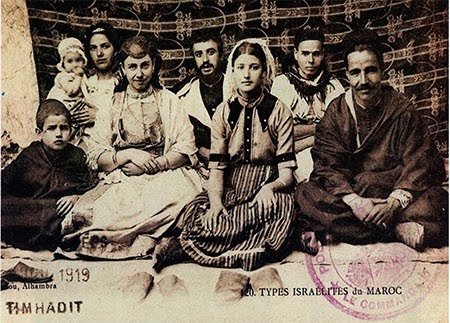
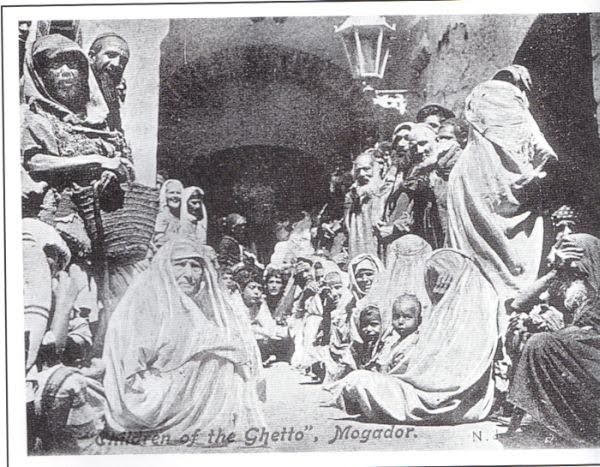
That commercial character shaped everything. At its height the town was so thoroughly Jewish that, by one account, it had more synagogues than mosques – with estimates of their number ranging from around 37 to as many as 47 to 48, depending on the source. The Jewish quarter, or mellah, sat in the northern medina and, at points, spilled well beyond it – some of the wealthiest Jewish families lived not in the Mellah at all but among their Muslim neighbours.
The word “mellah” derives from the Arabic word for salt – for a more complete account of the etymology of the word, please read this article about the Marrakech Mellah.
Why did Jews move to Essaouira?
Jews came to Essaouira largely at the sultan’s invitation. To build his new Atlantic port, Sidi Mohammed ben Abdellah – advised, by some accounts, by his Jewish counsellor Samuel Sumbal – recruited leading Jewish merchant families as tujjar as-sultan, “the sultan’s traders,” granting them privileges to run commerce between Morocco, Europe and beyond.
This is the heart of Essaouira’s distinctiveness – the community wasn’t drawn primarily by refuge, but actively recruited for commerce. The sultan brought merchant families in from established centres across Morocco – among them names still woven through the city’s story, such as Corcos, Afriat, Knafo and Pinto (The Pinto name reappears later at the synagogue and cemetery.)
What set these families apart was the deal they were offered. As the sultan's merchants they were:
- Exempt from the jizya, the poll-tax ordinarily levied on non-Muslims.
- Housed in the prestigious casbah quarter – the finest dwellings in the city – rather than the cramped Mellah.
- Given interest-free royal loans to finance major trade transactions.
- Entrusted with diplomacy, mediating with European consuls and merchants on the sultan’s behalf.
In return they controlled the port’s major imports and exports – tea, sugar, metals, gunpowder – and effectively led the local Jewish community from within.
How many Jews lived in Essaouira?
Essaouira was, for much of its history, a Jewish-majority town – a rare distinction in Morocco. Estimates of the peak vary widely across sources, but all point to a community that made up a large share of the population before its mid-20th-century decline to almost none today.
The honest picture is that the numbers genuinely conflict from source to source, so rather than assert a single figure, here is the range as the records actually give it:
| Period | Jewish population / share | Source |
|---|---|---|
| 1770 | ~1,875 Jews (the founding community) | Jewish Journal; IJC |
| 1880s | ~40% of the population | Visiting Jewish Morocco; Qantara |
| Early 1900s | ~12,000 | Jewish Virtual Library |
| c. 1950 | ~18,000, around 60% of residents (by one account) | IJC |
| Today | Almost none | ABC; JTA |
How many Jews used to live in Essaouira at its peak?
At its height, Essaouira was one of the most Jewish cities in Morocco – by some accounts the only town in the Muslim world with a Jewish majority. According to Youssef Sebti, one of Shin Tours’ registered guides in Morocco, as much as 95% of the town was once Jewish.
Published estimates are more conservative, putting the Jewish share at roughly 40 to 50% – a community of some 16,000 to 18,000 people – but they tell the same story: a Jewish-majority port. Youssef’s 95% is the recollection of a guide who knows the city intimately; the independently published estimates run lower.
According to Visiting Jewish Morocco, Jews made up around 40% of the population in the 1880s. By the mid-20th century the community numbered somewhere between roughly 6,500 and 16,000–18,000 people, depending on the source.
The sources genuinely differ, and we won't pretend to a single true number – but every account, first-hand and published alike, agrees on the essential point: this was a port where Jewish life was not a minority footnote but a defining feature.
Why did Jews leave Essaouira?
The community declined on two fronts. First, the Atlantic trade that built Essaouira faded as direct European shipping bypassed the caravan routes, and the port lost its role to Casablanca. Then mid-20th-century emigration – driven by the founding of Israel, regional conflict and Moroccan independence – drew families to Casablanca, Israel and France until almost none remained.
The economic decline came first and quietly. As the tujjar elite lost influence and trade shifted to Casablanca and Agadir, Mogador slid from Morocco’s leading port to a sleepy backwater. The political exodus followed and finished the job: after the creation of Israel in 1948, Moroccan independence in 1956, and the 1967 war, the vast majority of Moroccan Jews emigrated.
In the early 1960s, an arrangement under King Hassan II allowed Jewish families to leave the country with their possessions, and most of Essaouira’s community did.
How many Jews are in Essaouira today?
Almost none. The community that once dominated the port has effectively vanished; by 2018, sources described only a last handful of Jewish residents, and today the town’s Jewish life survives mainly through its restored sites and the descendants who return each year.
The contrast with the past is stark. In 2018, ABC News described the antique-shop keeper Joseph Sebag as “the last Jew in Essaouira.” Whether this is true or not, only a tiny number of Jewish residents remain, if any.
In 2020, The Jewish Telegraphic Agency reported that “fewer than a handful” remain, although 60–80 Moroccan-Jewish expatriates spend part of the year there. The city’s most famous Jewish son, André Azoulay – a native of Essaouira and senior adviser to the King – is not a resident but remains its leading heritage champion.
What are the Jewish sites in Essaouira?
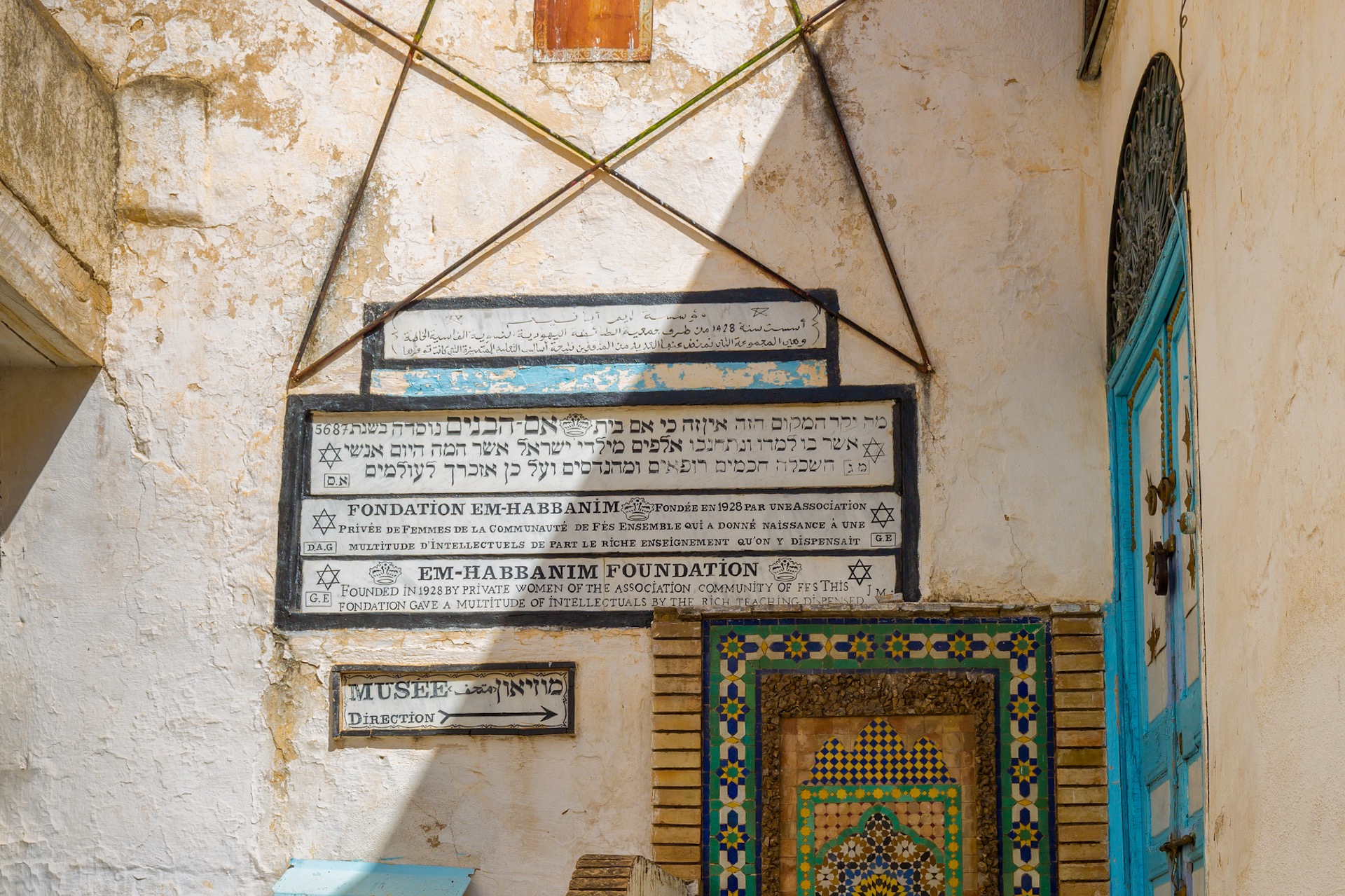
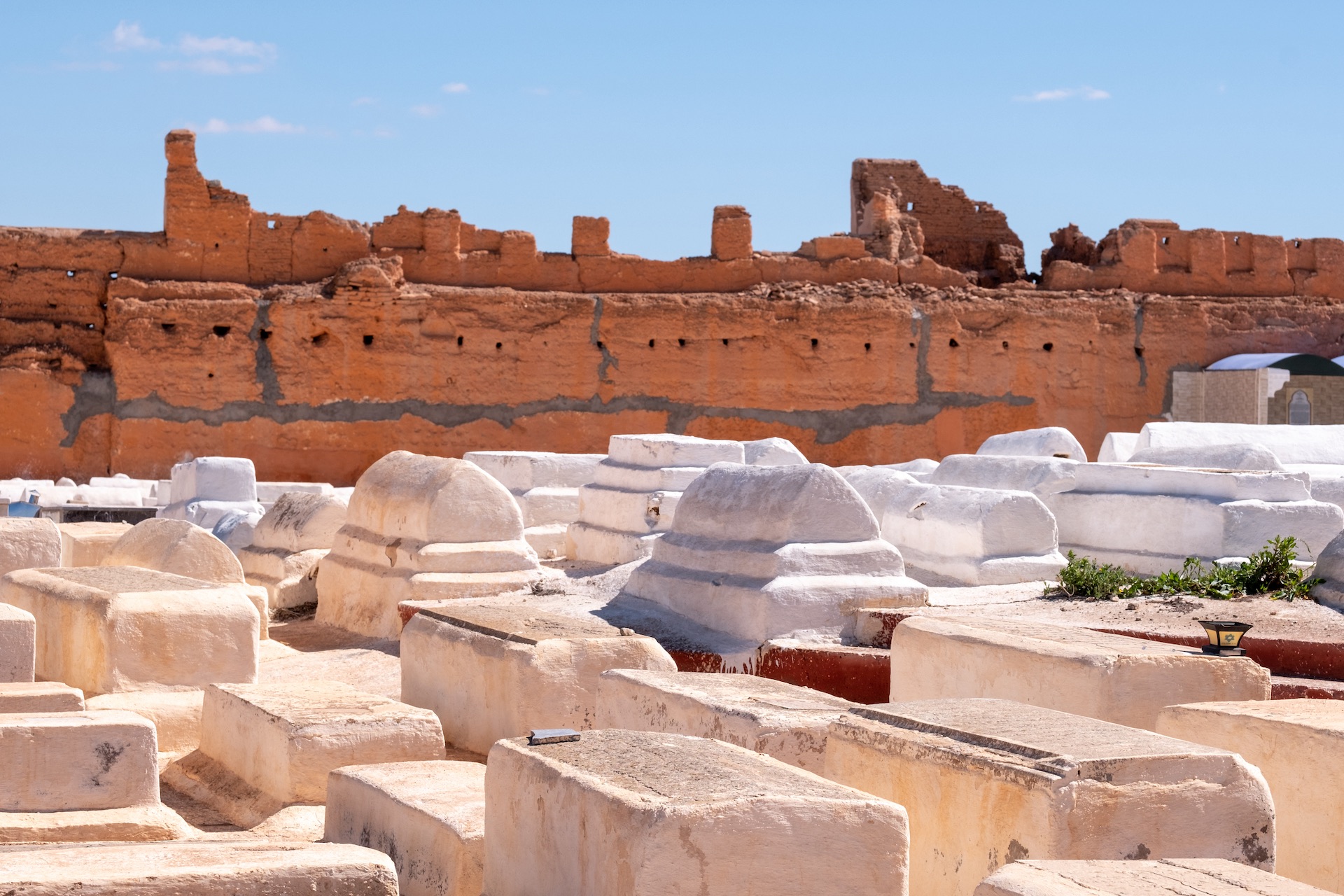
Essaouira has one of Morocco’s best-preserved Jewish heritage trails. Its key sites are the Bayt Dakira memorial museum and synagogue, the Mellah (Jewish quarter), the Haim Pinto Synagogue, the Slat Lkahal Synagogue, and the historic Jewish cemeteries – together telling the story of the port’s Jewish community.
These five sites sit within easy walking distance of one another in and around the old Mellah. For a wider itinerary, see our guide to the best Jewish sites in Morocco.
| Site | What it is | Why visit |
|---|---|---|
| Bayt Dakira | Restored synagogue and Jewish memorial museum, “House of Memory” | The flagship site; the single best introduction to the city’s Jewish story |
| The Mellah | The historic Jewish quarter in the northern medina | Walk the streets where the community lived and traded; spot Stars of David still carved above doorways |
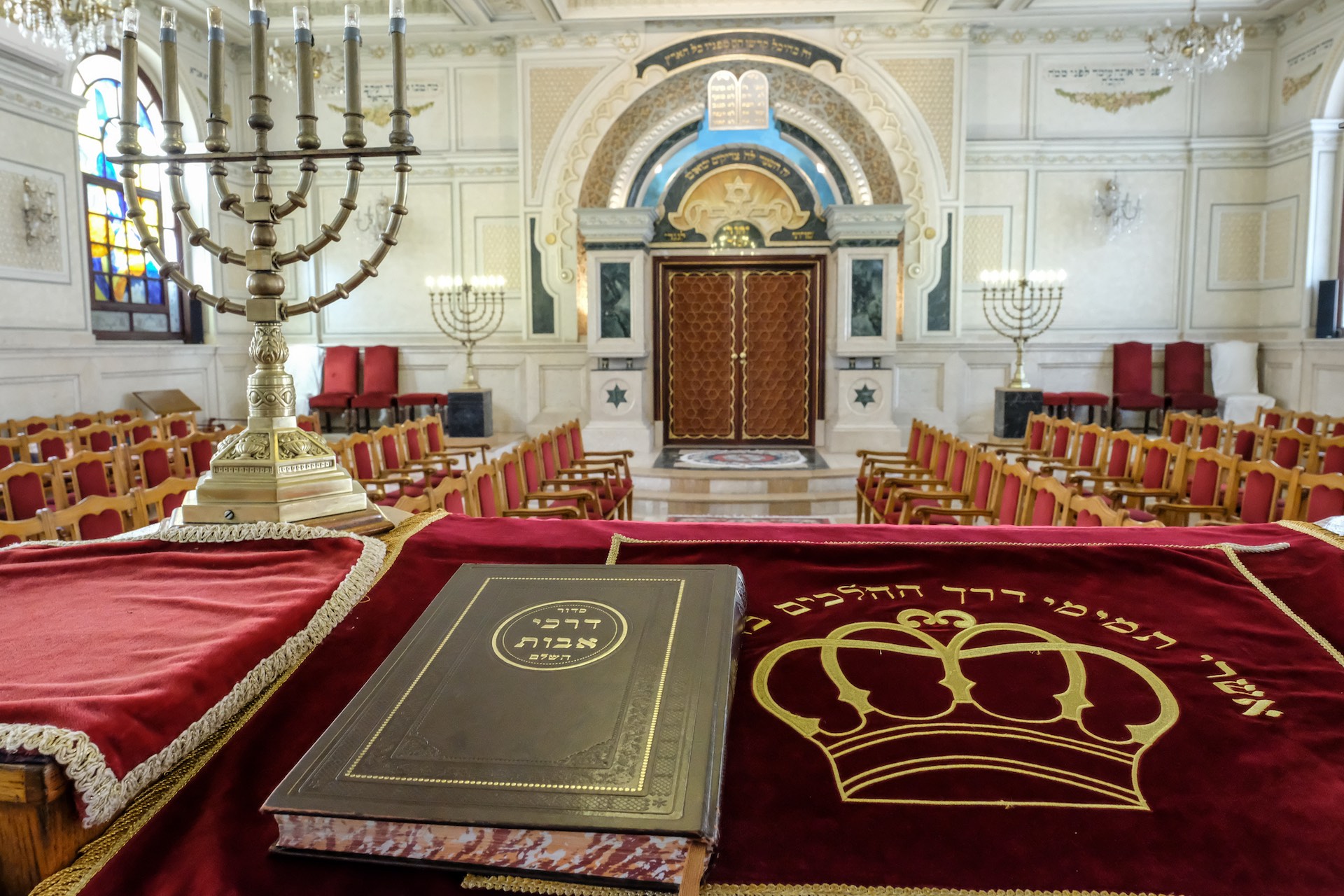
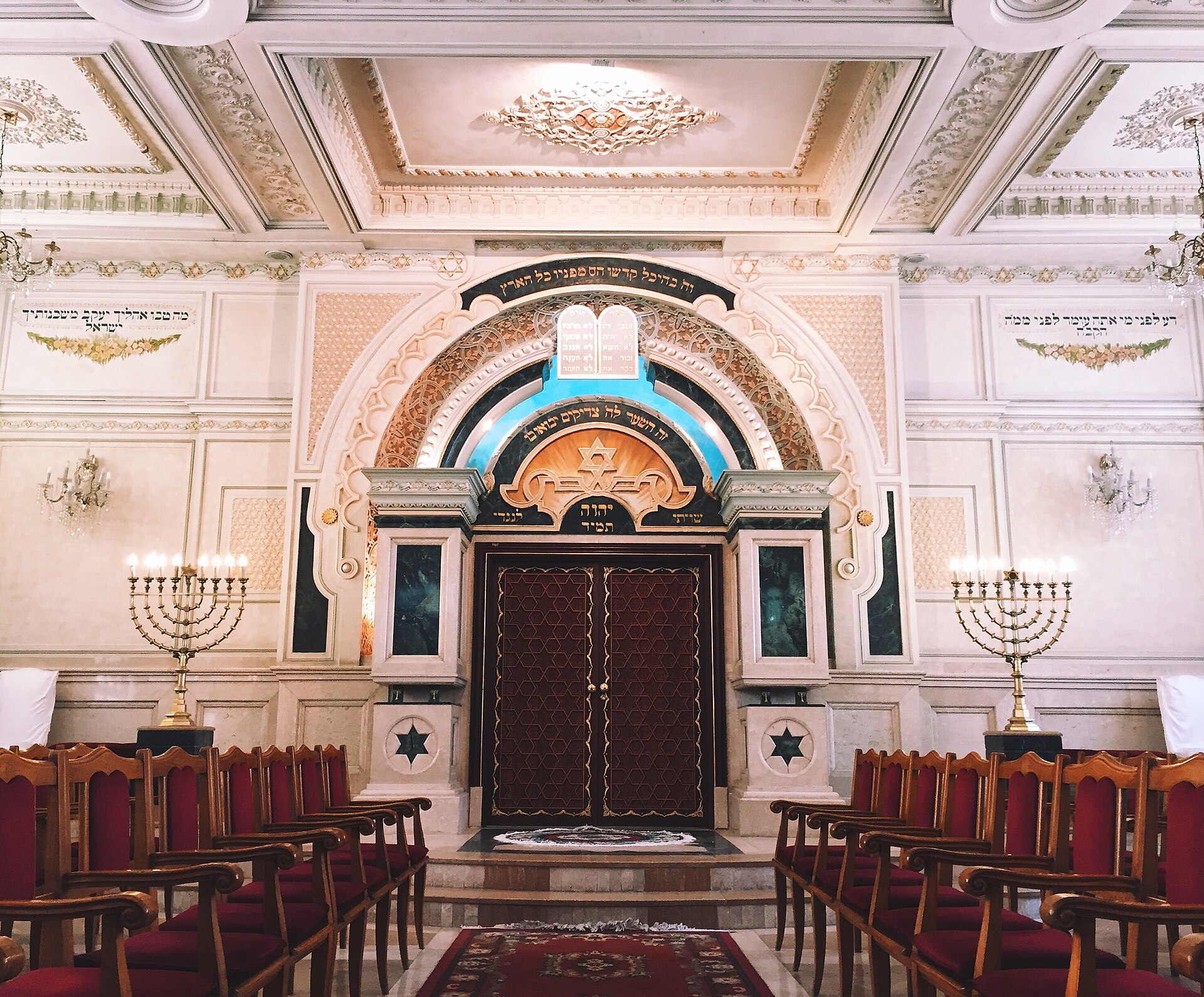
| Haim Pinto Synagogue | Restored synagogue and former home of a revered rabbi | The focus of the annual September pilgrimage; still used for services when pilgrims visit |
| The Jewish cemeteries | Old and new burial grounds on the seafront | Resting place of Rabbi Haim Pinto, a pilgrimage destination in its own right |
| Slat Lkahal Synagogue | Restored synagogue in the heart of the quarter | A quieter, beautifully restored counterpart to the Pinto synagogue |
Bayt Dakira
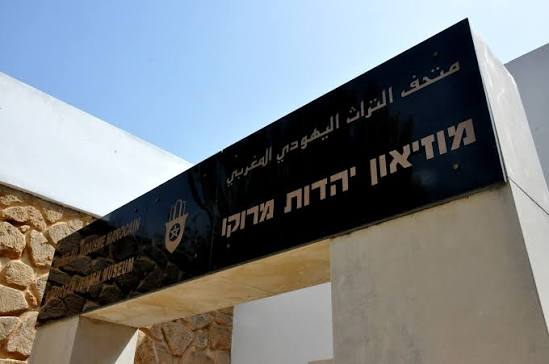
The flagship site and the best place to start. Bayt Dakira – “House of Memory” – was inaugurated by King Mohammed VI in January 2020, a $1.5 million restored home housing a small synagogue, a museum and a research centre.
The project was the initiative of André Azoulay. Inside is the restored Simon Attias Synagogue, along with rare Judaica, photographs and film that bring the pre-1948 Mellah to life.
The Mellah
The old Jewish quarter occupies the northern corner of the medina – roughly a 15-block triangular district that makes up about 10% of the walled town, part of the UNESCO-listed medina inscribed in
2001.
Much of it fell into disrepair after the community left, and the World Monuments Fund documented and mapped the quarter between 2018 and 2020 to record its history before more was lost. It was also the commercial and craft heart of Jewish Essaouira – beyond trade, the quarter was known for producing mahia, an anise-flavoured fig spirit, reportedly in dozens of small distilleries.
Haim Pinto Synagogue
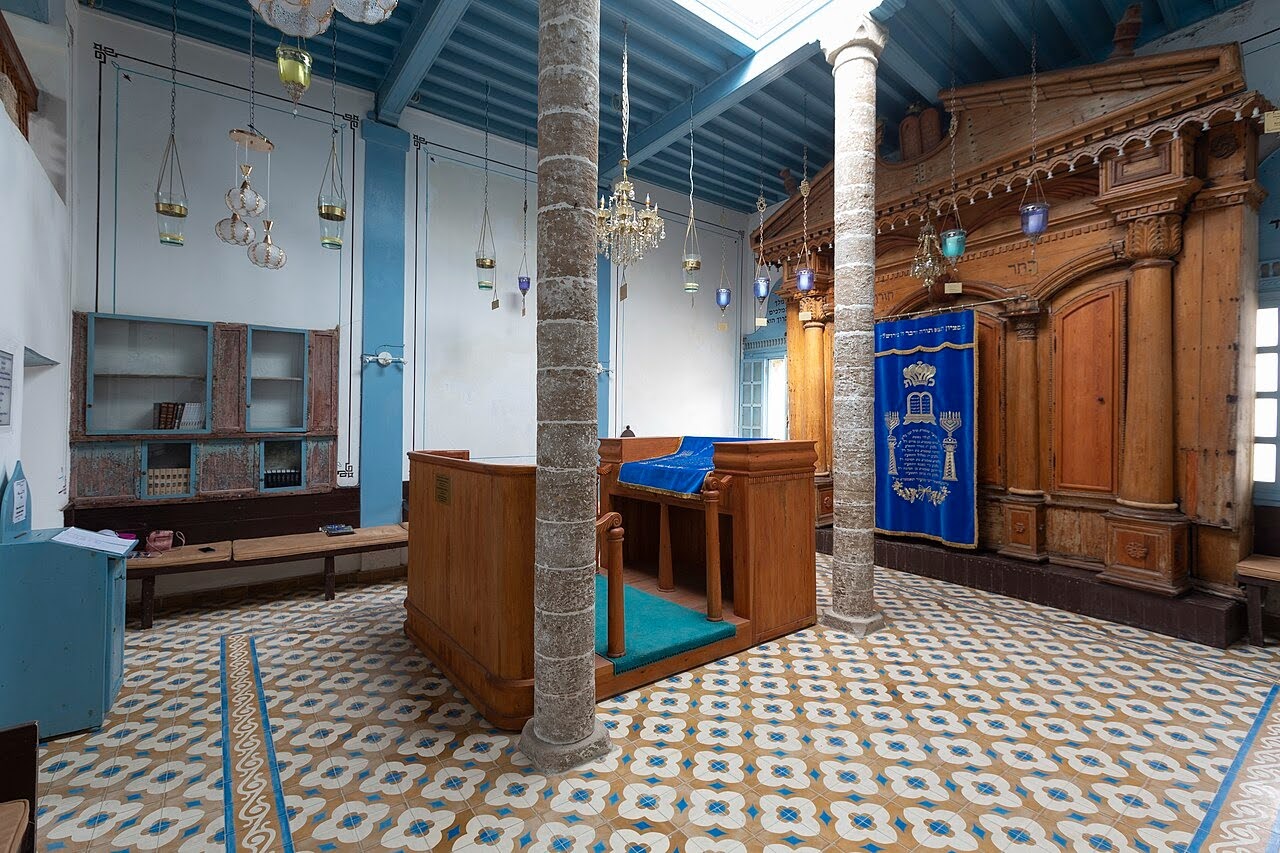
The most visited of the city’s Jewish sites, and its spiritual anchor. The synagogue preserves the former home of Rabbi Haim Pinto, who died in 1845 and is revered as a saint; it still holds services when pilgrim groups visit.
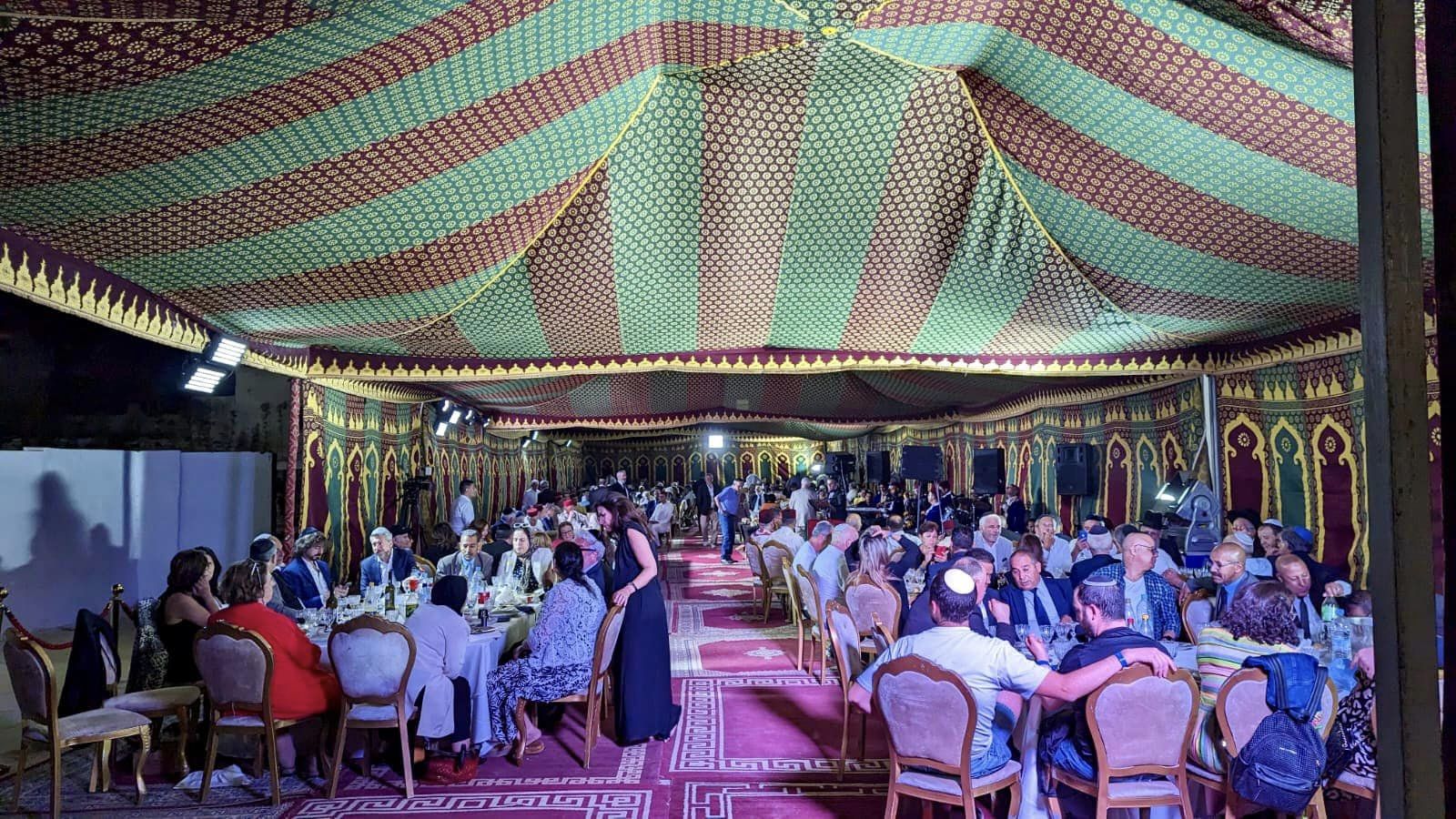
Every September, more than a thousand Jews – from Morocco and around the world – travel to Essaouira for the hiloula marking his death.
The Jewish cemeteries
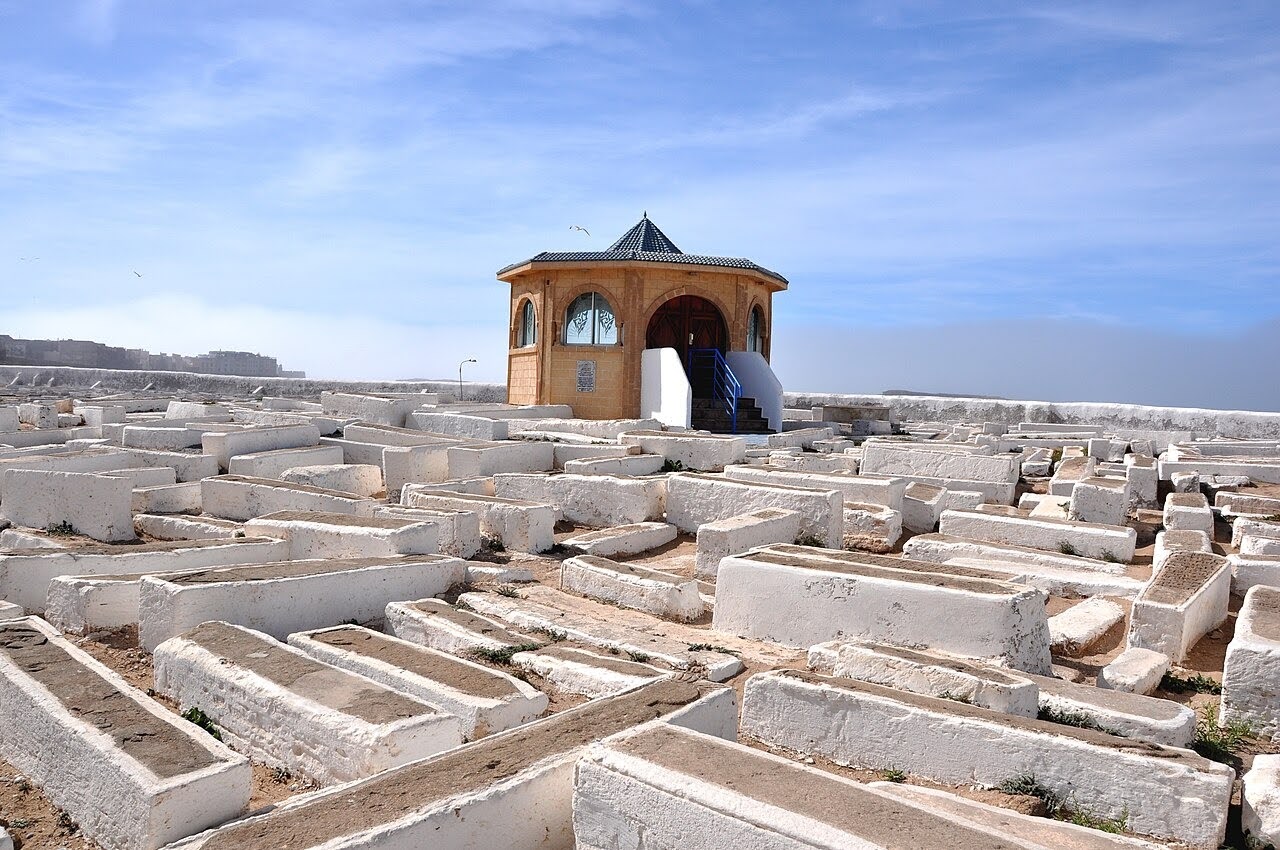
Just outside the city gates, on the seafront, lie Essaouira’s old and new Jewish cemeteries – well-kept burial grounds whose Hebrew inscriptions are slowly eroding under the sea air.
The centrepiece is the shrine of Rabbi Haim Pinto, a pilgrimage destination in its own right during the September hiloula.
Slat Lkahal Synagogue
A short walk from the Pinto synagogue, Slat Lkahal is a restored synagogue central to the old quarter, reopened at the end of 2017, after a five-year restoration funded largely by private donations from Jews around the world, as well as UNESCO.
Much of that effort was driven by Haim Bitton, an Essaouira-born émigré who left as a young man and returned in retirement to lead the work – his way of preserving the memory of the city’s Jewish-Muslim coexistence.
How do you visit Jewish Essaouira?
Jewish Essaouira is compact and walkable. Start at Bayt Dakira in the heart of the old Mellah, then explore the Pinto and Slat Lkahal synagogues and the seafront cemeteries nearby. A local guide brings the port’s history to life; dress modestly at active religious sites, and time your visit to the September Pinto hiloula if you can.
Everything sits within a short walk – a practical route runs from Bayt Dakira, through the Mellah’s alleys, on to the two synagogues, and out to the cemeteries by the sea.
A few tips:
- Go with a guide – the sites are modest from the outside and easy to walk past; the story is what makes them come alive.
- Dress modestly at the active religious sites, as you would at any place of worship.
- Time it for September if the hiloula matters to you – that’s when the Pinto pilgrimage fills the city.
We build this into our Jewish tours of Morocco, often pairing Essaouira with Marrakesh, which is only a few hours away.
Frequently asked questions
What is Essaouira famous for?
Essaouira is famous for its UNESCO-listed medina, its Atlantic ramparts and fishing harbour, and the strong winds that make it a windsurfing destination. It’s also a cultural hub – home to the Gnaoua World Music Festival – and known for its deep Jewish heritage as the historic trading port of Mogador.
Is there a Jewish museum in Essaouira?
Yes, Bayt Dakira (“House of Memory”) is a restored synagogue and Jewish memorial museum in the old Mellah, dedicated to Essaouira’s Jewish history. Opened in 2020, it is one of Morocco’s most significant Jewish heritage sites and the natural centrepiece of any visit to Jewish Essaouira.
Who is André Azoulay?
André Azoulay is a Moroccan Jewish figure born in Essaouira and a long-serving senior adviser to the King of Morocco. A prominent advocate for Muslim-Jewish coexistence, he championed the restoration of Essaouira’s Jewish heritage, including the creation of the Bayt Dakira museum.
Walk Jewish Essaouira With Shin Tours
I’ve spent over twelve years leading Jewish heritage journeys through Morocco, guiding thousands of travellers each year – and few places move people like Essaouira.
This was Morocco’s great Jewish trading port, a town once counted as majority-Jewish, and its story is still written into the Mellah, the Bayt Dakira museum, the Pinto synagogue and the sea-facing cemeteries.
My team and I know these places and the people who keep them – and we build trips that let you experience this heritage as something present, not just past.
When you request a free custom itinerary, here’s what you get:
- A tailored itinerary built around your interests and travel group, with the Mellah sites, synagogues and heritage places that matter to you mapped out.
- A personal call with me to talk through your trip and what you're hoping to connect with.
- A sample itinerary to review before you commit to anything.
You can also learn more about how Shin Tours works if you want the fuller picture first.
Essaouira is one of the most vivid chapters in one of the world’s oldest Jewish stories – and it’s more accessible to visit than most people expect.
Request your free custom Morocco itinerary and let’s plan a journey into a heritage that’s still very much alive.