Is Morocco safe for Jews? I’ve spent twelve years leading Jewish heritage tours across the world, and this is the question I hear most before every Morocco trip. Here’s my honest answer, backed by real data rather than reassurance alone.
Morocco is safe for Jews, home to one of the largest remaining Jewish communities in the Arab world. Diplomatic ties with Israel, normalized in 2020, support cultural exchange, and synagogues and cemeteries remain maintained, creating a welcoming environment for Jewish travelers today.
Summary
- Morocco is home to one of the largest remaining Jewish communities in the Arab world, with roots stretching back over two thousand years.
- Diplomatic relations between Morocco and Israel, normalized in 2020, support cultural exchange despite periodic disruption to flights.
- Jewish heritage sites — mellahs, synagogues, and cemeteries — are preserved across major Moroccan cities.
- Israeli citizens need an AEVM electronic visa to enter Morocco, valid for a 30-day stay.
- Ground-level safety for Jewish travelers has stayed stable through regional tensions since October 2023.
Below, I go deeper into what actually matters before you book: the current state of Israeli flights, which cities carry the strongest Jewish heritage, and the practical realities of visiting synagogues and finding kosher food in 2026.
Is Morocco Really Safe for Jewish Travelers?
Morocco's US State Department travel advisory sits at Level 2 — Exercise Increased Caution. That's the same rating given to France, Italy, Germany, Spain, and the United Kingdom. Countries most travelers wouldn't hesitate to visit.
A 2026 report from travel insurance provider HelloSafe ranked Morocco as the safest country to visit in Africa. Morocco welcomed 19.8 million tourists in 2025, a record high, and tourism now accounts for roughly 7.3% of the country's GDP, up from 6.8% in 2019.
Morocco isn't the country many people picture when they hear "safety concerns in an Arab nation." Its identity isn't reducible to that label — Berber roots run just as deep as Arab ones, and that pluralism has given Jewish life room to exist here for over two thousand years.
I've watched this play out firsthand.
From the moment my clients land, a Moroccan colleague greets them with a hand placed over the heart — a traditional gesture of welcome. It's a small thing. I've seen it settle even the most nervous first-time traveler within minutes.
That's not an accident. Morocco's leadership has spent decades signaling, through both policy and gesture, that Jewish heritage belongs here. For a broader look at Morocco's general safety record beyond the Jewish-specific angle, our sister site's breakdown of Morocco's general safety record covers petty crime, road safety, and standard travel precautions in more depth.
The sections below unpack where this plays out in practice: entry rules, heritage sites, and what changed — and didn't — after October 2023.
Is Morocco Welcoming to Jews?
Morocco is welcoming to Jews, shaped by a Jewish presence dating back over two thousand years and a monarchy with a documented record of protecting religious minorities. Synagogues, cultural festivals and heritage sites receive government support, reinforced by the 2020 normalization of relations with Israel.
This isn't just policy talk. King Mohammed VI has said it directly:
"I am committed to defending the faith and the community of believers and to fulfilling my mission with respect to upholding freedom of religion for all believers in the revealed religions, including Judaism, whose followers are loyal citizens for whom I deeply care." — King Mohammed VI
I've heard versions of that sentiment from ordinary Moroccans too, not just from official statements.
On one tour, a shop owner in Fez struck up a conversation with my group. He remembered the Jewish families who had lived on his street decades earlier — names, faces, stories passed down from his parents. What started as small talk turned into an hour over Moroccan tea.
That kind of spontaneous warmth is the pattern, not the exception. After twelve years of bringing Jewish travelers here, the feedback I hear most often isn't about safety — it's about how welcomed people felt.
People often expect distance. What they find instead is curiosity and respect.
What Happened to Jewish Travel to Morocco After October 7?
Jewish heritage sites and everyday safety in Morocco remained stable after October 7, even as Israel-Morocco flight routes were suspended. Direct flights, once carrying an expected 200,000 Israeli tourists in 2022, were due to resume in November 2025 but remain delayed by security checks.
It's worth separating two different questions here, because they get confused constantly.
The first is whether Morocco is safe for Jewish travelers and Jewish heritage sites on the ground. The second is whether flights and diplomatic relations between Israel and Morocco specifically have stayed smooth. These are not the same question, and the answers are different.
On the ground, the picture has held steady. Everyday safety at established Jewish heritage sites — the mellah in Marrakech, the synagogues and museums of Essaouira — has continued largely undisturbed. Local guides and hospitality providers have kept welcoming Jewish visitors from around the world throughout.
The flight and diplomatic side is a different story. Before the war in Gaza began, Morocco and Israel had a warming relationship — 200,000 Israeli tourists were expected to visit Morocco in 2022 alone. Direct flights between Tel Aviv and Moroccan cities were suspended after October 2023, alongside protests in several Moroccan cities and formal travel advisories from Israel's National Security Council.
Rabat agreed to reinstate direct flight routes in November 2025. As of this article's publication, that resumption remains delayed while Israel's Shin Bet completes security checks on the restart.
None of this changes the situation for Jewish travelers who aren't flying in directly from Israel. The AEVM visa process, heritage site access, and day-to-day safety for Jewish visitors from the US, Canada, Europe and elsewhere have continued without interruption.
Are there direct flights from Israel to Morocco?
Not currently, as of publication. Direct routes between Tel Aviv and Casablanca or Marrakech, previously operated by carriers including El Al, were suspended in October 2023. A restart was agreed for November 2025 but has since stalled pending Israeli security clearance.
Do Jews Still Live in Morocco Today?
Jews still live in Morocco today, though the community has shrunk from roughly 270,000 in 1948 to about 2,100 by 2020, concentrated mainly in Casablanca. Descended from Sephardic, Berber and Ashkenazi Jews, this community maintains active synagogues, cemeteries and cultural institutions.
The scale of that decline is worth understanding, because it tells the real story.
According to the World Jewish Congress, Morocco's Jewish population stood at around 270,000 in 1948. Mass emigration to France, Israel, the United States and Canada followed. By 1971, only around 25,000 Jews remained.
That decline continued. By 2020, the estimate stood at roughly 2,100. Hebrew University demographer Sergio Della Pergola put the 2015 figure at 2,150, broken down by city as follows.
| Year | Estimated Jewish Population | Notes |
|---|---|---|
| 1948 | ~270,000 | Peak population, per World Jewish Congress |
| 1971 | ~25,000 | After major waves of emigration to Israel, France, US, Canada |
| 2015 | ~2,150 | Della Pergola, Hebrew University — Casablanca (1,000), Rabat (400), Marrakesh (250), Meknes (250), Tangier (150), Fez (150), Tetouan (100) |
| 2020 | ~2,100 | World Jewish Congress estimate |
Morocco's Jewish population has declined sharply since 1948, though a small, active community remains — mainly in Casablanca.
The community today traces back to three distinct groups: Sephardic Jews who arrived after the 1492 expulsion from Spain, Berber Jews whose roots in North Africa predate Islam, and a smaller Ashkenazi presence. One of the most visible figures in Moroccan public life is André Azoulay, a Jewish Moroccan who has served as a senior adviser to King Mohammed VI.
Since Mohammed VI's ascension in 1999, this small community has seen real institutional support. In 2010, the King launched an initiative to restore Jewish cemeteries across the country. The 2011 constitution formally recognized the rights of religious minorities, including Jews. In 2016, the King personally attended the rededication of the Ettedgui Synagogue in Casablanca, following the reopening of the museum chronicling Moroccan Jewish history.
The community is small. It's also active, respected, and visibly supported at the highest levels of government.
Can Israelis Visit Morocco?
Israelis can visit Morocco but must first obtain an AEVM electronic visa through the official Accès Maroc platform, valid for a 30-day stay. Diplomatic relations, normalized in 2020, support tourism between the two countries, though direct flight routes have been intermittently disrupted since 2023.
Yes — but there's a specific process to follow. Israeli passport holders need to apply for the Electronic Authorization to Travel to Morocco (AEVM), sometimes called an eVisa, before departure. The application goes through the official Accès Maroc platform and allows a stay of up to 30 days.
This requirement exists independently of the flight situation covered above. Even once direct routes fully resume, Israeli travelers will still need to complete the AEVM process in advance.
The relationship between the two countries has broadly deepened since the 2020 normalization of ties, even with the recent flight disruption. Tourism between Israel and Morocco reached meaningful scale before October 2023 — a sign of what's possible once routes stabilize again.
Is Marrakech Safe for Jewish Travellers?
Marrakech is safe for Jewish travelers, supported by Morocco's historic Jewish community and the preserved Mellah quarter, home to the Lazama Synagogue. Antisemitic incidents are rare, and local guides and hospitality providers are accustomed to welcoming Jewish and Israeli visitors.
Marrakech is one of the most visited cities in Morocco, and it's also one of the richest in Jewish history.
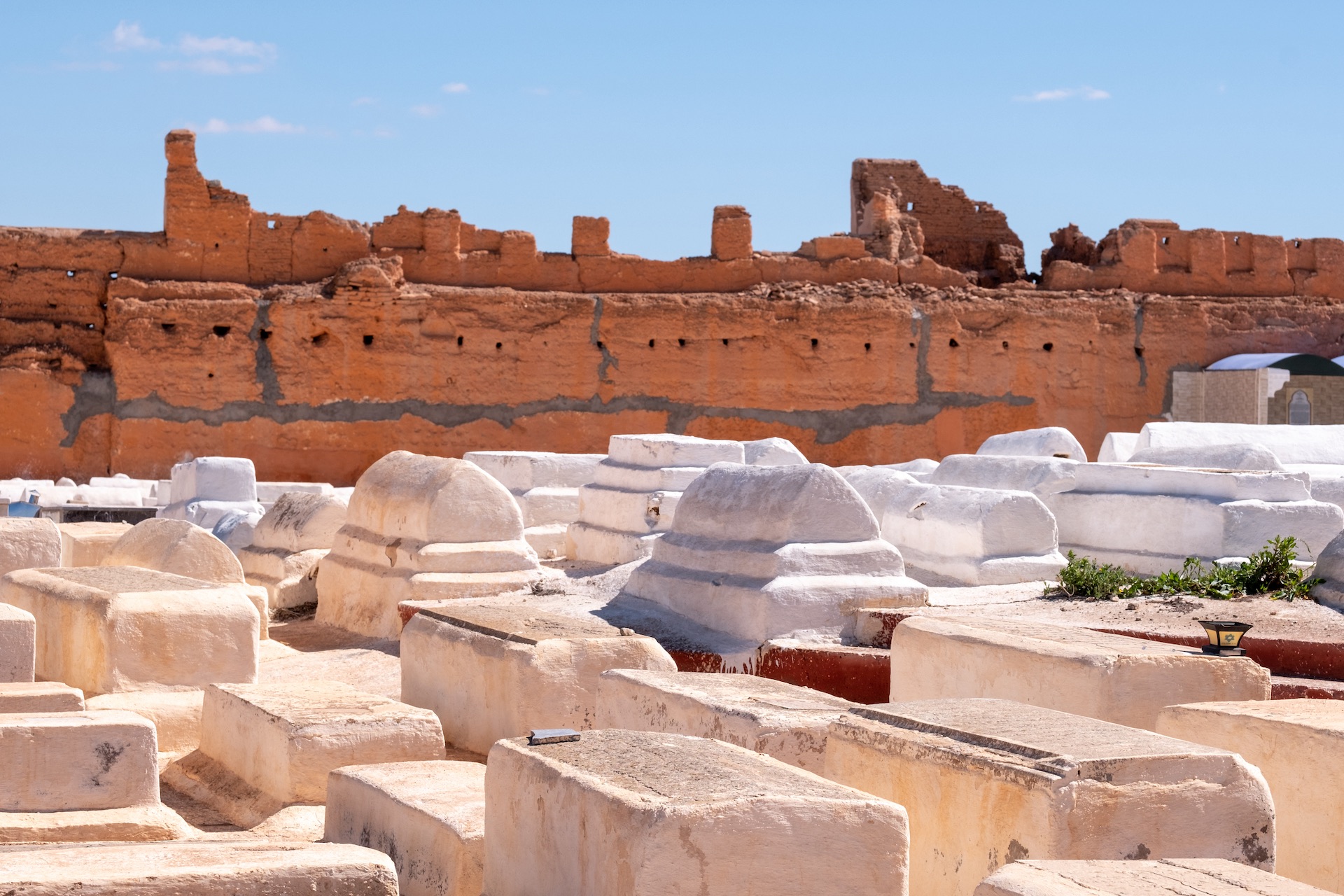
The city's mellah — its historic Jewish quarter — still stands, home to the Lazama Synagogue and a Jewish cemetery that dates back centuries. Tourist areas across Marrakech maintain visible security, and Jewish visitors from Israel, Europe and North America move through the city regularly without incident.
None of this means Marrakech requires special caution beyond what applies anywhere. Standard travel sense — staying alert in crowded souks, using a trusted guide, keeping valuables out of sight — applies here exactly as it does in any busy tourist city.
Dress modestly, respect local customs, and Marrakech tends to feel exactly as warm as the rest of the country.
What Jewish Heritage Sites Can You Visit in Morocco?
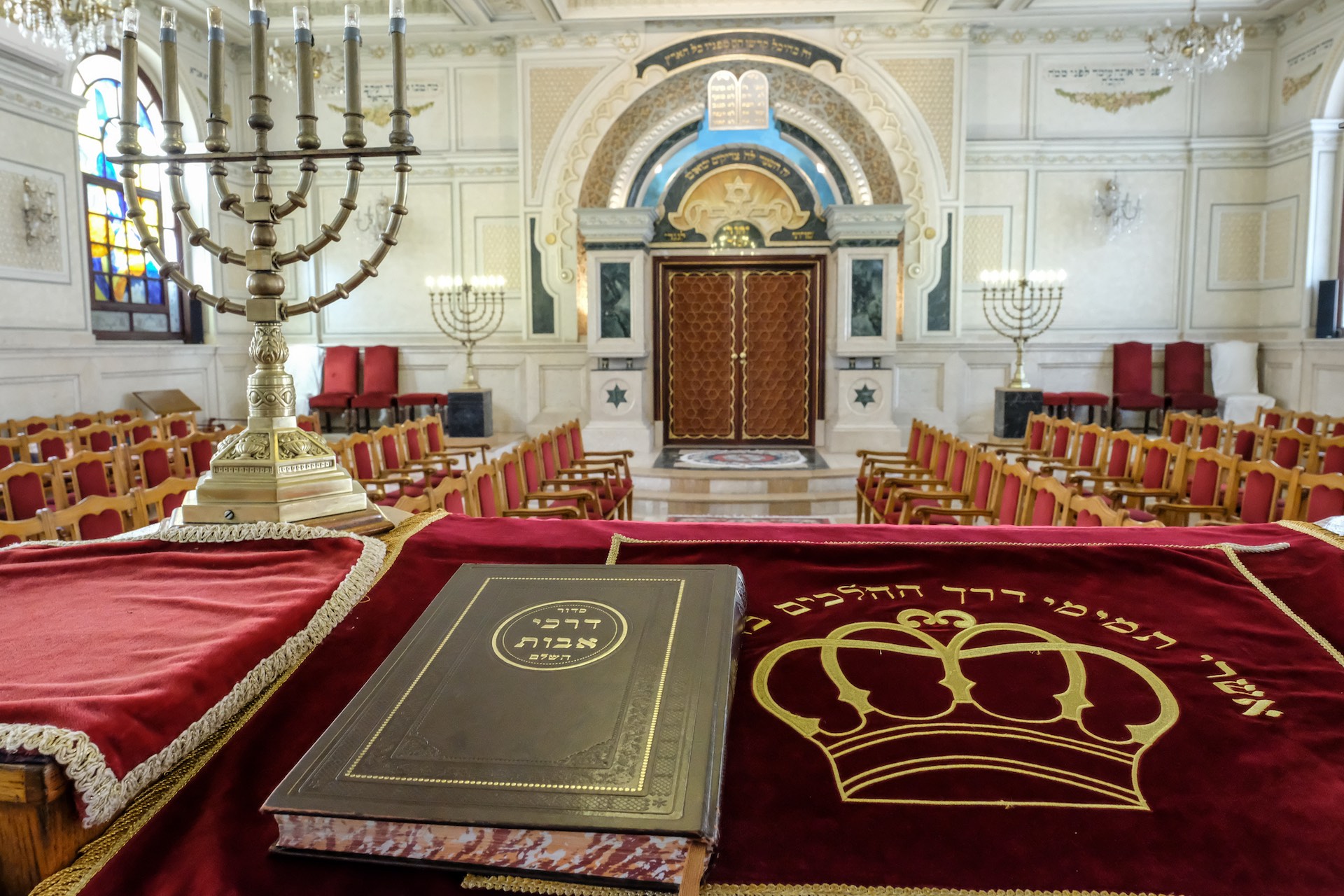
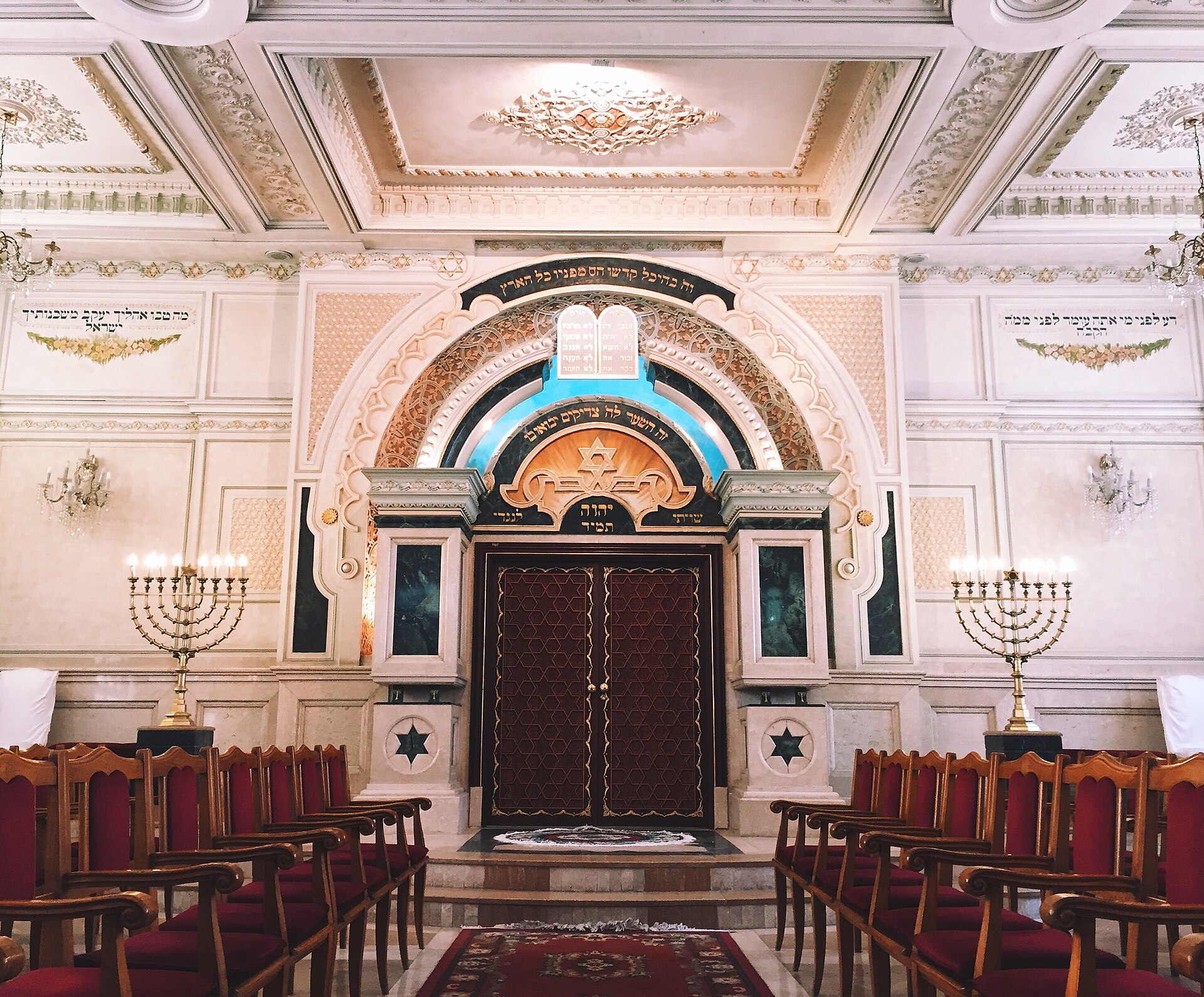
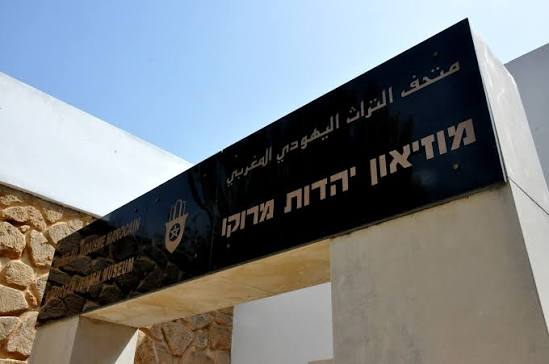
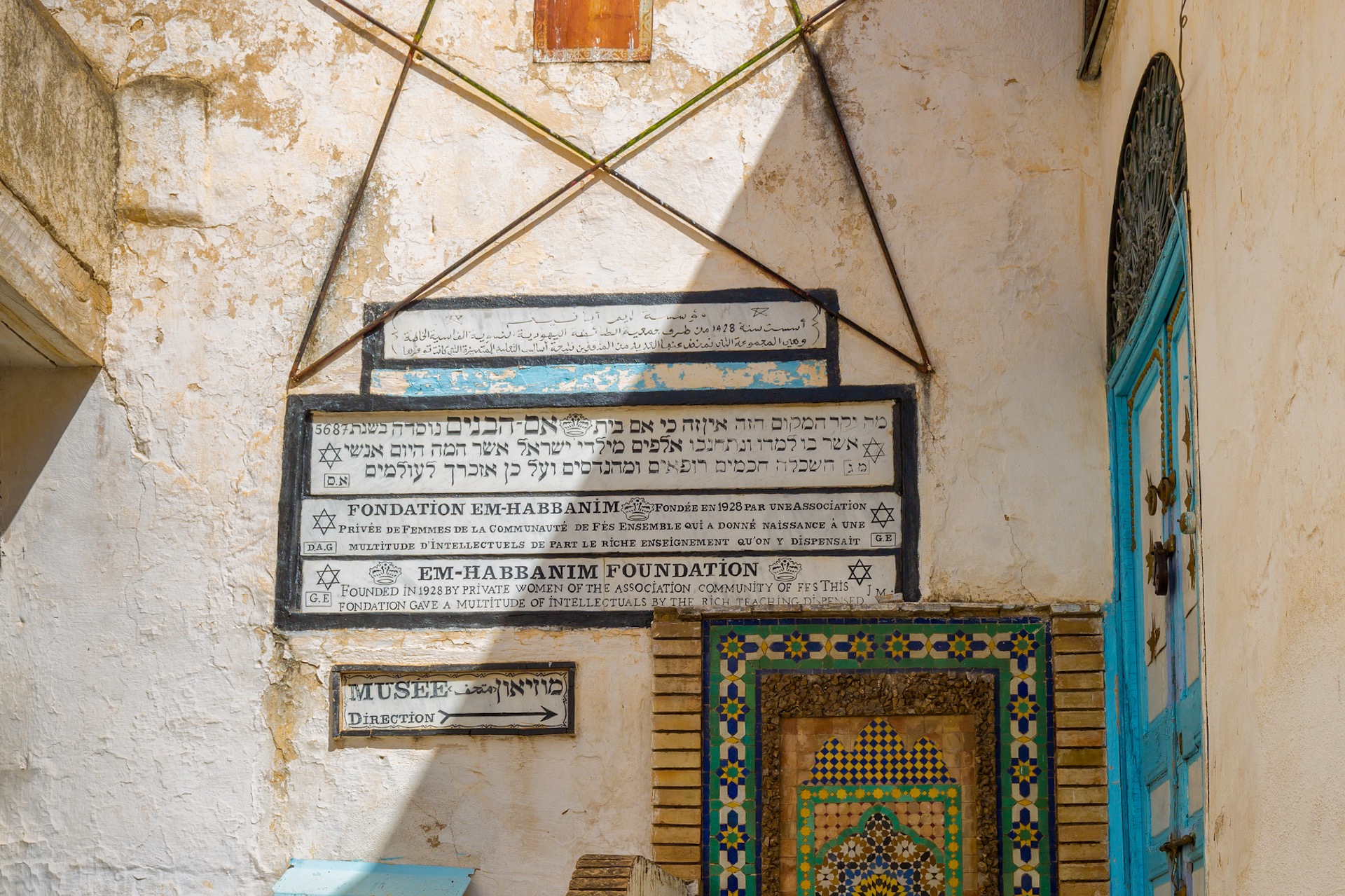
Morocco's Jewish heritage sites include historic mellahs, active synagogues such as Lazama in Marrakech, and the Museum of Moroccan Judaism in Casablanca. Many cities also maintain preserved Jewish cemeteries, reflecting a heritage that spans more than two thousand years.
One detail surprises most first-time visitors: the mellah in each Moroccan city was traditionally built close to the royal palace. Not as a place of confinement — as a place of proximity to power. Jewish families served as trusted merchants, diplomats and advisers across generations, and the mellah's location reflected that closeness.
You'll find these quarters, along with their synagogues and cemeteries, preserved in cities including Casablanca, Marrakech, Fez, and Essaouira. André Azoulay's ongoing role as a royal adviser is a living extension of that same historical relationship.
Want the full list? This section covers the categories — mellahs, synagogues, cemeteries and museums — rather than a site-by-site breakdown. For the complete rundown of specific locations worth visiting, see our full guide to Morocco's top Jewish sites.
Should Jewish Travellers Be Open About Being Jewish in Morocco?
Jewish travelers can generally be open about their identity in Morocco, particularly at tourist sites and Jewish heritage locations. Exercising discretion around visible religious symbols and avoiding political discussions is advisable, reflecting local norms rather than any specific safety concern.
Most of my clients don't need to hide being Jewish here. At heritage sites, in tourist areas, and around guides and drivers who work with Jewish groups regularly, openness is the norm, not the exception.
That said, a little discretion goes a long way in rural or non-tourist areas, where visible religious symbols may draw more attention than they would in a city center.
The one topic worth avoiding entirely is politics — specifically, conversations about Israel and the Palestinian territories. This isn't about hiding Jewish identity. It's the same advice I'd give any traveler anywhere: skip the political debates, and the trip goes more smoothly.
What Should Jewish Travellers Know Before Visiting Morocco?
Jewish travelers to Morocco should focus on three practical things: petty hassle in tourist areas, cultural differences from home, and strong trip planning. None of these are Jewish-specific concerns — they apply to any traveler visiting Morocco.
If you ask me what actually trips people up, it's rarely the dramatic scenario. It's smaller and more manageable than that.
Petty hassle. Busy medinas and tourist zones call for the same alertness you'd use anywhere crowded. Keep your phone and wallet secure, skip flashing valuables, and use a trusted guide or driver when it makes things easier.
Cultural gaps. Morocco is welcoming, but customs differ from what many Western visitors expect. Eating and shaking hands with the right hand only is standard, since the left is reserved for personal hygiene. Female travelers tend to have an easier time in longer, loose-fitting clothing that aligns with local modesty norms — not because Morocco is unsafe for women, but because it reduces unwanted attention.
Bad planning. In my experience, this causes more stress than anything else on this list. A rushed route, a weak hotel choice, or a generic guide can make Morocco feel harder than it needs to. Good planning does the opposite.
Kosher food is available, though mainly in Casablanca, and it's worth arranging in advance rather than assuming you'll find it on the road.
One recent client, reviewing their trip on TripAdvisor, put it well after an eight-night private tour: they wanted "a private tour with our own guide and driver" for an unfamiliar country, and came away calling it "a Five Star experience" — highlighting the well-maintained synagogues they visited along the way, alongside the souks, ruins and mosques.
That's the difference good planning makes.
Plan Your Morocco Trip With Shin Tours
I've spent over twelve years organizing Jewish heritage journeys, guiding thousands of travelers each year through Morocco's historic communities and living traditions. My team and I have built relationships with local guides, drivers and historians who bring context most visitors never find on their own.
When you request a free custom itinerary, here's what you get:
- A tailored itinerary built around your interests and travel group
- A personal call with me to talk through your trip
- A sample itinerary to review before you commit to anything
You can also learn more about how Shin Tours works if you want the fuller picture first.
Morocco has proven itself, year after year, as one of the most welcoming places in the world for Jewish travelers. Request your free custom Morocco itinerary and let's plan a trip that shows you why.
Asaf Peled
Asaf Peled began operating Jewish tours as a registered guide in Israel in 2012, before founding Shin Tours in 2018 and opening up Jewish heritage tours in the Middle East, North Africa and Europe.